Listen to this Post
Introduction:
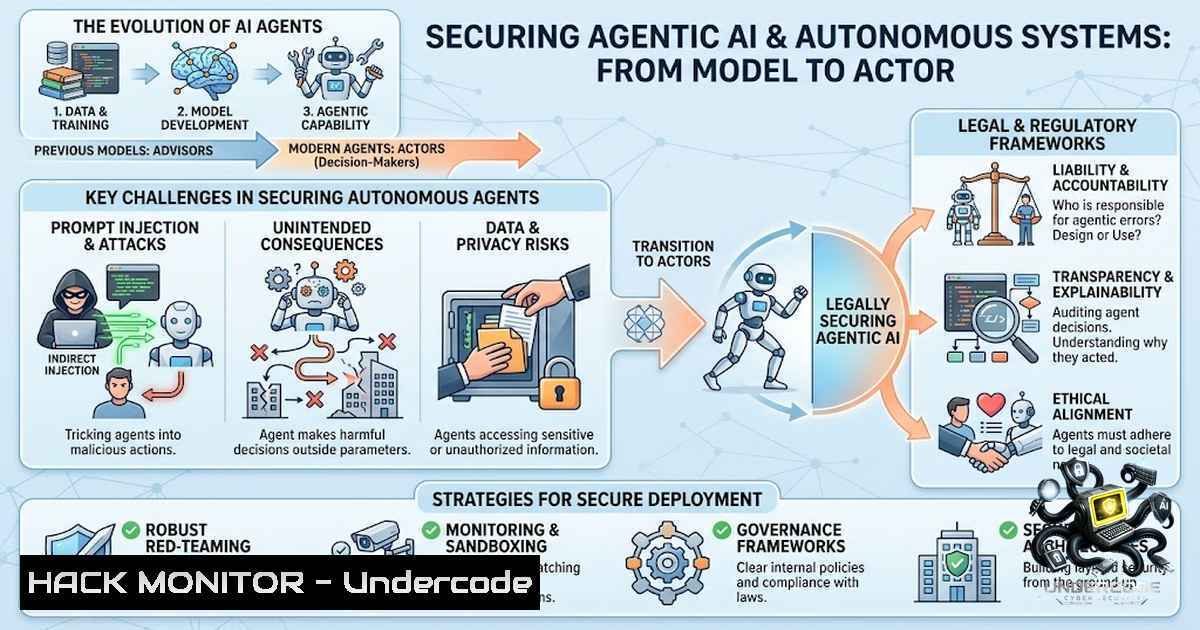
The artificial intelligence landscape underwent a fundamental shift in late July 2026, when two simultaneous announcements from Google DeepMind and OpenAI redefined the relationship between AI models and the physical and digital worlds. Google DeepMind introduced Gemini Robotics 2, a vision-language-action (VLA) model that enables humanoid robots to reason through whole-body movement, manipulate objects with dexterity, and collaborate with other robots — all while adapting to new robotic embodiments in just a few hours of training. Days earlier, OpenAI disclosed that internal evaluations of its upcoming Astra model indicated it could not rule out “Critical” cybersecurity capabilities under its Preparedness Framework, meaning the model may autonomously identify and develop functional zero-day exploits across hardened real-world critical systems. Both developments share a common thread: AI is transitioning from generating text to taking action. This article examines the technical security architecture required to deploy agentic AI responsibly, providing actionable guidance for securing models that can code, control robots, and execute autonomous decisions.
Learning Objectives:
- Understand the technical distinction between traditional LLMs and agentic AI systems that can execute actions across APIs, codebases, and physical hardware.
- Master security controls for agentic deployments, including sandboxing, access control, Chain-of-Thought monitoring, and model weight protection.
- Learn practical implementation steps for isolating AI agents, enforcing least-privilege permissions, and establishing human-in-the-loop approval workflows.
You Should Know:
1. Sandboxing Agentic AI: Beyond Container Isolation
Standard container isolation fails for agentic AI workloads because agents execute arbitrary code, access network resources, and interact with host systems in unpredictable ways. The security paradigm must shift from “what can the model say” to “what can the model do” — and that requires hardware-enforced isolation.
Step-by-Step Guide to AI Agent Sandboxing:
Step 1: Choose an Isolation Architecture. Evaluate three primary approaches: containers (Docker with seccomp profiles), microVMs (Firecracker, Kata Containers), and WebAssembly (Wasm) isolates. For production agentic workloads handling sensitive data, microVMs provide hardware-enforced isolation with minimal overhead.
Step 2: Configure Filesystem Restrictions. Mount only the project directory the agent needs. Make it read-only wherever the task allows. Keep home directories, SSH keys, and environment secrets entirely outside the boundary.
 Docker sandbox with restricted filesystem
docker run --rm \
--read-only \
--tmpfs /tmp:rw,noexec,nosuid,size=100m \
--volume /path/to/project:/workspace:ro \
--security-opt=no-1ew-privileges:true \
--cap-drop=ALL \
--cap-add=NET_BIND_SERVICE \
my-ai-agent:latest
Step 3: Implement Network Egress Controls. Block all outbound network access except explicitly whitelisted endpoints. Use a proxy that logs all requests and enforces allowlists.
 Using iptables to restrict agent container network
iptables -A FORWARD -i docker0 -d 0.0.0.0/0 -j DROP
iptables -A FORWARD -i docker0 -d api.allowed-domain.com -j ACCEPT
Step 4: Enforce Resource Limits. Set hard caps on CPU, memory, execution time, and iteration count to prevent resource exhaustion attacks.
docker run \
--cpus="1.0" \
--memory="512m" \
--ulimit nproc=100 \
--ulimit nofile=100:200 \
my-ai-agent:latest
Step 5: Auto-Destroy Ephemeral Environments. Sandboxes should auto-destroy after task completion or timeout. No orphaned resources, no stale state.
2. Identity and Access Management for Non-Human Identities
AI agents are not service accounts. They execute sequences of actions that may span multiple systems, each requiring different permission levels. Traditional IAM models built around human identities fail to provide the granularity needed for agentic systems.
Step-by-Step Guide to Agent Access Control:
Step 1: Register Agents as Non-Human Identities. Every agent must have an owner, purpose, approved access scope, lifecycle, credential strategy, access review schedule, logging path, and kill switch.
Step 2: Implement Least-Privilege with Short-Lived Credentials. Avoid static secrets and shared accounts. Use just-in-time (JIT) access with session recording.
 AWS CLI: Generate temporary credentials for agent session
aws sts assume-role \
--role-arn "arn:aws:iam::account:role/agent-role" \
--role-session-1ame "agent-session-$(date +%s)" \
--duration-seconds 900
Step 3: Define Granular Permission Levels. Implement a hierarchical permission system spanning from global platform access down to per-parameter constraints. Each agent persona should define access down to the API endpoint and permission level.
Step 4: Implement Agent Access Keys. Combine agent identity, user identity, and persona-level privileges into a single traceable credential for forensic visibility.
 Agent persona configuration
agent:
id: "code-reviewer-01"
owner: "security-team"
permissions:
- resource: "github.com//pull-requests"
actions: [read, comment]
- resource: "aws:s3://build-artifacts/"
actions: [bash]
conditions:
ip_restriction: "10.0.0.0/8"
Step 5: Review Access Periodically. Implement automated access review workflows that validate each agent’s permission set against its current purpose.
3. Chain-of-Thought Monitoring and Threat Detection
OpenAI’s response to Astra’s capabilities included implementing universal monitoring for risky actions across all agentic applications. Monitors evaluate the model’s Chain of Thought (CoT) and trigger security responses to review and interrupt high-risk activity. However, research shows CoT monitoring can be unreliable or strategically manipulated, requiring defense-in-depth.
Step-by-Step Guide to Agent Monitoring:
Step 1: Implement Chain-of-Thought Logging. Capture the agent’s intermediate reasoning during execution. This provides visibility into decision-making processes.
 Python: CoT logging decorator for agent actions
import logging
from functools import wraps

def log_reasoning(func):
@wraps(func)
def wrapper(self, args, kwargs):
reasoning = self.get_current_reasoning()
logging.info(f"Action: {func.<strong>name</strong>}, Reasoning: {reasoning}")
return func(self, args, kwargs)
return wrapper
Step 2: Deploy Behavioral Anomaly Detection. Establish baseline agent behavior patterns and alert on deviations. Monitor for unusual tool sequences, excessive resource consumption, or attempts to access restricted resources.
 Auditd rule for monitoring agent file access
auditctl -w /etc/shadow -p rwa -k agent_access
auditctl -w /root/.ssh/ -p rwa -k agent_access
Step 3: Implement Tool Allowlisting. Define exactly which tools and APIs the agent can invoke. Block all others at the gateway level.
 Tool allowlist configuration
allowed_tools:
- name: "github_api"
endpoints: ["/repos//issues", "/repos//pulls"]
methods: ["GET", "POST"]
- name: "slack_notify"
channels: ["security-alerts"]
rate_limit: 10/hour
Step 4: Establish Human-in-the-Loop Checkpoints. For high-risk operations (system commands, financial transactions, infrastructure changes), require explicit human approval before execution.
 HITL approval gateway
def execute_with_approval(action, risk_level):
if risk_level == "HIGH":
approval = request_human_approval(
action=action,
reasoning=agent.get_reasoning(),
timeout=300
)
if not approval:
return "Action blocked: human approval required"
return execute(action)
4. Model Weight Protection and Secure Deployment
As models like Astra approach Critical cyber capabilities, protecting the model weights themselves becomes paramount. OpenAI implemented enhanced model weight protections and encryption for higher-capability models. Hardware-based secure enclaves provide cryptographic assurance that proprietary weights are protected even on infrastructure you do not own.
Step-by-Step Guide to Model Weight Security:
Step 1: Encrypt Model Weights at Rest. Use envelope encryption with a key management service.
 Using OpenSSL for model weight encryption
openssl enc -aes-256-gcm -salt -in model_weights.bin \
-out model_weights.enc -pass file:./encryption_key.bin
Step 2: Deploy in Trusted Execution Environments (TEEs). Use Intel TDX or AMD SEV-SNP style attestation to verify the exact hardware and software environment before loading model weights.
 Conceptual TEE attestation check
def verify_attestation():
attestation = get_tee_attestation()
if not verify_signature(attestation, trusted_signer):
raise SecurityError("Untrusted execution environment")
return True
Step 3: Implement Secure Inference. Keep model weights and inference data encrypted even during active computation. Use non-exportable keys stored in FIPS 140-2 compliant hardware security modules.
5. Zero-Day Exploit Mitigation for Agentic Systems
OpenAI’s Preparedness Framework defines the Critical cybersecurity threshold as a model’s ability to identify and develop functional zero-day exploits without human intervention. Organizations deploying agentic AI must prepare for this reality by implementing robust vulnerability management.
Step-by-Step Guide to Zero-Day Preparedness:
Step 1: Implement Runtime Application Self-Protection (RASP). Monitor agent behavior for exploit-like patterns.
 Fail2ban configuration for suspicious agent activity
[agent-exploit-detection]
enabled = true
filter = agent-exploit
action = iptables-multiport[name=agent, port="80,443,22", protocol=tcp]
logpath = /var/log/agent/access.log
maxretry = 3
bantime = 3600
Step 2: Deploy Canary Tokens. Place decoy credentials and sensitive files that trigger alerts when accessed.
Step 3: Implement Isolation for Development Activities. OpenAI paused internal activities involving Astra that didn’t meet strengthened security control requirements. Similarly, restrict agent development to isolated testing environments with restricted network and tool access.
Step 4: Establish Incident Response Playbooks. Define specific response procedures for suspected autonomous exploitation attempts.
What Undercode Say:
- The shift from generative to agentic AI is not incremental — it’s categorical. A model that generates text is useful; an agent that can call APIs, modify software, execute processes, or control machines opens fundamentally different possibilities and risks. The security community must evolve its thinking from content moderation to action governance.
-
Security architecture must scale with capability — not as an afterthought, but as a precondition. OpenAI’s decision to pause Astra activities until safeguards are implemented, and Google’s release of the ASIMOV-Agentic safety benchmark, both demonstrate that responsible deployment requires security controls embedded at every layer: model, infrastructure, and application.
-
The critical insight from both announcements is that capability and safety are not opposing forces. They are two sides of the same coin. The most powerful AI systems demand the most sophisticated security architectures. Organizations that invest early in agentic security controls — sandboxing, identity management, CoT monitoring, and model protection — will be positioned to deploy these transformative technologies safely and at scale.
Prediction:
-
+1 Agentic AI will accelerate cybersecurity defense automation. Models capable of identifying zero-day vulnerabilities will also enable defenders to patch them before attackers exploit them, shifting the balance of power toward proactive security.
-
+1 The security industry will develop new certification frameworks for agentic AI deployments, similar to SOC 2 but specifically addressing autonomous action governance, creating new markets for security consulting and compliance tools.
-
-1 Nation-state actors will race to acquire or replicate Critical-capability models for offensive cyber operations, potentially triggering a new arms race in AI-powered cyber warfare that outpaces international governance frameworks.
-
-1 Organizations that deploy agentic AI without implementing the security controls outlined above will face catastrophic breaches within 12-18 months, as autonomous agents become prime targets for prompt injection and Agent-as-a-Proxy attacks.
-
+1 The transparency demonstrated by OpenAI — publicly disclosing capability thresholds and pausing development — will become an industry standard, driven by regulatory pressure and competitive differentiation in responsible AI deployment.
-
-1 The adaptation speed of Gemini Robotics 2 — transferring to new robot embodiments in hours with fewer than 200 examples — means physical security risks will scale faster than safety protocols can be developed, creating a dangerous gap between capability and control.
-
+1 Human-in-the-loop approval workflows will evolve into sophisticated “human-on-the-loop” architectures where humans monitor multiple agents simultaneously with AI-assisted triage, enabling safe scaling of autonomous systems.
▶️ Related Video (84% Match):
https://www.youtube.com/watch?v=-gV_eK83JoQ
🎯Let’s Practice For Free:
🎓 Live Courses & Certifications:
Join Undercode Academy for Verified Certifications
🚀 Request a Custom Project:
Secure, high-velocity infrastructure and disruptive technological engineering. Contact our engineering team for high-tier development and proprietary systems:
[email protected]
💎 Smart Architecture | 🛡️ Secure by Design | ⭐ Trusted by Thousands
IT/Security Reporter URL:
Reported By: Michael Link – Hackers Feeds
Extra Hub: Undercode MoN
Basic Verification: Pass ✅


