Listen to this Post
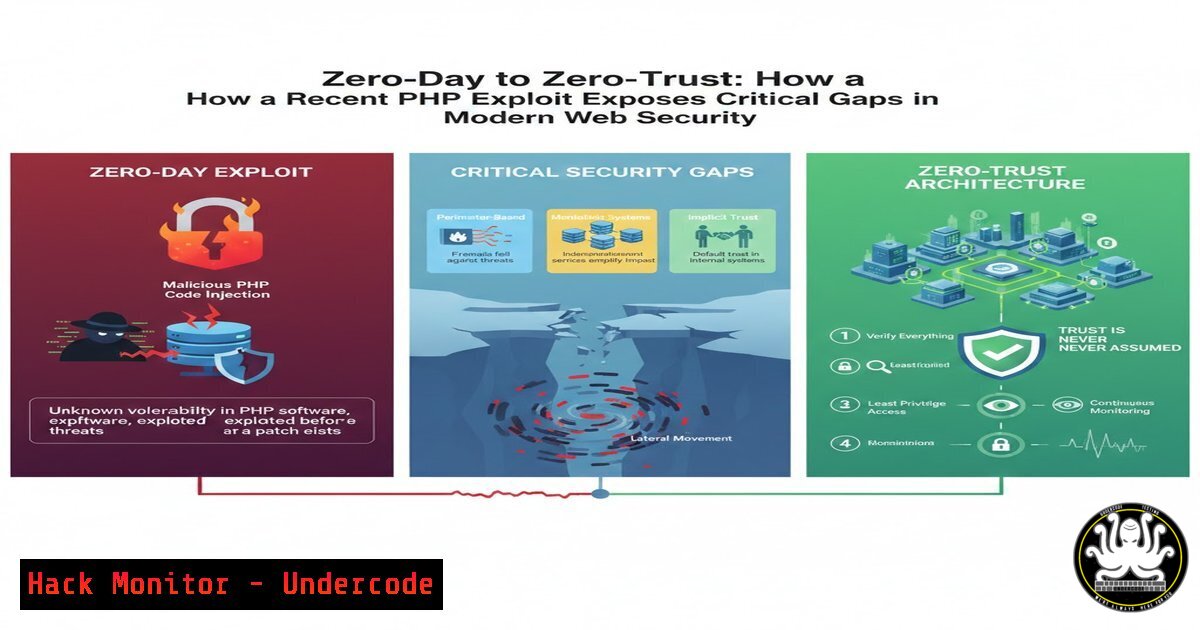
Introduction:
A recent critical vulnerability in PHP, tracked as CVE-2024-4577, has sent shockwaves through the web application security landscape. This exploit, stemming from a flaw in how PHP-CGI handles character encoding, allows attackers to bypass previous security measures and execute arbitrary code on vulnerable servers. This incident serves as a stark reminder that foundational web technologies remain prime targets and that a reactive security posture is insufficient in the face of sophisticated attacks.
Learning Objectives:
- Understand the technical mechanism behind the CVE-2024-4577 PHP Argument Injection vulnerability.
- Learn immediate mitigation steps for both Linux (Apache/mod_cgi) and Windows (XAMPP) environments.
- Develop a proactive strategy incorporating code analysis, WAF rules, and Zero-Trust principles to prevent similar exploits.
You Should Know:
- The Anatomy of the Exploit: From Encoding to Execution
This vulnerability is a bypass of a previous critical PHP flaw, CVE-2012-1823. In PHP-CGI mode, query string arguments are passed to the PHP interpreter. The exploit leverages special character encoding (notably from Windows-1252/936/950 for Chinese and Japanese locales) to bypass the filter put in place to patch the older vulnerability. When a string like `%AD` or `+` is interpreted, it can allow an attacker to inject additional command-line arguments (e.g.,-d allow_url_include=1 -d auto_prepend_file=php://input) to the PHP process, leading to remote code execution.
Step‑by‑step guide explaining what this does and how to use it.
Step 1: Attacker Reconnaissance: An attacker scans for servers running PHP in CGI mode (common in shared hosting or specific configurations like Apache with `mod_cgi` or Windows XAMPP).
Step 2: Crafting the Malicious Request: The attacker crafts an HTTP request to a `.php` file with a specially encoded query string. For example: `http://target.site/test.php?%AD’+-d+allow_url_include%3D1+-d+auto_prepend_file%3Dphp://input`
Step 3: Bypass and Injection: The PHP-CGI interpreter, due to the encoding flaw, misinterprets the query string. It doesn’t see the `%AD’` as part of the argument value but parses the subsequent `-d` as a new, malicious command-line directive for the PHP interpreter.
Step 4: Code Execution: The `auto_prepend_file=php://input` directive tells PHP to include and execute the raw POST data of the same request as PHP code, giving the attacker full shell access on the server.
2. Immediate Mitigation: Patching and Configuration Hardening
The primary mitigation is to upgrade PHP immediately to versions 8.1.29, 8.2.20, or 8.3.8. However, system hardening is required while patches are rolled out.
Step‑by‑step guide explaining what this does and how to use it.
For Linux/Apache Systems:
Step 1: Check your PHP version: `php -v`
Step 2: Upgrade using your package manager:
sudo apt update && sudo apt upgrade php8.3 Example for Debian/Ubuntu
Step 3: If you must use PHP-CGI, consider disabling it in Apache by moving or renaming the CGI module: `sudo a2dismod cgi`
Step 4: Implement a Web Application Firewall (WAF) rule to block requests containing suspicious PHP command-line arguments (-d, -s).
For Windows/XAMPP Systems:
Step 1: Download the latest PHP version from windows.php.net.
Step 2: Stop all XAMPP services via the Control Panel.
Step 3: Replace the `\xampp\php\` directory contents with the new version.
Step 4: Crucial Hardening: Modify \xampp\apache\conf\extra\httpd-xampp.conf. Find the `ScriptAlias /php-cgi/ "C:/xampp/php/". This disables the direct CGI execution path.
3. Proactive Defense: Implementing Application Allow-Listing with ModSecurity
Relying solely on patches is risky. Implement a positive security model using a WAF like ModSecurity to block malicious argument injections.
Step‑by‑step guide explaining what this does and how to use it.
Step 1: Ensure ModSecurity is installed and enabled on your web server.
Step 2: Create a custom rule set (php-cgi-mitigation.conf) that inspects query strings.
Step 3: Implement a rule to block requests where the query string contains PHP command-line options. Example OWASP CRS-style rule:
SecRule ARGS_GET "@rx (-d|-s|-a) [^\s]" \
"id:1000,\
phase:2,\
deny,\
status:403,\
msg:'PHP Argument Injection Attempt Detected',\
logdata:'Matched %{MATCHED_VAR}'"
Step 4: Reload Apache configuration: `sudo systemctl reload apache2`
4. Detection and Response: Hunting for Exploitation Attempts in Logs
You must know how to identify attack attempts in your server logs for incident response and forensics.
Step‑by‑step guide explaining what this does and how to use it.
Step 1: Locate your Apache/Nginx access logs (e.g., /var/log/apache2/access.log).
Step 2: Use `grep` to search for tell-tale signs of the exploit pattern in the query string (QUERY_STRING):
sudo grep -E "(%AD|%8D|%AF|%8F|auto_prepend_file|allow_url_include)" /var/log/apache2/access.log
Step 3: For a more comprehensive hunt, parse logs for unusual `-d` parameter appearances in URLs, which are highly anomalous in normal traffic.
Step 4: If you find hits, correlate with error logs (error.log) to see if code execution was attempted and immediately scope potential compromise.
- The Long Game: Shifting from Perimeter Security to Zero-Trust for Apps
This exploit bypassed network perimeters and targeted the application directly. A Zero-Trust architecture for applications assumes breach and verifies every request.
Step‑by‑step guide explaining what this does and how to use it.
Step 1: Micro-Segmentation: Isolate your web servers in their own network segment, restricting inbound traffic to only ports 80/443 and outbound traffic only to necessary services (DB, API).
Step 2: Runtime Application Self-Protection (RASP): Deploy agents or modules within your PHP runtime that can monitor and block malicious input inside the application, where the WAF’s view ends. Tools like OpenRASP can be integrated.
Step 3: Strict Input Validation: Implement schema validation for all inputs (GET, POST, Headers) at the application level before business logic processes them. Reject anything that doesn’t conform.
Step 4: Least-Privilege Execution: Ensure the PHP process (www-data, apache) runs with the absolute minimum OS privileges, incapable of writing to web directories or accessing sensitive files.
What Undercode Say:
- Foundational Tech is Foundational Risk. The most widespread, legacy-ridden technologies (PHP, Windows) are the most attractive targets due to their massive attack surface and complex backward compatibility requirements. Security debt here is catastrophic.
- Encoding is the New Obfuscation. Attackers are increasingly leveraging deep knowledge of character encoding, Unicode, and parser inconsistencies to bypass signature-based defenses. Security tools must decode and normalize data in the same way the target application does.
- Analysis: The CVE-2024-4577 exploit is not just another bug; it’s a masterclass in exploit evolution. It highlights how a “patched” vulnerability can resurface years later through a different vector, challenging the notion of a permanent fix. The Windows locale-specific trigger reveals the extreme depth of research undertaken by attackers, targeting edge-case dependencies. This forces a paradigm shift from “patch and forget” to “assume and verify.” Organizations must now implement defense-in-depth that includes semantic-aware WAFs, rigorous input hygiene, and runtime protection, treating every single HTTP transaction as potentially hostile, regardless of its origin. The patch closes a door, but the strategy must be to reinforce the entire wall.
Prediction:
The success of CVE-2024-4577 will catalyze a new wave of research into “parser confusion” attacks across all interpreter-based technologies (e.g., Python, Node.js, Tomcat). We will see a rise in exploits that abuse the gap between how security devices decode traffic and how the target application runtime interprets it. This will accelerate the adoption of behavioral and AI-powered WAFs that can model normal application behavior rather than just match static signatures. Furthermore, it will push the industry towards memory-safe languages and more sandboxed execution environments for legacy scripting languages, making remote code execution significantly harder to achieve. The “soft underbelly” of global web infrastructure remains these ubiquitous, decades-old technologies, and the arms race to defend them is entering its most critical phase.
▶️ Related Video (78% Match):
🎯Let’s Practice For Free:
IT/Security Reporter URL:
Reported By: Evankirstel We – Hackers Feeds
Extra Hub: Undercode MoN
Basic Verification: Pass ✅


