Listen to this Post
Introduction:
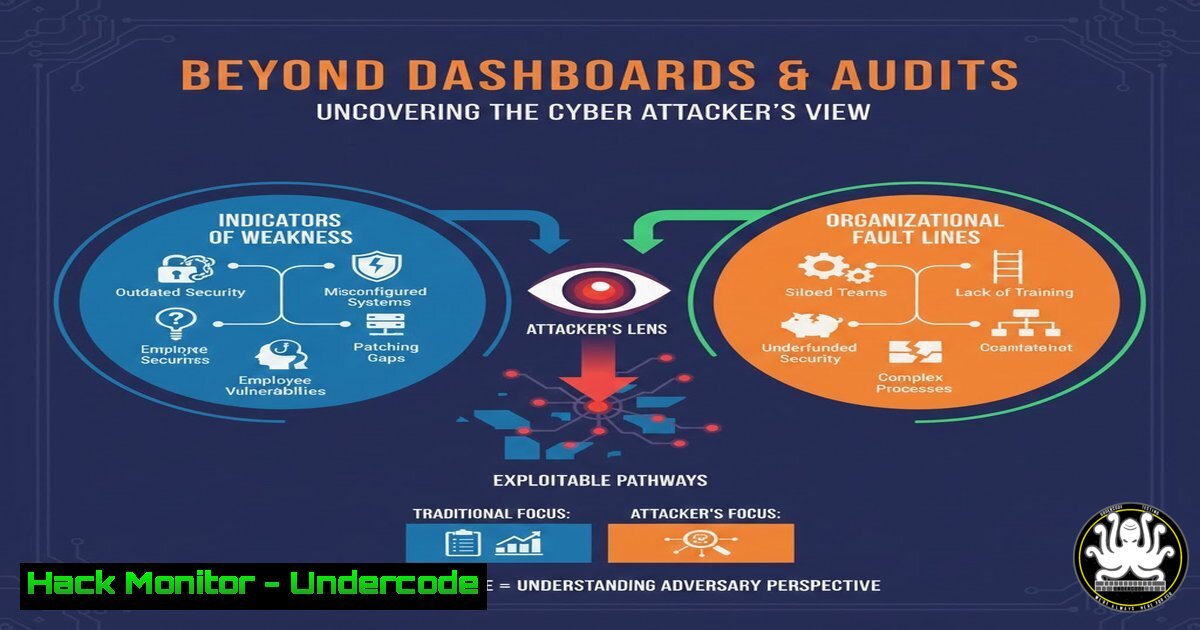
In cybersecurity, the most significant failures often occur not from a lack of technology but from a systemic inability to perceive and interpret subtle, early-warning signals. Drawing a powerful analogy from marathon running, cybersecurity leadership is about sensing the “ragged breathing” and “slapping pavement” of an organization under pressure—signals that sophisticated attackers actively probe for and exploit. This article shifts the focus from compliance checklists to the critical concepts of Indicators of Weakness (IoWs) and organizational Fault Lines, providing a framework for leaders to audit their security posture through an adversary’s lens.
Learning Objectives:
- Understand the concepts of Indicators of Weakness (IoWs) and Fault Lines as components of an organization’s security DNA.
- Learn practical methods to actively probe for and identify these weaknesses within your own IT and governance structures.
- Implement technical and procedural controls to harden systems against the quiet, probing attacks that target these vulnerabilities.
You Should Know:
1. Identifying Your Organization’s Cybersecurity “Breathing Patterns”
The core premise is that organizations, like athletes, exhibit signals of fatigue and stress long before a catastrophic failure. In technical terms, these are Indicators of Weakness (IoWs). Unlike Indicators of Compromise (IoCs), which are forensic and reactive, IoWs are proactive, systemic signs of fragility. They manifest in outdated system inventories, delayed patch cycles, excessive privileged account usage, and vague, un-actionable risk reports.
Step‑by‑step guide explaining what this does and how to use it:
Step 1: Audit Authentication & Authorization “Noise.” Attackers listen for inconsistent access patterns. Use command-line tools to baseline normal behavior and spot anomalies.
On Linux: Analyze secure logs for failed SSH attempts and sudo commands: grep "Failed password\|sudo" /var/log/auth.log | tail -50. Use `lastb` to see all bad login attempts.
On Windows (PowerShell): Review recent security event logs for logon failures: Get-WinEvent -FilterHashtable @{LogName='Security'; ID=4625} -MaxEvents 20 | Format-List -Property TimeCreated, Message.
Step 2: Map Network Service “Footfalls.” Probes often target forgotten or misconfigured services. Regularly map what is exposed.
Use `nmap` from both inside and outside perspectives: nmap -sV -O --top-ports 100 <target_network_range>. Compare results over time; unexpected new open ports are a major IoW.
Step 3: Automate IoW Detection Scripts. Create a simple Python script to aggregate these signals. For example, a script that checks for user accounts with passwords that never expire (a critical IoW) can be run periodically.
 Example for Linux (checks /etc/shadow for password aging)
import spwd, datetime
for entry in spwd.getspall():
last_change = entry.sp_lstchg
if last_change == 0 or last_change > 99999:  0 or very high number means no expiry
print(f"IoW Detected: User '{entry.sp_nam}' has no password expiration.")
- Mapping Structural “Fault Lines” in Governance and IT
IoWs point to deeper Fault Lines—structural cracks in governance, culture, and resource allocation. A common Fault Line is the disconnect between a “passing” audit score and the operational security reality. This includes shadow IT, lack of security champion roles in dev teams, and risk registers that never lead to concrete remediation actions.
Step‑by‑step guide explaining what this does and how to use it:
Step 1: Conduct a “Fault Line” Interview. Move beyond technical scans. Interview teams with probing questions: “What security task do you consistently deprioritize and why?” or “Which security policy is most often bypassed to meet a business deadline?” The answers reveal cultural and procedural cracks.
Step 2: Perform a Cloud Configuration War-Game. A major Fault Line is misconfigured cloud storage (S3 buckets, Blob containers). Use offensive security tools defensively to find your own exposures.
Tool: CloudScraper / ScoutSuite. Run an automated audit of your AWS, Azure, or GCP environment: python3 scout.py --provider aws --report-dir ./report. Analyze the report for publicly accessible storage, over-permissive IAM roles, and unencrypted databases.
Step 3: Analyze Vulnerability Management Lifecycle. The time gap between a patch release and its deployment is a measurable Fault Line. Use your vulnerability scanner’s API to generate metrics.
Example using Nuclei & Custom Script: nuclei -u <target> -t cves/ -severity critical,high -o vulns.json. Then, write a script to track the age of each finding. Findings older than your SLA (e.g., 30 days) indicate a resource or process Fault Line.
3. Simulating Attacker “Probing Efforts” with Ethical Hacking
To truly see what attackers see, you must adopt their methodology of quiet probing. This involves low-and-slow reconnaissance, feints, and testing for reactions.
Step‑by‑step guide explaining what this does and how to use it:
Step 1: Passive Subdomain Enumeration. Discover the forgotten, unmanaged assets that are prime attack surfaces.
Use `amass` in passive mode: amass enum -passive -d yourcompany.com -o subdomains.txt.
Cross-reference with certificate transparency logs: curl -s "https://crt.sh/?q=%.yourcompany.com&output=json" | jq -r '.[].name_value' | sort -u.
Step 2: Probing for Internal Network Weaknesses (Lateral Movement). Simulate an attacker who has a foothold on a standard user workstation.
Command: BloodHound Ingestor. Run SharpHound on a test Windows system to map privilege escalation paths: Sharphound.exe -c All. Import the data into the BloodHound GUI to visually identify critical Fault Lines like “Users who can edit Domain Admins groups.”
Step 3: API Security Probing. Modern applications’ APIs are a rich source of IoWs. Use tools to fuzz and test them.
Tool: OWASP Amass (for API endpoints) & FFuf. Discover and fuzz endpoints: ffuf -w common-api-paths.txt -u https://api.yourcompany.com/FUZZ -mc 200 -H "Authorization: Bearer <test_token>".
- From Signal to Action: Building a “Signal-Driven” Security Program
Detecting IoWs is futile without a process to act on them. This requires integrating weak signals into risk management and breaking down organizational silos between SOC, IT, and business leadership.
Step‑by‑step guide explaining what this does and how to use it:
Step 1: Establish an IoW Registry. Create a simple Kanban board or SIEM dashboard dedicated to IoWs, not just incidents. Categorize them: Technical Debt, Process Gap, Cultural Blindspot.
Step 2: Implement Continuous Configuration Enforcement. Use Infrastructure as Code (IaC) security scanners to prevent Fault Lines from being coded into existence.
For Terraform: Use `checkov` or `tfsec` in your CI/CD pipeline: checkov -d /path/to/terraform/code.
For Kubernetes: Use `kube-bench` to check for CIS compliance: kube-bench --json | jq '.Totals.total_fail'.
Step 3: Create Red Team Feedback Loops. Ensure every red team or penetration test report explicitly maps findings back to underlying IoWs and Fault Lines. The question should not just be “Can you exploit this?” but “What weakness did you sense that made you look here?”
- Cultivating the Experienced “Runner’s” Mindset in Your Team
The final layer is developing the intuitive, experienced judgment to sense drift. This comes from cross-training and immersive simulations.
Step‑by‑step guide explaining what this does and how to use it:
Step 1: Conduct “Signal Sensing” Tabletop Exercises. Run scenarios focused on ambiguous early warnings. Present teams with a slight increase in failed logins from a strange region, coupled with a minor but odd configuration change in a developer’s commit log. Discuss the investigative steps before declaring an incident.
Step 2: Implement Cross-Functional Rotations. Have network engineers spend time with the SOC analysts, and have developers participate in threat modeling sessions. This builds a shared sense of the organization’s “cadence.”
Step 3: Leverage Threat Intelligence Proactively. Don’t just ingest IoC feeds. Use platforms like MISP to track adversary Tactics, Techniques, and Procedures (TTPs) that align with your identified Fault Lines. Ask: “Which threat actor groups are known for quietly probing for the specific weaknesses we have?”
What Undercode Say:
- Compliance is a Snapshot, Security is a Video. Passing an audit or earning a certification is a single frame in a continuous movie. Attackers watch the entire film, looking for the moments where vigilance lapses between audit cycles. True resilience is measured in the constant, disciplined interpretation of weak signals.
- The Most Dangerous Vulnerability is Organizational Self-Deception. The belief that “because we passed, we are safe” is the ultimate Fault Line. It leads to normalizing deviations, ignoring IoWs, and creating a culture where inconvenient truths are suppressed until they are exploited by an adversary.
Analysis: The post’s marathon analogy brilliantly encapsulates the modern cybersecurity challenge. The technical battlefield has expanded into the psychological and organizational realm. Today’s defenders must master not only firewalls and EDR but also the art of perceiving systemic drift. The frameworks of IoWs and Fault Lines provide a crucial lexicon for translating intuition into actionable data. Investing in tools and processes that continuously hunt for these signals—from misconfigured cloud permissions to toxic Active Directory chains—is no longer optional. It is the core differentiator between organizations that are genuinely secure and those that are merely confident until the “black snow” of a breach makes their weaknesses undeniably clear.
Prediction:
The future of cybersecurity leadership will hinge on Organizational Cyber Kinesthetics—the developed sense of feeling how the enterprise moves and reacts under pressure, much like an athlete feels their own body. We will see the rise of C-suite roles like the Chief Resilience Officer, whose primary tool won’t be a dashboard but a framework for interpreting weak signals. AI will be leveraged not just for threat detection, but to model organizational Fault Lines by analyzing communication patterns, decision latency, and resource allocation data. The organizations that survive the next decade’s attacks will be those that learn to listen to their own “ragged breathing” and act before the attacker does.
▶️ Related Video (74% Match):
🎯Let’s Practice For Free:
IT/Security Reporter URL:
Reported By: Johndmackenzie Blacksnow – Hackers Feeds
Extra Hub: Undercode MoN
Basic Verification: Pass ✅


