Listen to this Post
Introduction:
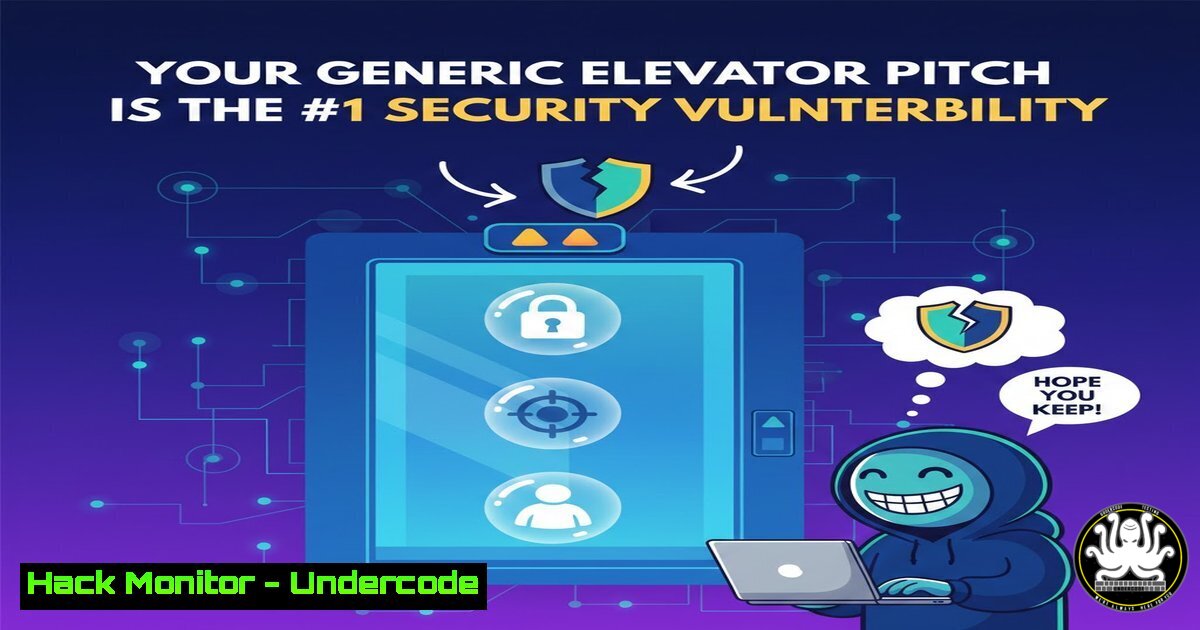
In the cybersecurity landscape, the most significant threats often stem from internal inconsistencies rather than external exploits. A disjointed organizational message, especially regarding security posture and protocols, creates exploitable gaps in human and technical defenses. This article explores how unifying your company’s voice is not merely a branding exercise but a critical pillar of IT security, threat mitigation, and operational resilience.
Learning Objectives:
- Understand how inconsistent external and internal messaging creates security blind spots and social engineering opportunities.
- Learn to implement technical controls and monitoring to enforce policy awareness and compliance across all organizational levels.
- Develop a framework for continuous security communication training, simulating real-world phishing and pretexting scenarios.
You Should Know:
1. Human Error: The Primary Attack Vector
A confused team member is a vulnerable one. When employees give varying descriptions of the company’s work, especially to unsolicited inquiries, they inadvertently leak information that can be weaponized. An attacker can piece together these disparate answers to map internal structure, identify key projects (like a new AI platform), or spot which departments are less security-aware.
Step‑by‑step guide explaining what this does and how to use it.
Step 1: Conduct a Security Messaging Audit. Anonymously survey or interview staff from different departments with a simple question: “What does our company do, and what are our core security practices for client data?” Analyze the responses for inconsistencies.
Step 2: Establish a Single Source of Truth. Create a secure, internal-only wiki page (e.g., using BookStack or a hardened Confluence instance) that defines approved external messaging and basic security posture statements. This is your “elevator pitch” bible.
Step 3: Technical Enforcement of Access. Ensure this resource is accessible only via the corporate VPN or on the internal network. Use group policies (GPO) or configuration management to bookmark it on all workstations.
Linux/Mac (Example): Deploy a managed bookmark via a configuration management tool like Ansible.
 Ansible task snippet to deploy a Chrome policy file
- name: Deploy secure internal messaging guide bookmark
copy:
content: |
{
"BookmarkBar": {
"Children": [{
"Guid": "xyz123",
"Name": "SECURE: Company Messaging Guide",
"Url": "https://internalwiki.yourcompany.com/security-messaging"
}]
}
}
dest: /etc/opt/chrome/policies/managed/internal_bookmarks.json
Windows: Deploy via Group Policy Administrative Templates for Chrome or Edge.
2. Enforcing Unified Security Policies
Consistent messaging must extend to security policies. If the SOC team follows strict password protocols while the sales team uses shared credentials for a demo environment, you have a critical vulnerability. Uniformity is key.
Step‑by‑step guide explaining what this does and how to use it.
Step 1: Policy as Code. Define security baselines (e.g., CIS Benchmarks) using code. Tools like HashiCorp Sentinel, Terraform, or AWS SSM can enforce that every deployed resource, from cloud VMs to SaaS accounts, complies with the same standard.
Step 2: Implement Just-In-Time Access. Use a Privileged Access Management (PAM) solution like CyberArk or BeyondTrust. No employee has standing access to critical systems; they must request it with an approved business reason, aligning all access narratives.
Step 3: Automated Compliance Scanning. Use tools like Nessus, OpenSCAP, or AWS Config to continuously scan for deviations from your hardened images and configurations.
 Example using OpenSCAP on Linux to evaluate against a unified policy
sudo oscap xccdf eval --profile stig --results scan-results.xml --report report.html /usr/share/xml/scap/ssg/content/ssg-rhel8-ds.xml
3. Monitoring for Policy Deviations
You cannot manage what you cannot measure. Monitoring how systems and people deviate from policy is essential. This includes monitoring for data exfiltration attempts that might follow a successful social engineering attack gleaned from inconsistent info.
Step‑by‑step guide explaining what this does and how to use it.
Step 1: Centralized Logging. Aggregate logs from all endpoints, network devices, and cloud services into a SIEM like Splunk, Elastic Stack, or Microsoft Sentinel.
Step 2: Create Detection Rules. Build alerts for actions that contradict policy, such as a developer accessing a production database from an unusual location or time.
Example Sigma Rule (for SIEMs): Detecting unauthorized cloud storage access.
title: Unauthorized S3 Bucket Access Attempt
logsource:
product: aws
service: cloudtrail
detection:
selection:
eventSource: s3.amazonaws.com
eventName: GetObject
errorCode: AccessDenied
condition: selection
Step 3: Regular Audit Reviews. Schedule weekly reviews of privileged access logs and failed authentication attempts, correlating them with help desk tickets for legitimate access issues.
4. Simulating Social Engineering Attacks
Test your unified front. Phishing simulations should not just be generic; they should be tailored using information that could be gathered from the very inconsistencies your training aims to fix.
Step‑by‑step guide explaining what this does and how to use it.
Step 1: Reconnaissance. Use OSINT tools (theharvester, Maltego) to simulate an attacker gathering public employee info from LinkedIn and company press releases.
Step 2: Craft Targeted Campaigns. Using a platform like GoPhish or KnowBe4, create phishing emails that reference specific projects or departments mentioned inconsistently in your initial audit.
Step 3: Measure and Educate. Track click-through rates. For employees who fail the test, mandate interactive, role-specific training modules rather than generic videos.
5. Securing Internal Communication Channels
The “one pitch” philosophy requires secure channels for that pitch to be disseminated and discussed. Leaked internal comms are a goldmine for crafting advanced attacks.
Step‑by‑step guide explaining what this does and how to use it.
Step 1: Mandate Encryption. Enforce TLS 1.3 for all internal web services. For chat platforms like Slack or Microsoft Teams, ensure Enterprise Key Management (EKM) is configured for maximum control.
Step 2: Implement Data Loss Prevention (DLP). Configure DLP rules on email and chat to prevent the sharing of sensitive code, credentials, or architectural diagrams—even internally, unless explicitly authorized.
Microsoft Purview DLP Policy (Conceptual): Create a rule to detect and block source code shared in Teams chats unless between members of the “Development” group.
Step 3: Segment Network Traffic. Use network segmentation (VLANS, NSGs, NAC) to ensure that even if a device in the sales VLAN is compromised, it cannot directly reach R&D or SOC systems.
6. Automating Security Awareness Training
Training must be as consistent and pervasive as the message. Automate enrollment and tracking to ensure no one, from intern to MD, is missed.
Step‑by‑step guide explaining what this does and how to use it.
Step 1: Integrate with HR Systems. Use the HRIS (e.g., Workday, BambooHR) API to automatically enroll new hires in security training on their first day and assign annual refresher courses.
 Pseudo-code for API-driven training enrollment
import requests
 Webhook from HRIS triggers on new_hire event
new_hire_data = get_webhook_payload()
training_platform_api.enroll_user(
user_email=new_hire_data['email'],
course_id="sec-101-unified-security-posture",
department=new_hire_data['department']  For role-specific modules
)
Step 2: Gamify Compliance. Use platforms that offer points, leaderboards, and positive reinforcement for completing training and reporting phishing tests.
Step 3: Mandate for Third-Parties. Require contractors and vendors with network access to complete the same core awareness modules, ensuring your security message permeates your entire ecosystem.
7. Continuous Improvement through Feedback Loops
Security and messaging are not “set and forget.” Establish channels for employees to report suspicious incidents, ambiguities in policy, or suggestions for improving the clarity of security directives.
Step‑by‑step guide explaining what this does and how to use it.
Step 1: Create an Anonymous Reporting Portal. A simple, secure web form protected by a CAPTCHA, logging only to a restricted SIEM mailbox.
Step 2: Regular Tabletop Exercises. Quarterly, run incident response scenarios that involve a breach originating from a social engineering attack. Debrief focusing on communication clarity and chain of command.
Step 3: Update the “Pitch”. Based on feedback and exercise outcomes, formally revise and re-distribute your security messaging guide and incident response playbooks. Version these documents and track acknowledgment.
What Undercode Say:
- A Unified Front is a Hardened Front: Inconsistency in how your company presents itself is not a soft skills problem; it is a direct technical vulnerability. It provides the narrative fodder for highly targeted, low-cost social engineering attacks that bypass millions in security tech.
- Culture as Code: Your security culture must be codified, enforceable, and measurable with the same rigor as your application infrastructure. The “human firewall” is only effective if every node runs the same, updated security protocol.
The analysis of the original post reveals a profound truth often missed by technical teams: operational security begins with operational clarity. A company that cannot concisely and uniformly articulate what it does and stands for is a company with inherent weaknesses in process, training, and internal communication—weaknesses that are trivial and inexpensive for adversaries to probe and exploit. The comment, “most cyber damage comes from simple mistakes, not smart hackers,” underscores this. Those “simple mistakes” are frequently born from ambiguity and a lack of drilled, universal understanding.
Prediction:
The future of offensive cybersecurity will see a surge in AI-driven social engineering, where Large Language Models (LLMs) scrape fragmented public and leaked internal data to generate hyper-personalized, context-aware phishing lures at scale. Organizations that fail to unify and control their internal and external narratives will be the first and easiest targets. Conversely, companies that implement the technical and cultural controls to enforce a single, clear “pitch” will find their human layer transformed from the weakest link into a coherent, monitored, and resilient defensive asset. The convergence of brand strategy and cybersecurity strategy will become a standard board-level discussion.
▶️ Related Video (82% Match):
🎯Let’s Practice For Free:
IT/Security Reporter URL:
Reported By: Rajeevmamidanna What – Hackers Feeds
Extra Hub: Undercode MoN
Basic Verification: Pass ✅


