Listen to this Post
Introduction:
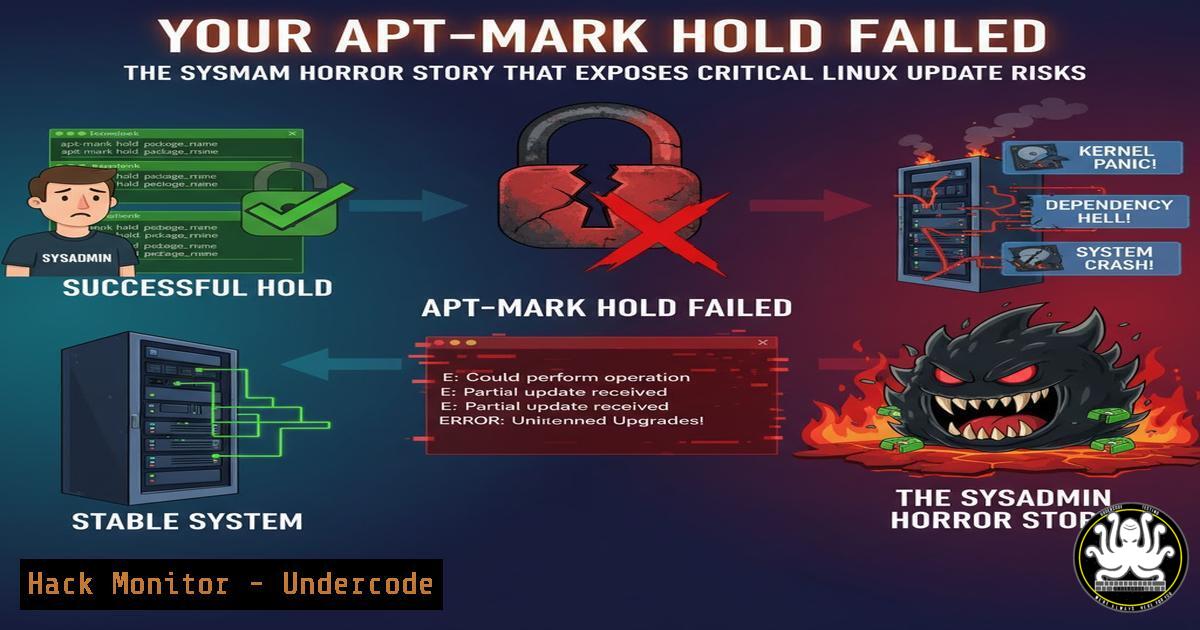
A routine Linux server update nearly escalated into a catastrophic system failure for a security engineer when critical SIEM components updated despite explicit hold commands. This incident exposes the hidden dangers in package management systems and underscores why robust change control is non-negotiable in security infrastructure management.
Learning Objectives:
- Understand why apt-mark hold commands can fail and how to implement redundant protection
- Master proper Wazuh SIEM upgrade procedures to prevent production outages
- Implement comprehensive snapshot and recovery strategies for critical security infrastructure
You Should Know:
1. The Hidden Dangers of Package Management Systems
The core incident involved `apt-mark hold` commands failing to prevent Wazuh and Filebeat packages from updating during a routine `apt upgrade` operation. Package holds are designed to prevent automatic updates but can be circumvented by dependency chains, forced upgrade commands, or repository conflicts.
Step-by-step guide to verify and implement package holds:
 Place holds on critical packages
sudo apt-mark hold wazuh-manager wazuh-indexer wazuh-dashboard filebeat

Verify current holds
apt-mark showhold

Check what packages would be updated
apt list --upgradable

Simulate upgrade without applying changes
apt upgrade -s
Always combine package holds with explicit exclusion in apt commands:
sudo apt-mark unhold package-name
sudo apt upgrade -s | grep -i wazuh
2. Proper Wazuh SIEM Upgrade Methodology
Wazuh upgrades require meticulous multi-stage processes involving index management, API authentication, and configuration backups. Rushing this process can break dashboards, disrupt agent communications, and corrupt security data.
Step-by-step upgrade preparation:
 1. Backup critical configuration files
sudo tar -czf /opt/backups/wazuh_config_backup_$(date +%Y%m%d).tar.gz /etc/wazuh

<ol>
<li>Check current Wazuh component versions
sudo systemctl status wazuh-manager
sudo /usr/share/wazuh-indexer/bin/opensearch-version</p></li>
<li><p>Document API credentials
sudo grep -r "password" /etc/wazuh-indexer/opensearch-security/</p></li>
<li><p>Stop services in correct order
sudo systemctl stop wazuh-dashboard
sudo systemctl stop wazuh-indexer
sudo systemctl stop wazuh-manager
3. Implementing Redundant Update Protection
Single-layer protection mechanisms frequently fail. Enterprise environments require defense-in-depth approaches to update management.
Step-by-step multi-layer protection:
 Layer 1: Package holds
sudo apt-mark hold wazuh-

Layer 2: Pinning in apt preferences
sudo nano /etc/apt/preferences.d/wazuh-pin

Add contents:
Package: wazuh-
Pin: version
Pin-Priority: -1

Layer 3: Repository exclusion
sudo sed -i 's/^deb/deb/g' /etc/apt/sources.list.d/wazuh.list

Layer 4: Dry-run verification
sudo apt update && sudo apt upgrade -s
4. Automated Snapshot Strategies for Security Infrastructure
The engineer’s salvation was a recent snapshot. Regular, automated snapshots are crucial for SIEM systems where data integrity is paramount.
Step-by-step snapshot configuration:
 For LVM systems - create snapshot
sudo lvcreate --size 10G --snapshot --name wazuh-snap /dev/ubuntu/root

For virtualized environments - script automated snapshots
!/bin/bash
TIMESTAMP=$(date +%Y%m%d_%H%M%S)
SNAPSHOT_NAME="siem_backup_$TIMESTAMP"

VMware example using govc
govc snapshot.create -vm SIEM-PROD $SNAPSHOT_NAME

Cleanup old snapshots (keep last 7 days)
govc snapshot.tree -vm SIEM-PROD -D -i | head -n -7 | xargs -r govc snapshot.remove
5. Emergency Recovery Procedures for Broken Upgrades
When upgrades fail, having documented recovery procedures prevents panic-induced mistakes.
Step-by-step recovery execution:
 1. Immediate service status assessment
sudo systemctl list-units --failed
journalctl -u wazuh-manager -f

<ol>
<li>Rollback using package cache
sudo apt-cache policy wazuh-manager
sudo apt install wazuh-manager=4.7.2-1 --allow-downgrades</p></li>
<li><p>Configuration restoration
sudo tar -xzf /opt/backups/wazuh_config_backup_20240501.tar.gz -C /</p></li>
<li><p>Index integrity verification
curl -XGET "https://localhost:9200/_cat/indices?v" -u admin:password -k
6. Monitoring Post-Upgrade Service Health
After any update, comprehensive health checks must verify all SIEM components are functioning correctly.
Step-by-step health validation:
 Wazuh manager integrity check
sudo /var/ossec/bin/wazuh-control status

Indexer cluster health
curl -XGET "https://localhost:9200/_cluster/health?pretty" -u admin:password -k

Dashboard accessibility
curl -f https://localhost:5601 || echo "Dashboard unavailable"

Agent connection verification
grep "New connection" /var/ossec/logs/ossec.log | tail -10
7. Change Control Documentation for Security Operations
Formal change control processes prevent unauthorized modifications to critical security infrastructure.
Step-by-step change implementation:
 Pre-change checklist script
!/bin/bash
echo "=== SIEM UPDATE CHECKLIST ==="
echo "1. Change ticket created and approved: [Y/N]"
echo "2. Business hours maintenance window: [Y/N]"
echo "3. Configuration backups completed: [Y/N]"
echo "4. Snapshots verified: [Y/N]"
echo "5. Rollback procedure documented: [Y/N]"

Log all change activities
echo "$(date): Update initiated by $(whoami)" >> /var/log/siem_changes.log
What Undercode Say:
- Never trust single-layer protection mechanisms in production environments – implement redundant controls
- SIEM systems require specialized upgrade procedures that differ significantly from standard package management
- The gap between perceived protection (apt-mark hold) and actual system behavior represents a critical operational risk
The incident reveals fundamental flaws in how organizations manage security infrastructure updates. Package management systems were designed for convenience, not for protecting business-critical security monitoring systems. The assumption that `apt-mark hold` provides absolute protection creates a false sense of security that can lead to catastrophic outages. Organizations must implement defense-in-depth strategies combining technical controls, procedural safeguards, and comprehensive recovery capabilities.
Prediction:
This incident foreshadows increasing operational risks as security infrastructure becomes more complex and interconnected. Future attacks may deliberately exploit update mechanisms and dependency conflicts to disrupt security monitoring capabilities, creating windows of opportunity for broader network compromise. The cybersecurity industry will likely develop specialized package management solutions for security infrastructure that prioritize stability over currency, with blockchain-verified update integrity and mandatory rollback capabilities becoming standard enterprise requirements.
🎯Let’s Practice For Free:
IT/Security Reporter URL:
Reported By: Nir Roitman – Hackers Feeds
Extra Hub: Undercode MoN
Basic Verification: Pass ✅


