Listen to this Post
Introduction:
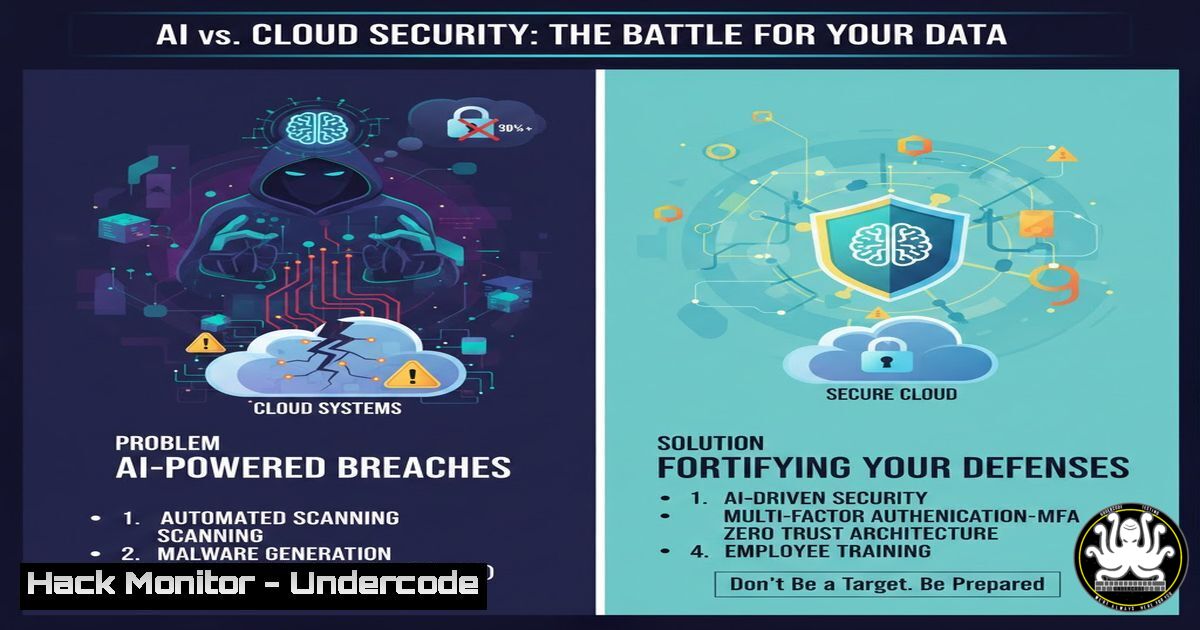
Artificial intelligence is revolutionizing cybersecurity, but malicious actors are exploiting AI to automate attacks, target cloud misconfigurations, and evade traditional defenses. This article breaks down the technical mechanics of these threats and provides hands-on guidance for IT professionals to fortify their infrastructure.
Learning Objectives:
- Identify common AI-driven attack vectors in cloud and API environments.
- Implement hardening measures for Linux and Windows servers against automated exploits.
- Deploy monitoring and mitigation strategies using open-source tools and best practices.
You Should Know:
1. AI-Powered Phishing and Social Engineering
Attackers now use generative AI to craft highly convincing phishing emails and fake training portals, often embedding malicious links. These campaigns target employees to steal credentials and deploy ransomware.
Step‑by‑step guide explaining what this does and how to use it:
– Step 1: Detection with Email Headers – On Linux, use tools like `grep` to analyze email headers for suspicious origins:
`grep -i “received\|from\|by” phishing_email.eml | head -5`
- Step 2: URL Extraction and Analysis – Extract URLs from emails using
python3:import re with open("email.txt", "r") as f: urls = re.findall(r'https?://\S+', f.read()) print(urls) - Step 3: Simulate Attacks with GPT-based Tools – Use open-source frameworks like `GPT-Phish` (hypothetical) to test awareness:
`git clone https://github.com/security-labs/gpt-phish-simulator.git``cd gpt-phish-simulator && python3 simulate_phish.py –target-company ExampleCorp`
- Step 4: Mitigation via Training – Enroll in courses like “AI Security Fundamentals” on platforms such as Coursera (https://www.coursera.org/learn/ai-security) and conduct regular drills.
2. Cloud Storage Misconfigurations and S3 Bucket Exploits
Misconfigured AWS S3 buckets or Azure Blob Storage are prime targets for AI-driven scanning tools that exfiltrate data. Attackers use scripts to find and access open buckets.
Step‑by‑step guide explaining what this does and how to use it:
– Step 1: Identify Misconfigurations – Use AWS CLI to check S3 bucket policies:
`aws s3api get-bucket-policy –bucket my-bucket-name –profile prod`
- Step 2: Harden Buckets – Apply a restrictive policy via JSON:
{ "Version": "2012-10-17", "Statement": [{ "Effect": "Deny", "Principal": "", "Action": "s3:", "Resource": "arn:aws:s3:::my-bucket-name/", "Condition": {"NotIpAddress": {"aws:SourceIp": ["192.0.2.0/24"]}} }] } - Step 3: Scan for Vulnerabilities – Use `s3scanner` (https://github.com/sa7mon/S3Scanner) on Linux:
`python3 s3scanner.py –bucket-list buckets.txt –out-file results.csv`
- Step 4: Monitor with CloudTrail – Enable logging and alert on unauthorized access:
`aws cloudtrail create-trail –name security-trail –s3-bucket-name my-log-bucket`
3. API Security: Exploiting Weak Authentication
AI bots can brute-force API keys or exploit insecure endpoints. Common issues include lack of rate limiting and token exposure in code repositories.
Step‑by‑step guide explaining what this does and how to use it:
– Step 1: Test API Endpoints – Use `curl` to check for weak authentication:
`curl -X GET https://api.example.com/data -H “Authorization: Bearer weaktoken” -v`
– Step 2: Implement Rate Limiting – On an NGINX server, add to /etc/nginx/nginx.conf:
limit_req_zone $binary_remote_addr zone=api:10m rate=10r/s;
location /api/ {
limit_req zone=api burst=20 nodelay;
}
– Step 3: Scan with OWASP ZAP – Launch ZAP from Kali Linux:
`docker run -v $(pwd):/zap/wrk -t owasp/zap2docker-stable zap-baseline.py -t https://api.example.com -g gen.conf`
– Step 4: Secure Keys with Vault – Use HashiCorp Vault to manage secrets:
`vault kv put secret/api-keys/prod key=xyz-encrypted-value`
4. Endpoint Hardening for Linux and Windows
AI-driven malware can bypass antivirus by morphing code. Hardening endpoints with EDR and system-level controls is critical.
Step‑by‑step guide explaining what this does and how to use it:
– Linux (Ubuntu/CentOS):
– Step 1: Disable Unused Services – `systemctl disable apache2` (if not needed).
– Step 2: Configure Firewall – Use ufw:
`ufw allow ssh && ufw enable`
- Step 3: Install and Configure Osquery – Monitor processes:
`osqueryi “SELECT FROM processes WHERE name LIKE ‘%malicious%’;”`
– Windows (PowerShell): - Step 1: Harden PowerShell Execution Policy – Run as Administrator:
`Set-ExecutionPolicy Restricted`
- Step 2: Enable Windows Defender ATP – Use Group Policy:
`gpedit.msc → Computer Configuration → Administrative Templates → Windows Components → Windows Defender Antivirus`
– Step 3: Deploy Sysmon for Logging – Download from https://docs.microsoft.com/en-us/sysinternals/downloads/sysmon and configure with SwiftOnSecurity XML.
5. AI Model Poisoning and Data Integrity Attacks
Attackers can corrupt AI training data to manipulate outcomes, affecting security tools like anomaly detectors.
Step‑by‑step guide explaining what this does and how to use it:
– Step 1: Detect Data Anomalies – Use Python with scikit-learn:
from sklearn.ensemble import IsolationForest
import pandas as pd
data = pd.read_csv('training_data.csv')
model = IsolationForest(contamination=0.1)
data['anomaly'] = model.fit_predict(data)
– Step 2: Secure Training Pipelines – Implement version control with DVC (https://dvc.org/):
`dvc init && dvc add data/training.csv`
- Step 3: Adversarial Testing – Use libraries like `ART` (Adversarial Robustness Toolbox):
`pip install adversarial-robustness-toolbox`
- Step 4: Enroll in Specialized Courses – Explore “AI Security” on edX (https://www.edx.org/professional-certificate/ai-security) for deep dives.
6. Incident Response and Automation with SOAR
Security Orchestration, Automation, and Response (SOAR) platforms use AI to triage alerts, but misconfigurations can lead to false negatives.
Step‑by‑step guide explaining what this does and how to use it:
– Step 1: Deploy TheHive and Cortex – Use Docker:
`docker run -d -p 9000:9000 thehiveproject/thehive:latest`
- Step 2: Create Playbooks – Automate phishing response with Python scripts that quarantine endpoints.
- Step 3: Integrate with SIEM – Forward logs from Splunk or Elasticsearch to SOAR for analysis.
- Step 4: Train with CyberRange Labs – Practice on platforms like RangeForce (https://www.rangeforce.com/).
7. Zero-Trust Architecture for Hybrid Clouds
Implement zero-trust principles to mitigate lateral movement by AI-powered bots, focusing on identity and device verification.
Step‑by‑step guide explaining what this does and how to use it:
– Step 1: Configure Identity-Aware Proxy (IAP) – In Google Cloud:
`gcloud compute firewall-rules create allow-iap –allow tcp:22 –source-ranges 35.235.240.0/20`
– Step 2: Enforce Device Compliance – With Intune for Windows:
PowerShell: `Get-MsolDevice -All | Where-Object { $_.TrustType -ne “ServerAD” }`
– Step 3: Micro-Segmentation with NSX – On VMware, create security groups to isolate workloads.
– Step 4: Continuous Verification – Use open-source tools like `SPIFFE/SPIRE` for service identity.
What Undercode Say:
- Key Takeaway 1: AI is a double-edged sword—while it enhances attack sophistication, it also empowers defense through automated threat detection and response. Organizations must invest in AI-aware security training and tools.
- Key Takeaway 2: Cloud and API security are paramount; misconfigurations remain the low-hanging fruit exploited by attackers. Regular auditing, hardening, and embracing zero-trust can significantly reduce risk.
Analysis: The convergence of AI and cybersecurity demands a proactive stance. As attackers leverage machine learning to optimize exploits, defenders must adopt similar technologies for penetration testing and monitoring. The technical guides above provide a foundation, but continuous learning via courses (e.g., SANS SEC541 for cloud) is essential. Future breaches will likely involve AI-augmented social engineering, making human factors as critical as technical controls.
Prediction:
In the next 2-3 years, AI-driven attacks will evolve to autonomously exploit zero-day vulnerabilities in real-time, targeting IoT and edge computing environments. This will lead to a surge in demand for AI-powered security operations centers (SOCs) and regulatory frameworks for AI ethics in cybersecurity. Organizations that fail to integrate AI into their defense strategies will face increased breach frequencies and financial losses.
🎯Let’s Practice For Free:
IT/Security Reporter URL:
Reported By: Withsandra Sprintopartner – Hackers Feeds
Extra Hub: Undercode MoN
Basic Verification: Pass ✅


