Listen to this Post
Introduction:
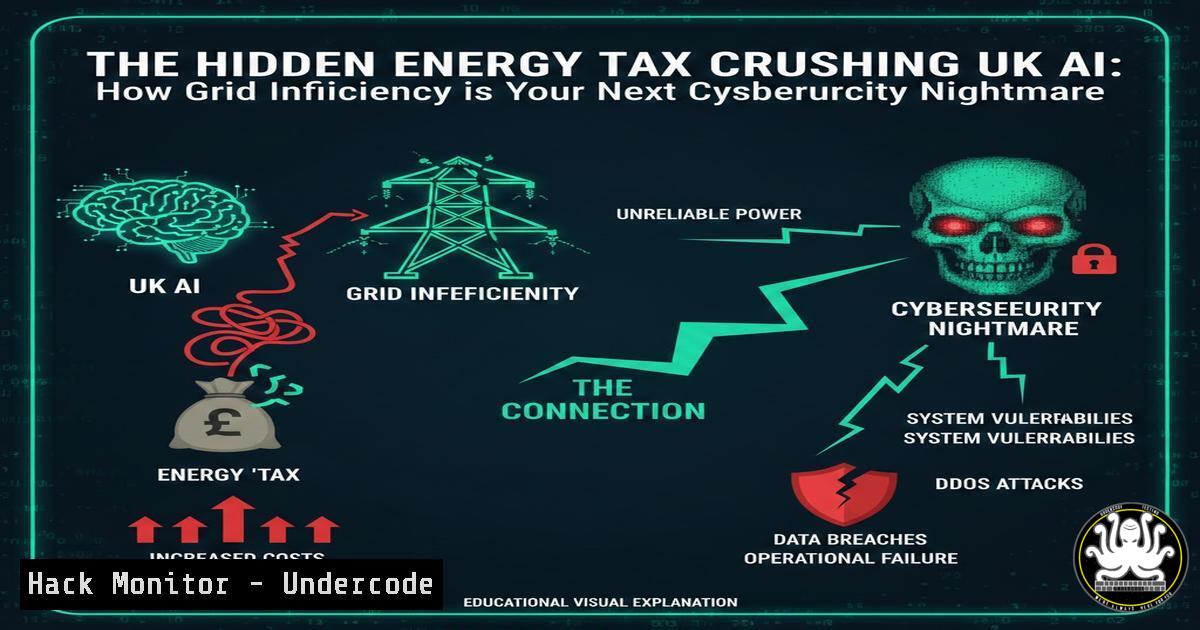
The UK’s aspiration to become a global AI leader is being silently throttled not by a lack of talent, but by exorbitant energy costs. As highlighted by recent analysis, UK electricity prices remain artificially high, tracking volatile global gas prices despite over 50% of generation now coming from renewables. This creates a direct cost barrier to the massive compute resources required for AI development and training, while simultaneously forcing data centers and IT infrastructure into cost-cutting corners that can compromise security and resilience.
Learning Objectives:
- Understand the direct link between national energy pricing models and the operational security of compute-intensive industries like AI.
- Learn to implement technical measures for energy efficiency and cost monitoring within Linux/Windows server environments and cloud platforms.
- Identify how financial pressure on compute budgets can lead to security anti-patterns and how to mitigate them.
You Should Know:
1. Decoding the Energy Cost-to-Compute Ratio
The core issue is a misalignment between energy generation costs and consumer pricing. When AI labs or cloud providers pay premiums based on gas prices for electricity primarily generated from wind, solar, and nuclear, their operational overhead skyrockets. This directly reduces the budget available for secure, resilient infrastructure.
Step‑by‑step guide:
To grasp your own infrastructure’s vulnerability, you must first measure its energy footprint.
1. On Linux servers, install and use `powertop` to analyze power consumption per process and tune settings for efficiency.
sudo apt install powertop -y  Debian/Ubuntu
sudo yum install powertop -y  RHEL/CentOS
sudo powertop --calibrate
sudo powertop --html=report.html
2. On Windows servers, use the built-in `powercfg` tool to generate detailed energy reports.
powercfg /energy /output %USERPROFILE%\energy_report.html
3. In the cloud (AWS/Azure/GCP), activate the native cost and usage management tools. In AWS, use Cost Explorer and apply tags to all compute instances (e.g., Project=AI-Training) to attribute spending accurately.
2. Data Center Hardening Under Financial Constraint
Pressure to reduce the largest operational cost (energy) can lead to dangerous shortcuts: delaying hardware refreshes (running outdated, vulnerable systems), reducing redundancy (cheaper cooling, single power supplies), or overcrowding racks leading to thermal throttling and hardware failure.
Step‑by‑step guide:
Harden your environment against these risks.
- Implement strict inventory and lifecycle management. Use an asset management system. A simple but effective start is a scripted inventory pull.
Linux: Collect system info
sudo dmidecode -t system | grep "Manufacturer|Product Name|Serial Number"
cat /proc/cpuinfo | grep "model name" | head -1
- Enforce hardware health monitoring. Use tools like `smartctl` for disk health and `ipmitool` for server management.
sudo apt install smartmontools ipmitool
sudo smartctl -a /dev/sda | grep -i "reallocated|pending|uncorrectable"
- Virtualization and Consolidation. Use VMs or containers (Docker, Kubernetes) to consolidate underutilized physical servers, reducing the physical footprint and energy load without sacrificing isolation.
3. Cloud Cost Optimization Without Sacrificing Security
The cloud is not immune. Choosing cheaper, lower-tier regions or cutting corners on storage replication (e.g., using a single availability zone) can increase risk.
Step‑by‑step guide:
- Right-sizing with security in mind. Use cloud provider tools (AWS Compute Optimizer, Azure Advisor) to recommend instance sizes. Never downgrade from an instance type that supports your required security features (e.g., specific Intel VT-x or AMD-V extensions for encrypted VMs).
- Automated start/stop schedules. Use AWS Instance Scheduler, Azure Automation, or GCP Scheduler to turn off non-production resources (like dev/test AI training environments) nights and weekends. Ensure security monitoring remains active.
Example AWS CLI command to stop instances (tagged with Environment:Dev) via a scheduled Lambda
aws ec2 stop-instances --instance-ids $(aws ec2 describe-instances --filters "Name=tag:Environment,Values=Dev" "Name=instance-state-name,Values=running" --query "Reservations[].Instances[].InstanceId" --output text)
- Commit to Reserved Instances or Savings Plans for predictable, stable workloads to lock in lower rates, freeing budget for security tools.
-
Securing the AI Training Pipeline from Resource Scarcity
When compute budget is squeezed, teams might use unauthorized, “shadow” cloud accounts, train on inadequately secured local hardware, or skip essential steps like adversarial robustness testing due to time/cost.
Step‑by‑step guide:
- Establish a governed AI training environment. Use Infrastructure as Code (IaC) with Terraform or CloudFormation to provision pre-hardened, approved environments.
Example Terraform snippet for an AWS SageMaker notebook with enforced VPC and encryption resource "aws_sagemaker_notebook_instance" "secure_notebook" { name = "ai-training-instance" role_arn = aws_iam_role.sagemaker_role.arn instance_type = "ml.t3.medium" subnet_id = aws_subnet.private.id security_groups = [aws_security_group.sagemaker_sg.id] kms_key_id = aws_kms_key.my_key.arn } - Mandate data and model encryption at rest and in transit. For local training servers, ensure full disk encryption is active.
-
Integrate security scans into the ML pipeline. Use tools like `bandit` for Python code security and `Clair` for container image vulnerability scanning before training jobs spin up.
-
The Policy and Advocacy Layer for Technical Professionals
Technologists must advocate for change. Understanding and communicating how energy policy affects technical outcomes is crucial.
Step‑by‑step guide:
- Quantify your organization’s compute-related energy costs. Correlate this with your security and innovation budget.
- Build a white paper for leadership linking national energy competitiveness to your organization’s AI roadmap and security posture.
- Engage with industry bodies (techUK, etc.) to push for energy market reform that decouples renewable energy prices from gas, providing long-term, stable pricing for compute-intensive industries.
What Undercode Say:
- Key Takeaway 1: The cybersecurity and resilience of the UK’s digital future are inextricably linked to national energy policy. Artificially high energy costs act as a systemic risk, incentivizing security-compromising shortcuts across the AI and broader tech stack.
- Key Takeaway 2: Technical professionals have both a responsibility and the tools to mitigate this risk at the infrastructure level through rigorous efficiency monitoring, cloud cost governance, and secure consolidation, while simultaneously advocating for the policy changes required for long-term competitiveness.
The analysis reveals a critical, often-overlooked attack vector: macroeconomic policy. When energy costs are misaligned with generation costs, it doesn’t just hurt the bottom line—it creates a threat model where financial survival pressures directly conflict with security best practices. The £140bn in energy company profits cited is not just a political issue; it’s a direct drain on the resources needed to build secure, sovereign AI capabilities. The UK’s tech sector must frame this not merely as a cost issue, but as a fundamental national security imperative for the age of AI.
Prediction:
If the UK fails to reform its energy pricing structure, it will experience a gradual but irreversible erosion of its AI and high-performance computing capacity. This will manifest as a “brain drain” of talent to regions with cheaper compute, increased reliance on foreign (likely US or EU) AI models and infrastructure—creating data sovereignty risks—and a growing “AI security debt” as domestic companies run older, less secure hardware to save costs. Conversely, nations that leverage stable, low-cost renewable energy will establish a formidable strategic advantage, attracting investment and becoming the secure, resilient hubs for the next generation of technological innovation. The race for AI supremacy will be won not just in algorithms, but in the power grid.
🎯Let’s Practice For Free:
IT/Security Reporter URL:
Reported By: Debbiegarsidechiefinnovationscientist Factcheck – Hackers Feeds
Extra Hub: Undercode MoN
Basic Verification: Pass ✅


