
Listen to this Post
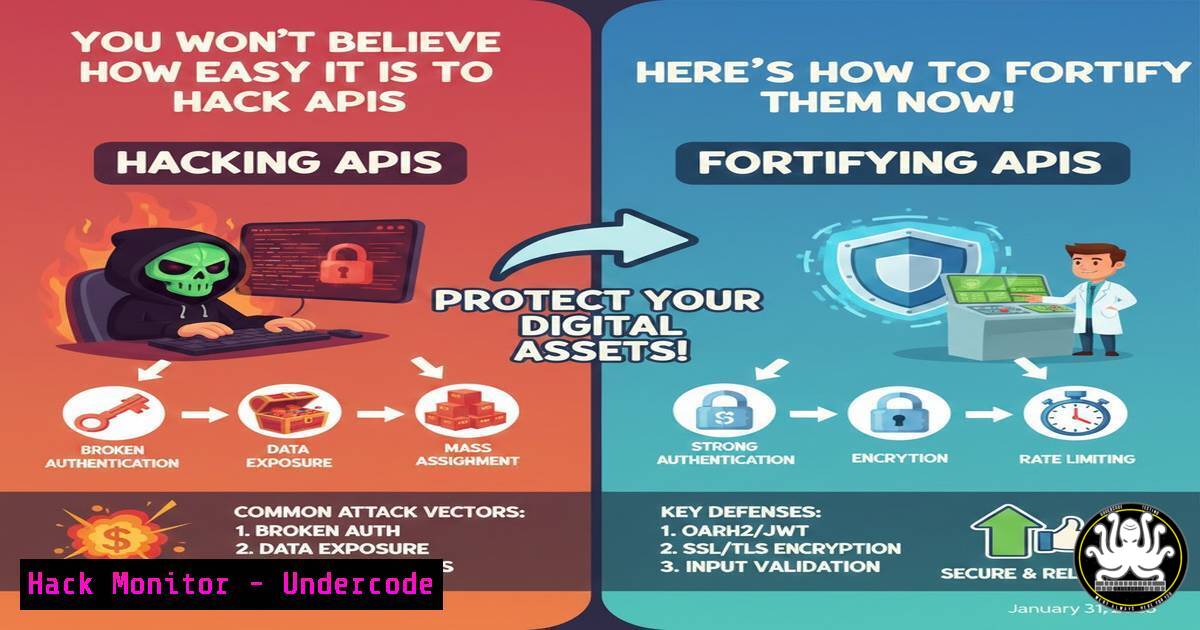 Introduction: APIs are the backbone of modern cloud applications, but they are often the weakest link in cybersecurity. This article delves into common API vulnerabilities and provides hands-on steps to secure them, integrating tools and techniques for IT professionals, AI integrations, and ongoing training.
Learning Objectives:
- Understand critical API security vulnerabilities like injection attacks and broken authentication.
- Learn to implement security measures using tools like OWASP ZAP and Burp Suite.
- Master cloud-specific hardening techniques for AWS API Gateway and Azure API Management.
You Should Know:
1. Identifying API Vulnerabilities with OWASP ZAP
Step-by-step guide: OWASP ZAP is a free, open-source tool for finding vulnerabilities in web applications and APIs. First, install ZAP on your system. For Linux, use sudo apt-get install zaproxy. For Windows, download from the official OWASP site (https://www.zaproxy.org/download/). Launch ZAP and configure your browser to use ZAP as a proxy (e.g., set proxy to 127.0.0.1:8080). Then, spider your API endpoint by entering the URL in the ‘Quick Start’ tab. Analyze the alerts for issues like SQL injection or XSS. For API-specific testing, use the ‘Active Scan’ feature targeting API endpoints to simulate attacks and generate reports.
2. Securing Authentication with JWT Tokens
Step-by-step guide: JSON Web Tokens (JWT) are commonly used for API authentication but are prone to misconfiguration. Ensure tokens are signed with strong algorithms like HS256 or RS256, and avoid using none algorithm. In your code, always validate the token signature and expiry. For example, in Node.js, use the `jsonwebtoken` library: jwt.verify(token, process.env.SECRET_KEY, (err, decoded) => { if (err) throw new Error('Invalid token'); }). Store secrets securely using environment variables or cloud secrets managers like AWS Secrets Manager. Regularly rotate keys and implement token blacklisting for revoked tokens.
3. Hardening AWS API Gateway
Step-by-step guide: AWS API Gateway offers built-in security features that need proper configuration. Enable AWS WAF (Web Application Firewall) to protect against common web exploits like SQL injection and XSS. Configure resource policies to restrict access to specific IP ranges using JSON policies. Use IAM roles for authorization instead of hard-coded credentials. In the AWS console, go to API Gateway, select your API, and under “Settings”, enable logging to CloudWatch for monitoring. Additionally, use AWS CloudTrail for auditing API calls. For automated hardening, use AWS CLI commands like aws apigateway update-stage --rest-api-id <api-id> --stage-name <stage> --patch-operations op=add,path=///logging/loglevel,value=INFO.
4. Implementing Rate Limiting and Throttling
Step-by-step guide: Rate limiting prevents abuse by limiting the number of requests per user or IP address. In Linux, you can use `iptables` to limit connections to your API server: sudo iptables -A INPUT -p tcp --dport 443 -m limit --limit 10/min -j ACCEPT. For cloud APIs, use gateway policies. In Azure API Management, create a policy in the policy editor: <rate-limit calls="10" renewal-period="60" />. For AWS API Gateway, set usage plans with throttling limits via the console or CLI: aws apigateway create-usage-plan --name "BasicPlan" --throttle burstLimit=10,rateLimit=5. Monitor thresholds with tools like Grafana for anomaly detection.
5. Scanning for Vulnerabilities with Burp Suite
Step-by-step guide: Burp Suite is a comprehensive platform for security testing of APIs. Start Burp Suite (Professional or Community edition) and configure your browser to its proxy (default 127.0.0.1:8080). Use the Repeater tool to manipulate API requests and test for vulnerabilities like Insecure Direct Object References (IDOR) or broken access control. For automated scanning, use the Scanner tool by right-clicking on requests in the Proxy history and selecting ‘Scan’. Ensure you have proper authorization before testing. Integrate with CI/CD pipelines using Burp’s REST API for continuous security. Training courses on Burp Suite are available on platforms like Pentester Academy (https://www.pentesteracademy.com).
6. Monitoring and Logging for Anomaly Detection
Step-by-step guide: Implement logging to detect suspicious activities and enable rapid incident response. In Linux, use `journalctl` to view logs for your API service: journalctl -u your-api-service -f --since "1 hour ago". For cloud environments, use services like AWS CloudTrail for API auditing or Azure Monitor for log analytics. Set up alerts for failed login attempts or unusual traffic patterns using tools like Elastic Stack or Splunk. Incorporate AI-driven anomaly detection with services like AWS GuardDuty or open-source tools like Apache Spot. Configure alerts to trigger via email or Slack for real-time notifications.
7. Training and Continuous Education
Step-by-step guide: Stay updated with cybersecurity trends through structured courses and hands-on practice. Enroll in online courses from platforms like Coursera (e.g., “APIs Security” by Intel) or Udemy (e.g., “The Complete API Security Course”). Participate in capture-the-flag (CTF) competitions on sites like Hack The Box (https://www.hackthebox.com) or TryHackMe (https://tryhackme.com). Practice API security labs in environments like OWASP Juice Shop. Regularly review resources from OWASP API Security Top 10 (https://owasp.org/www-project-api-security/) and implement findings in your organization through weekly security workshops.
What Undercode Say:
- Key Takeaway 1: API security is not optional; it requires proactive measures, automated tools, and continuous monitoring to mitigate evolving threats.
- Key Takeaway 2: Tools like OWASP ZAP and Burp Suite are essential for identifying vulnerabilities, but human expertise is crucial for interpretation, mitigation, and integrating security into DevOps pipelines.
Analysis: The increasing reliance on APIs for business-critical functions makes them a prime target for attackers, especially with the rise of microservices and cloud-native apps. Organizations must adopt a defense-in-depth strategy, combining automated scanning with manual testing, employee training, and AI-enhanced monitoring. As APIs evolve, so do attack vectors, necessitating regular security assessments, updates to security policies, and investment in cybersecurity training programs to bridge skill gaps.
Prediction: With the rise of AI-driven attacks, API security will become more challenging as AI can automate vulnerability discovery and exploit APIs at scale. However, AI can also enhance security through anomaly detection and automated response systems. Future APIs will need to incorporate AI-based security mechanisms, such as behavioral analysis and predictive threat modeling, to stay ahead of threats. Additionally, quantum computing may break current encryption standards, pushing for post-quantum cryptography in API communications. Organizations that prioritize API security training and adaptive defenses will lead in mitigating these future risks.
▶️ Related Video (74% Match):
🎯Let’s Practice For Free:
IT/Security Reporter URL:
Reported By: Cybersecricki This – Hackers Feeds
Extra Hub: Undercode MoN
Basic Verification: Pass ✅


