
Listen to this Post
Introduction:
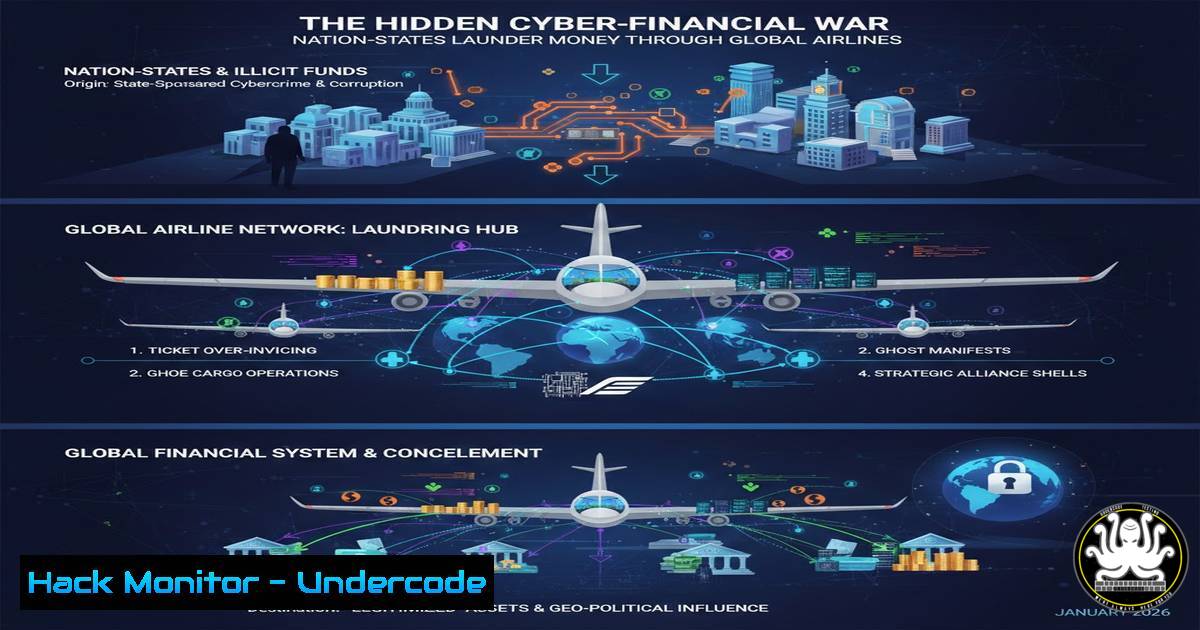
The intersection of geopolitical conflict, organized crime, and cybersecurity has birthed a new frontline: the cyber-financial war. Nation-states like Iran, leveraging non-state actors such as the Islamic Revolutionary Guard Corps (IRGC), are increasingly using complex digital networks and legitimate business fronts, including international airlines, to obscure illicit financial flows. This activity funds operations and evades sanctions, creating a persistent threat that blurs the lines between financial crime, cyber espionage, and terrorism.
Learning Objectives:
- Understand the technical mechanisms of modern digital money laundering.
- Learn to identify digital evidence trails linking corporations to illicit state activities.
- Develop skills in forensic analysis of financial transactions and network data.
You Should Know:
1. The Digital Payment Trail: Following the Metadata
Modern laundering rarely involves physical cash. Instead, it uses a maze of digital payments, shell companies, and compromised corporate accounts. Airlines are ideal due to high transaction volumes, international reach, and complex supply chains. The initial step involves “placement,” where illicit funds are injected into the legitimate financial system.
Step‑by‑step guide explaining what this does and how to use it.
Step 1: Packet Capture for Suspicious Traffic. On a network suspected of processing funneled transactions, capture traffic to/from financial institution IPs.
Linux Command: `sudo tcpdump -i eth0 host
What it does: This captures all raw network packets to/from a specific IP address, potentially revealing unencrypted transaction data or beaconing to command-and-control servers.
Step 2: Analyze Logs for Anomalous Access. Attackers may access financial systems via compromised credentials. Search for logins from unusual locations or times.
Windows Command (PowerShell): `Get-WinEvent -LogName Security | Where-Object {$_.ID -eq 4625 -and $_.Properties
.Value -eq 'CWE-285'} | Select-Object TimeCreated, Message`
 What it does: This queries the Windows Security Event Log for failed logon events (ID 4625) with the reason "Account Lockout," which could indicate brute-force attacks on financial software.

<h2 style="color: yellow;">2. Dark Web Procurement & Coordination</h2>

The IRGC and similar entities often procure materials (e.g., dual-use technology) or coordinate logistics using dark web markets and encrypted platforms, paid for with laundered funds.

Step‑by‑step guide explaining what this does and how to use it.
 Step 1: Tor Relay Sniffing (For Research/Legal Monitoring). While Tor traffic is encrypted, entry/exit node analysis can be performed.
 Linux Tool (nyx): `sudo apt install nyx && nyx`
 What it does: Nyx is a command-line monitor for Tor relays. Security teams can use it to monitor their own relay for patterns of connection attempts originating from known hostile infrastructure IP ranges.
 Step 2: Cryptocurrency Address Clustering. Laundered fiat is often converted to crypto. Use blockchain analysis tools to trace flows.
 Tool (OSINT): Use a platform like Chainalysis Reactor or a public explorer like Blockchain.com. Input a suspect address and follow the transaction graph to cluster addresses potentially controlled by the same entity.

<h2 style="color: yellow;">3. Cryptocurrency Tumblers and Mixers</h2>

To break the traceable link on the blockchain, actors use mixers. Understanding their mechanics is key to following the money.

Step‑by‑step guide explaining what this does and how to use it.
 Step 1: Identify Mixer Usage. Look for transactions to known mixer service addresses.
 Method: Compare transaction outputs to published lists of mixer deposit addresses (available from some threat intelligence feeds). A script can automate this.

<h2 style="color: yellow;"> Python Snippet (Conceptual):</h2>

[bash]
import requests
mixer_list = ["addr1_mixer", "addr2_mixer"]  From intel feed
tx_output = "recipient_address_from_block"
if tx_output in mixer_list:
print(f"[!] Potential mixer transaction detected: {tx_output}")
4. Forensic Analysis of Compromized Airline Systems
Airline booking (PNR) and cargo systems can be manipulated to over-invoice, book ghost passengers, or ship illicit goods.
Step‑by‑step guide explaining what this does and how to use it.
Step 1: Memory Dump Analysis for Credential Theft. Use Volatility to find malware or hooks in a compromised airline backend server.
Linux Commands (Volatility 3):
`vol -f memory.dump windows.pslist.PsList`
`vol -f memory.dump windows.hashdump.Hashdump`
What it does: The first command lists processes to find malware; the second extracts password hashes from the LSASS process, showing how attackers gained persistence to manipulate financial data.
Step 2: Database Transaction Audit. Query booking databases for patterns indicative of fraud.
SQL Query Example: `SELECT booking_ref, passenger_name, payment_amount, agent_id FROM bookings WHERE payment_amount > (SELECT AVG(payment_amount)5 FROM bookings) AND passenger_name IN (SELECT name FROM blacklist);`
5. Cloud Infrastructure Misconfiguration for Shell Companies
Illicit actors use cloud services (AWS, Azure) to host front-company websites and payment portals, often misconfiguring services to avoid detection.
Step‑by‑step guide explaining what this does and how to use it.
Step 1: S3 Bucket Enumeration. Misconfigured public buckets can leak data on shell company operations.
Tool (AWS CLI): `aws s3 ls s3://suspect-bucket-name/ –recursive –no-sign-request`
What it does: Lists contents of a potentially misconfigured public S3 bucket. “–no-sign-request” works only if the bucket has no authentication.
Step 2: CloudTrail Log Analysis for Anomalies. Check for unauthorized API calls that could create or modify financial resources.
AWS CLI Query: `aws cloudtrail lookup-events –lookup-attributes AttributeKey=EventName,AttributeValue=CreateTrail –max-results 10`
What it does: Looks for specific, sensitive API events that could be used to obfuscate audit trails.
6. API Security & Fake Payment Gateways
Laundering networks may set up fake payment gateways with vulnerable APIs to process and legitimize transactions.
Step‑by‑step guide explaining what this does and how to use it.
Step 1: API Fuzzing for Vulnerabilities. Test suspected gateway endpoints for injection flaws.
Tool (OWASP ZAP): Use ZAP’s automated scanner against the API endpoint URL (`https://suspect-gateway.com/api/v1/process`).
What it does: Actively tests for SQLi, XSS, and broken authentication that could be exploited to manipulate transaction records.
Step 2: Inspect SSL/TLS Certificates. Legitimate fronts may use cheap or self-signed certs.
Linux Command: `openssl s_client -connect suspect-site.com:443 | openssl x509 -noout -subject -issuer -dates`
What it does: Reveals who issued the certificate and its validity period. A very new domain with a long-dated cert from a free CA can be a red flag.
7. Mitigation: Building a Cyber-Financial Intelligence Platform
Defense requires correlating cyber threat intelligence (CTI) with financial transaction data.
Step‑by‑step guide explaining what this does and how to use it.
Step 1: Set up a SIEM Correlation Rule. Alert when a financial system login correlates with traffic to a known hostile IP.
Splunk SPL Example: `index=firewall dest_ip=”10.0.10.50″ (action=”blocked”) | join type=inner src_ip [search index=windows EventCode=4625 TargetUserName=”finance_user”] | table _time, src_ip, dest_ip, TargetUserName`
Step 2: Deploy Blockchain Monitoring Tools. Use commercial or open-source tools (e.g., TRM Labs, Elliptic) to screen cryptocurrency transactions for links to sanctioned addresses or mixers.
What Undercode Say:
- Key Takeaway 1: The future of sanctions evasion and hybrid warfare is inherently cyber-physical. Legitimate global industries, especially in transport and logistics, are the new battleground, attacked not for disruption but for covert financial utility.
- Key Takeaway 2: Attribution is the core challenge. The technical layers of cryptocurrency, cloud infrastructure, and compromised business networks create a “plausible deniability” shield for state actors, allowing them to wage financial war below the threshold of open military conflict.
Analysis: The technical dissection of this threat reveals a sophisticated, multi-layered operation. It’s not a simple crime; it’s a form of national power projection using the global digital economy as both weapon and camouflage. Cybersecurity professionals must now expand their scope beyond confidentiality and integrity to include economic integrity. The tools and techniques—from memory forensics to blockchain analysis—are available, but they require integration across traditionally siloed teams: SOC, financial fraud, and threat intelligence. The article from Ultrascan-OSCN likely provides specific case data, but the pattern is clear. Defending against this requires a convergence of financial audit trails and digital forensic evidence, treating anomalous database entries with the same severity as malware alerts.
Prediction:
The next phase will see increased automation of these laundering networks using AI. Machine learning models will be employed to optimize transaction patterns for stealth, dynamically routing funds through thousands of micro-transactions across decentralized finance (DeFi) protocols and NFT markets. Furthermore, we will see a rise in “deepfake” corporate identities—complete with AI-generated executive profiles and synthetic media—used to establish more convincing front companies. This will escalate the cyber-financial war, forcing regulatory bodies and security firms to develop AI-driven counter-intelligence platforms capable of unraveling these algorithmically-generated obfuscation webs in real-time, making advanced fintech expertise a critical pillar of national security.
▶️ Related Video (86% Match):
🎯Let’s Practice For Free:
IT/Security Reporter URL:
Reported By: Frank Engelsman – Hackers Feeds
Extra Hub: Undercode MoN
Basic Verification: Pass ✅


