Listen to this Post
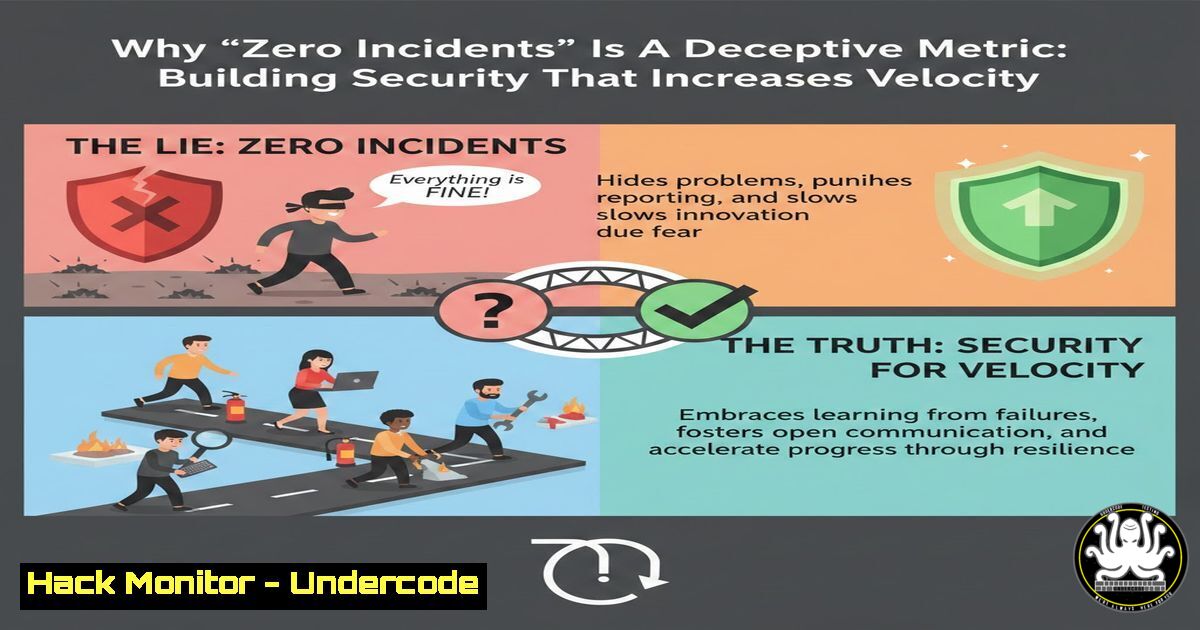
Introduction:
Most security programs measure success by what didn’t happen—zero breaches, zero ransomware, zero headlines. This creates a dangerous illusion of safety. The quiet failures are far more damaging: engineers design without security input, roadmaps pivot to avoid friction, and exceptions accumulate into a shadow risk that no dashboard tracks. True security maturity is measured not by incident count, but by how early security is embedded, how automated the guardrails are, and whether the organization ships faster because of it.
Learning Objectives:
- Quantify security’s impact on engineering velocity and measure “time-to-yes”
- Implement automated policy-as-code guardrails that replace manual approvals
- Design shift‑left security pipelines that integrate SAST, IaC scanning, and compliance checks without slowing CI/CD
- Replace Manual Gates with Policy-as-Code Using Open Policy Agent (OPA)
Manual security approvals are the 1 reason developers bypass security. The fix is not education—it is automation. Policy-as-code (PaC) encodes compliance rules (e.g., “no public S3 buckets,” “TLS 1.2+ required”) into executable tests that run inside the CI/CD pipeline.
Step‑by‑step: Implementing OPA in a Kubernetes Admission Controller
1. Install OPA as an admission controller:
kubectl create namespace opa
helm repo add gatekeeper https://open-policy-agent.github.io/gatekeeper/charts
helm install gatekeeper/gatekeeper --name-template=gatekeeper --namespace opa
2. Write a constraint template (Rego) that forbids privileged containers:
package k8srequiredlabels

violation[{"msg": msg}] {
container := input.review.object.spec.containers[bash]
container.securityContext.privileged
msg := sprintf("Privileged container is not allowed: %v", [container.name])
}
3. Apply the constraint to enforce the rule across all namespaces.
Windows Equivalent (using PowerShell DSC + Azure Policy Guest Configuration):
Configuration DenyLocalAdmin {
Node localhost {
User 'Builtin\Administrator' {
Ensure = 'Absent'
}
}
}
DenyLocalAdmin
This removes the need for a ticket, a meeting, and a signature. The policy simply is.
- Shift Security Left: Integrate SAST/SCA Before Code Merge
Static Application Security Testing (SAST) and Software Composition Analysis (SCA) must run on every pull request, not nightly. The goal: fail the build before human review begins.
Step‑by‑step: GitHub Actions Pipeline with Semgrep and Dependency-Check
1. Create `.github/workflows/sast.yml`:
name: Security Scan
on: [bash]
jobs:
semgrep:
runs-on: ubuntu-latest
steps:
- uses: actions/checkout@v3
- run: python -m pip install semgrep
- run: semgrep --config=p/ci --error .
depcheck:
runs-on: ubuntu-latest
steps:
- uses: actions/checkout@v3
- run: |
wget https://github.com/jeremylong/DependencyCheck/releases/download/v9.0.0/dependency-check-9.0.0-release.zip
unzip dependency-check-.zip
./dependency-check/bin/dependency-check.sh --scan . --format JSON --out report.json
2. Block merging if critical severity vulnerabilities are found using GitHub branch protection rules.
3. Provide fix links via PR comments using semgrep --autofix.
Developers no longer wait three days for a security ticket; they get the fix suggestion in the same terminal they commit from.
- Automate Cloud Hardening with Infrastructure as Code (IaC) Scanning
Misconfigured cloud resources are the leading cause of preventable breaches. Embed `checkov` or `tfsec` into Terraform/CloudFormation pipelines.
Step‑by‑step: Pre-commit IaC Scan for AWS
1. Install pre-commit framework:
pip install pre-commit
2. Create `.pre-commit-config.yaml`:
repos:
- repo: https://github.com/bridgecrewio/checkov
rev: stable
hooks:
- id: checkov
args: [--quiet, --framework, terraform]
3. Run against all Terraform files:
pre-commit run --all-files
A failing build will show: Check: CKV_AWS_23: "Ensure every security group rule has a description". No ticket. No security team email. The developer adds the description and moves on.
Windows Cloud (Azure ARM / Bicep) equivalent:
 Azure PowerShell - Enforce HTTPS only on Storage Accounts
$resources = Get-AzResource -ResourceGroupName "prod-rg"
foreach ($res in $resources) {
if ($res.ResourceType -eq "Microsoft.Storage/storageAccounts") {
Update-AzStorageAccount -ResourceGroupName $res.ResourceGroupName `
-Name $res.Name -EnableHttpsTrafficOnly $true
}
}
- API Security: Automate Rate Limiting and Schema Enforcement
APIs are bypassed when security imposes arbitrary throttling. Instead, use code-level middleware that enforces business logic safely.
Step‑by‑step: Express.js Middleware for Request Validation and Rate Limiting
1. Install express-rate-limit and Joi:
npm install express-rate-limit joi
2. Apply rate limit per API key:
const rateLimit = require('express-rate-limit');
const limiter = rateLimit({
windowMs: 15  60  1000, // 15 minutes
max: 100, // limit each IP to 100 requests
keyGenerator: (req) => req.apiKey, // not IP, to avoid shared IP issues
message: "Too many requests, please try again later."
});
app.use('/api/', limiter);
3. Enforce request schema:
const Joi = require('joi');
const schema = Joi.object({
email: Joi.string().email().required(),
amount: Joi.number().positive().required()
});

app.post('/payment', (req, res, next) => {
const { error } = schema.validate(req.body);
if (error) return res.status(400).send(error.details[bash].message);
next();
});
This shifts security from a separate audit to part of the codebase—no velocity loss.
- Windows Endpoint Hardening via Group Policy Objects (GPO) as Code
Security that depends on manually clicking through MMC snap-ins is slow and error‑prone. Convert GPOs to PowerShell Desired State Configuration (DSC) or Security Compliance Toolkit scripts.
Step‑by‑step: Deploy LAPS (Local Administrator Password Solution) with PowerShell
1. Import the LAPS module:
Import-Module AdmPwd.PS
2. Extend AD schema:
Update-AdmPwdADSchema
3. Set computer OU permissions:
Set-AdmPwdComputerSelfPermission -OrgUnit "OU=Workstations,DC=company,DC=com"
4. Deploy via Group Policy (or Intune) the LAPS client and configuration.
Now every local admin password is rotated, unique, and stored securely in AD—no manual intervention. The developer never needs to request a password reset.
6. Vulnerability Exploitation and Mitigation: Log4j Still Lurking
The “quiet failure” often hides in transitive dependencies. Measure your ability to respond to a new zero‑day, not how many you avoided.
Step‑by‑step: Hunt and Mitigate Log4j (CVE-2021-44228) Across 10,000 Servers
Linux (find all JARs containing JndiLookup):
find / -name ".jar" -exec sh -c 'jar tf {} | grep -q JndiLookup.class' \; -print
Windows PowerShell:
Get-ChildItem -Recurse -Filter .jar | ForEach-Object {
$match = Select-String -Path $<em>.FullName -Pattern "JndiLookup.class" -SimpleMatch -Quiet
if ($match) { $</em>.FullName }
}
Mitigation (if patching impossible):
zip -q -d log4j-core-.jar org/apache/logging/log4j/core/lookup/JndiLookup.class
A mature security team runs this query weekly, not once. They automate it via a cron job or Sentinel scheduled query.
What Undercode Say:
Key Takeaway 1:
Security velocity is a business KPI. If you cannot prove that security makes developers faster, you are already being bypassed. Automate guardrails, never slow down the pipeline.
Key Takeaway 2:
Policy-as-code transforms “no” into “yes, if…” It removes the human bottleneck, enforces compliance uniformly, and leaves an audit trail that auditors actually trust.
Analysis:
The LinkedIn post by Jeremy Dodson articulates a shift many security teams resist: they measure activity (scans run, tickets closed) instead of business impact (features shipped securely). The technical implementations above—OPA, pre-commit IaC scanning, Joi validation—are not new tools, but they are rarely deployed as velocity enablers. The gap is not tooling; it is the mental model. When a developer has to wait for a security approval, the risk moves to production via a configuration backdoor or an unapproved API. The only way to win is to make the secure path the easiest path. The code snippets provided demonstrate that security can be invisible—policies compile with the code, tests run with unit tests, and failures surface in the same terminal as syntax errors. That is the definition of “yes is safe.”
Prediction:
Within three years, the CISO’s dashboard will no longer feature “incident count” prominently. It will show “average time to first security feedback in PR” and “percentage of policies enforced automatically.” Organizations that fail to adopt policy‑as‑code will experience a “soft breach”—no headline, but a gradual loss of competitive speed. Eventually, they will be disrupted not by a hack, but by a competitor that ships secure features in hours, not weeks. The hack will be irrelevant because there will be no company left to breach.
▶️ Related Video (84% Match):
🎯Let’s Practice For Free:
IT/Security Reporter URL:
Reported By: Jeremydodson332 Most – Hackers Feeds
Extra Hub: Undercode MoN
Basic Verification: Pass ✅


