Listen to this Post
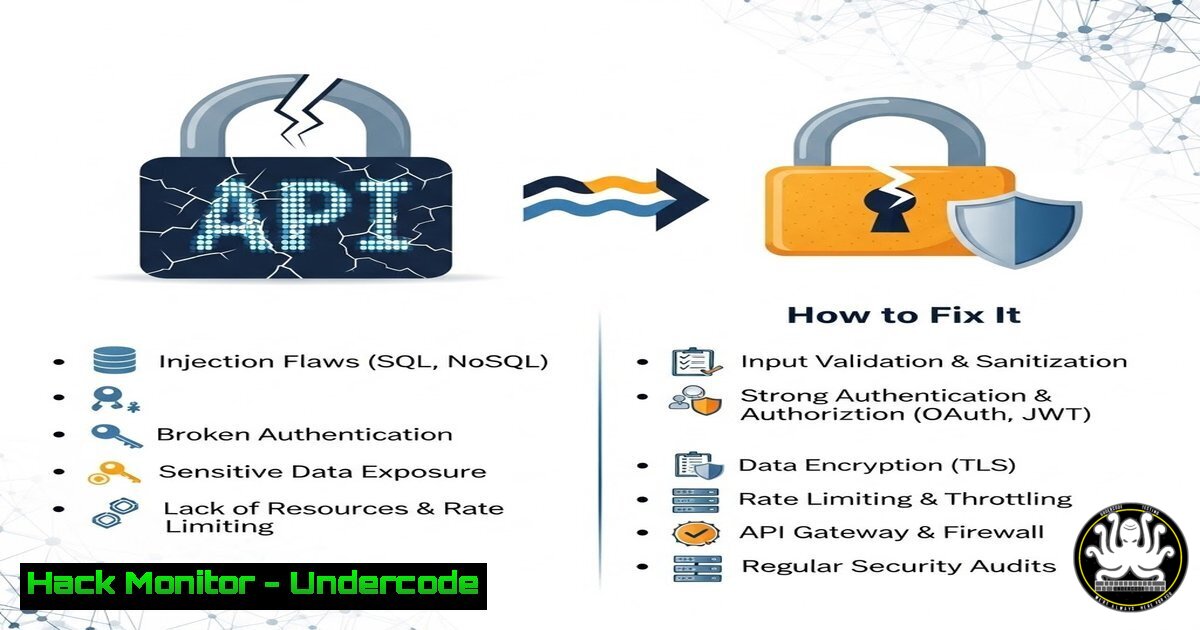
Introduction:
Many developers claim to build RESTful APIs, but in reality, they are creating HTTP-based RPC endpoints that violate core architectural constraints. These violations, such as embedding verbs in URLs or ignoring proper status codes, do not just create technical debt—they introduce significant security vulnerabilities. When an API breaks statelessness or misuses HTTP methods, it opens the door to information disclosure, session hijacking, and unpredictable client-side behavior that attackers can exploit. Understanding the difference between REST and RPC is the first step toward hardening your application’s attack surface.
Learning Objectives:
- Differentiate between true RESTful architecture and RPC-style endpoints to identify security anti-patterns.
- Implement proper HTTP status codes and resource-based URLs to prevent information leakage.
- Enforce statelessness to mitigate session-based attacks and improve scalability.
You Should Know:
- The Danger of Verbs in URLs: From RPC to Resource-Based Hardening
When you use URLs like `/getUsers` or/deleteUser, you are exposing actions rather than resources. This is a classic Remote Procedure Call (RPC) pattern over HTTP. From a security perspective, this is problematic because it makes access control logic more complex and prone to errors. It also leaks information about backend functions.
What you should do instead:
Your URL should represent a noun (the resource), and the HTTP method should be the verb. This aligns with REST and simplifies security policies.
Step‑by‑step guide to refactor and test:
- Identify RPC endpoints: List all endpoints containing verbs (e.g.,
/createUser,/updateUserProfile).
2. Refactor to resource model:
– `POST /users` (to create)
– `GET /users` (to list)
– `GET /users/{id}` (to retrieve one)
– `PUT /users/{id}` (to update)
– `DELETE /users/{id}` (to delete)
3. Verify with cURL (Linux/macOS):
 Insecure/Bad Practice
curl -X POST https://api.example.com/createUser -d '{"name":"test"}'

Secure/RESTful Practice
curl -X POST https://api.example.com/users -H "Content-Type: application/json" -d '{"name":"test"}'
4. Windows PowerShell equivalent:
 Insecure
Invoke-RestMethod -Uri "https://api.example.com/createUser" -Method Post -Body '{"name":"test"}' -ContentType "application/json"

Secure
Invoke-RestMethod -Uri "https://api.example.com/users" -Method Post -Body '{"name":"test"}' -ContentType "application/json"
5. Update API Gateway/Firewall rules: If you use a Web Application Firewall (WAF), ensure your rules are based on resource paths and methods, not arbitrary action names. For example, block `POST` to any path containing a verb.
- Status Codes as a Security Contract: Preventing Information Leakage
Returning `200 OK` for every response, including validation errors or “user not found,” blinds the client and can lead to business logic abuse. An attacker cannot distinguish between a successful action and a failure, but more critically, they cannot infer why it failed. However, using the wrong codes can also leak information. For example, returning `403 Forbidden` vs. `404 Not Found` for a resource tells an attacker whether the resource exists.
Step‑by‑step guide to implementing secure status codes:
1. Map outcomes to correct codes:
200 OK: SuccessfulGET,PUT, orPATCH.201 Created: SuccessfulPOST.400 Bad Request: Malformed syntax or client-side validation error (generic, no specifics).401 Unauthorized: Missing or invalid authentication.403 Forbidden: Authenticated but not permitted (use cautiously, consider `404` for hidden resources).404 Not Found: Resource does not exist (use this even for existing resources you don’t want to disclose).500 Internal Server Error: Generic server error, never reveal stack traces.
2. Configure your server (Node.js/Express example):
// Insecure
app.get('/users/:id', (req, res) => {
const user = findUser(req.params.id);
if (!user) {
return res.status(200).json({ error: 'User not found' }); // Leaks existence check? Still 200.
}
res.status(200).json(user);
});

// Secure
app.get('/users/:id', (req, res) => {
const user = findUser(req.params.id);
if (!user) {
// Return 404. Don't differentiate between "doesn't exist" and "hidden" if policy requires.
return res.status(404).json({ message: 'Not found' });
}
res.status(200).json(user);
});
3. Test with cURL to check response headers:
curl -I -X GET https://api.example.com/users/9999
 Look for HTTP/2 404
3. Enforcing Statelessness to Prevent Session Hijacking
Statelessness means that each request from the client must contain all the information necessary to understand it. The server should not store any session context between requests. Violating this by storing user state on the server (e.g., in-memory sessions) creates a massive attack vector for session fixation and hijacking. In cloud environments, it also breaks auto-scaling.
Step‑by‑step guide to moving from stateful to stateless (using JWT):
1. Eliminate server-side sessions: Stop using `express-session` with in-memory stores.
2. Implement token-based authentication (JWT):
- Client sends credentials to
POST /auth/login. - Server validates and returns a signed JWT containing user ID and roles.
- Client stores the token (HttpOnly cookie or local storage with caution).
- Client sends the token in the `Authorization` header for every subsequent request.
- Configure server to validate token on each request (Node.js/Express with
jsonwebtoken):const jwt = require('jsonwebtoken');</li> </ol> function authenticateToken(req, res, next) { const authHeader = req.headers['authorization']; const token = authHeader && authHeader.split(' ')[bash]; // Bearer TOKEN if (!token) return res.sendStatus(401); jwt.verify(token, process.env.ACCESS_TOKEN_SECRET, (err, user) => { if (err) return res.sendStatus(403); // Invalid token req.user = user; // Attach user to request next(); }); } app.get('/users/:id', authenticateToken, (req, res) => { // The request is self-contained; user info is in req.user // No need to hit a session store. const user = findUser(req.params.id); if (!user) return res.status(404).json({ message: 'Not found' }); res.status(200).json(user); });4. Linux command to test token propagation:
 Get token first (simulate login)
TOKEN=$(curl -s -X POST https://api.example.com/auth/login -d '{"username":"admin","password":"pass"}' | jq -r '.token')

Use token for subsequent request (stateless)
curl -H "Authorization: Bearer $TOKEN" https://api.example.com/users/123
4. HATEOAS: The Overlooked Security Layer
HATEOAS (Hypermedia as the Engine of Application State) is a constraint of REST that forces the server to guide the client via hyperlinks in the responses. While often ignored for practicality, it has a security benefit: it prevents clients from guessing or brute-forcing URLs. The server provides the valid next actions, reducing the attack surface for forced browsing.
Implementation example (JSON response with links):
{
"userId": 123,
"name": "John Doe",
"links": [
{ "rel": "self", "href": "/users/123", "method": "GET" },
{ "rel": "update", "href": "/users/123", "method": "PUT" },
{ "rel": "delete", "href": "/users/123", "method": "DELETE" }
]
}
The client uses the provided `href` values, not hardcoded paths. This allows the server to change URL structures without breaking clients and to omit links for actions the user is not authorized to perform, effectively hiding attack vectors.
What Undercode Say:
- Key Takeaway 1: API design is a security control. Resource-based URLs and correct HTTP methods (verbs) are the foundation for consistent, enforceable access control policies. RPC-style APIs create a chaotic, hard-to-secure attack surface.
- Key Takeaway 2: Statelessness is not just a scalability feature; it is a security boundary. By eliminating server-side session state, you drastically reduce the risk of session-based attacks (fixation, hijacking) and make your system more resilient to distributed denial-of-service (DDoS).
The debate between strict REST and practical RPC is ongoing, but from a cybersecurity perspective, the principles of REST—statelessness, uniform interface, and resource orientation—provide a robust framework for building predictable and secure systems. While many production APIs lean toward pragmatic RPC, developers must be aware of the security trade-offs they are making. Ignoring status codes leads to client-side confusion that attackers can manipulate. Ignoring statelessness creates sticky sessions that are prime targets for interception. Ultimately, understanding these foundational concepts allows you to make informed decisions about where to apply strict constraints for security and where to relax them for performance, without inadvertently creating vulnerabilities.
Prediction:
As API-driven architectures continue to dominate cloud-native development, we will see a resurgence of RESTful design principles, not for ideological purity, but for security automation. AI-driven security tools will increasingly analyze API traffic patterns, and they will flag verb-in-URLs and inconsistent status codes as anomalous behavior. The future of API security lies in machine-readable contracts (like OpenAPI) that strictly enforce RESTful constraints, enabling automated threat detection and zero-trust authorization at the edge.
▶️ Related Video (76% Match):
🎯Let’s Practice For Free:
IT/Security Reporter URL:
Reported By: Sahilt02 This – Hackers Feeds
Extra Hub: Undercode MoN
Basic Verification: Pass ✅🔐JOIN OUR CYBER WORLD [ CVE News • HackMonitor • UndercodeNews ]
📢 Follow UndercodeTesting & Stay Tuned:


