
Listen to this Post
Introduction:
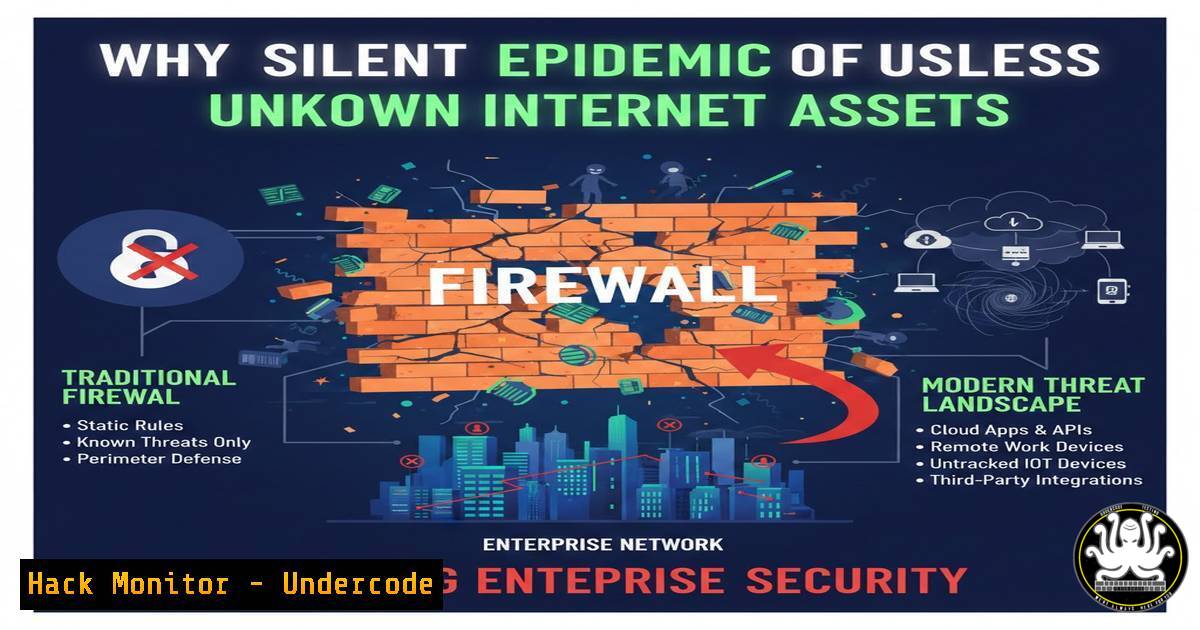
In an era of unprecedented cybersecurity investment, mature organizations with skilled teams and advanced tools continue to fall victim to devastating breaches. The core failure is not a lack of effort or technology, but a fundamental blindness: security cannot protect assets it does not know exist. This article deconstructs the critical gap in internet-facing asset visibility and provides a technical roadmap for regaining control, moving beyond theory to actionable commands and configurations.
Learning Objectives:
- Understand the technical pillars of internet exposure: DNS, TLS, and HTTP/S.
- Learn to execute discovery and inventory commands for forgotten assets across key protocols.
- Implement continuous monitoring and correlation techniques to shrink your unknown attack surface.
You Should Know:
- The Triad of Internet Exposure: DNS, TLS, and HTTP/S
Every connected asset communicates through fundamental layers. Attackers map these layers to find discrepancies—like a subdomain in DNS that points to an unpatched server with an expired TLS certificate, all serving an unauthenticated HTTP API.
What This Does: This foundational view forces asset discovery across the three core protocols that define “exposure.” A complete inventory requires correlated data from all three.
How to Use It: Begin by enumerating your official domains, then probe each layer systematically.
DNS Reconnaissance (Using `dig` and `subfinder`):
 Enumerate known DNS records for a domain
dig example.com ANY +noall +answer
 Use a tool like subfinder to discover subdomains
subfinder -d example.com -silent | tee subdomains.txt
TLS Certificate Discovery (Using `crt.sh` and OpenSSL):
 Query certificate transparency logs for domains/subdomains
 Manually visit: https://crt.sh/?q=%.example.com
 Check certificate details for a specific host
openssl s_client -connect forgotten-app.example.com:443 -servername forgotten-app.example.com 2>/dev/null | openssl x509 -noout -subject -dates
HTTP Service Fingerprinting (Using `httpx`):
 Take your subdomains list and probe for live HTTP/HTTPS services
cat subdomains.txt | httpx -silent -title -status-code -tech-detect -o live_assets.txt
2. Discovering Forgotten Subdomains and Zombie IPs
Abandoned subdomains (dev.example.com, test.example.com, legacy-api.example.com) and IP addresses not tied to current infrastructure are prime attacker entry points.
What This Does: This process expands your known asset list beyond official records, uncovering development, testing, and legacy systems that were never decommissioned.
How to Use It: Combine passive sources with active brute-forcing.
Passive Enumeration with `amass`:
amass enum -passive -d example.com -o passive_subs.txt
DNS Brute-Forcing (Using `ffuf` and a wordlist):
ffuf -w /usr/share/wordlists/seclists/Discovery/DNS/subdomains-top1million-5000.txt -u https://example.com -H "Host: FUZZ.example.com" -fs <size_of_404_page>
IP Range Discovery & Reverse DNS (Using `nmap` and whois):
 Identify your organization's announced IP ranges
whois -h whois.radb.net '!gAS<Your-ASN-Number>'
 Perform a ping sweep on a discovered range
nmap -sn 203.0.113.0/24 -oG ping_sweep.txt
 Check reverse DNS for owned IPs
for ip in $(cat owned_ips.txt); do dig +short -x $ip; done
3. Hunting Misconfigured Services and Expired Certificates
Unknown assets often run default-configuration services (like open S3 buckets, unauthenticated Redis) or have expired TLS certificates, creating immediate exploitation opportunities.
What This Does: This step moves from discovery to vulnerability assessment, identifying low-hanging fruit that attackers automate finding.
How to Use It: Scan your discovered live assets for common misconfigurations.
Check for Expired/Invalid Certificates:
 Script to check certificate validity from your live_assets.txt
while read host; do
expiry_date=$(echo | openssl s_client -connect "$host":443 -servername "$host" 2>/dev/null | openssl x509 -noout -enddate | cut -d= -f2)
if [[ $(date -d "$expiry_date" +%s) -lt $(date +%s) ]]; then
echo "[!] EXPIRED: $host - $expiry_date"
fi
done < live_assets.txt
Scan for High-Risk Open Services (Using `nmap`):
 Quick scan for databases, caches, and management interfaces
nmap -p 21,22,23,80,161,389,443,445,6379,9200,27017 -sV -iL live_ips.txt -oG service_scan.txt
- Building a Correlated Asset Inventory with OSINT and AI
Manual correlation is impossible at scale. The post highlights AI’s role in continuously linking data across DNS, TLS, and HTTP/S layers to maintain a living, correlated inventory.
What This Does: AI/ML models can normalize data, cluster related assets, and predict ownership by spotting patterns humans miss, turning scattered data into a coherent attack surface map.
How to Use It: Implement a simple correlation pipeline. - Data Normalization: Convert all discovery outputs (subdomains, IPs, certificates) into a standard JSON format.
- Relationship Mapping: Use simple logic: group all subdomains sharing an IP; link all certificates to their hostnames.
- Enrichment: Use SHA-256 fingerprinting of HTTP responses to identify identical services.
Generate a fingerprint for a web page
curl -s https://example.com/admin --insecure | shasum -a 256
5. Implementing Continuous Monitoring and Change Detection
The attack surface is dynamic. A one-time scan is obsolete within hours. Continuous monitoring for new assets, changes, and expirations is non-negotiable.
What This Does: Establishes a security feedback loop, alerting teams to new, unauthorized, or changed exposures—like a new subdomain pointing to an internal IP.
How to Use It: Automate discovery scripts and diff outputs.
Cron Job for Daily Discovery:
 Example crontab entry
0 2    /opt/scripts/asset_discovery.sh > /var/log/discovery_$(date +\%Y\%m\%d).log 2>&1
Simple Change Detection with `diff`:
diff /var/log/discovery_20240101.log /var/log/discovery_20240102.log | mail -s "New Asset Alert" [email protected]
6. Hardening Cloud and API Security Posture
Unknown assets frequently emerge in cloud environments (shadow IT, abandoned deployments) and as undocumented APIs.
What This Does: Applies asset discovery principles specifically to cloud providers and API endpoints, which are often ephemeral and poorly tracked.
How to Use It:
Cloud Inventory (AWS CLI Example):
 List all EC2 instances across all regions
for region in $(aws ec2 describe-regions --query "Regions[].RegionName" --output text); do
echo "=== Region: $region ==="
aws ec2 describe-instances --region $region --query 'Reservations[].Instances[].{ID:InstanceId,PublicIP:PublicIpAddress,State:State.Name,Tags:Tags}'
done
API Discovery (Using `gau` and `katana`):
 Gather historical URLs for a domain
echo "example.com" | gau --threads 5 | grep -E ".json|.xml|api\/|graphql" | tee api_endpoints.txt
 Crawl the site for dynamic API discovery
katana -u https://example.com -jc -o katana_crawl.txt
7. Integrating Discovery into Vulnerability Management and Mitigation
Discovery data must feed directly into patch management and configuration hardening workflows. An unknown asset cannot be patched.
What This Does: Closes the loop by ensuring every discovered asset is assessed, owned, and integrated into standard security baselines or decommissioned.
How to Use It:
- Triage & Ownership: Assign discovered assets to an owner (team, application).
- Baseline Enforcement: Apply standard hardening (close ports, enforce TLS, add auth).
- Scheduled Decommissioning: Create a workflow to sunset confirmed orphaned assets.
Windows (PowerShell – Remove DNS Record):
 Example for removing a stale DNS A record (requires RSAT-DNS-Server)
Remove-DnsServerResourceRecord -ZoneName "example.com" -Name "legacy-app" -RRType A -Force
Mitigation (Quick Cloud Security Group Fix – AWS CLI):
 Revoke public access on an accidentally exposed security group
aws ec2 revoke-security-group-ingress --group-id sg-abc123 --protocol tcp --port 22 --cidr 0.0.0.0/0
What Undercode Say:
- Visibility Precedes Control: You cannot defend, monitor, or patch assets outside your inventory. Full-spectrum DNS, TLS, and HTTP/S discovery is the absolute prerequisite for any effective security program.
- Automation is Mandatory: The scale and rate of change in modern digital environments make manual processes and point-in-time audits completely inadequate. Continuous, automated discovery and correlation are the only viable solutions.
The analysis suggests that the industry’s focus on advanced threat detection and complex controls is misplaced if deployed on an incomplete asset base. This creates a “security theater” effect where mature processes are bypassed via forgotten, unmanaged entry points. The strategic shift must be towards foundational asset intelligence, leveraging automation and AI not as a luxury, but as a core defensive mechanism to eliminate the attacker’s primary advantage: your own ignorance.
Prediction:
Within the next 3-5 years, regulatory frameworks and cyber insurance policies will mandate continuous, automated attack surface discovery and inventory as a baseline compliance requirement, similar to vulnerability scanning today. Organizations that fail to adopt these practices will face significantly higher premiums or be deemed uninsurable. Furthermore, AI-driven offensive security tools will make the discovery of unknown assets trivial for attackers, exponentially increasing the risk for organizations that maintain poor visibility, forcing a fundamental architectural shift towards “self-aware” infrastructure.
🎯Let’s Practice For Free:
IT/Security Reporter URL:
Reported By: Andy Jenkinson – Hackers Feeds
Extra Hub: Undercode MoN
Basic Verification: Pass ✅


