
Listen to this Post
Introduction:
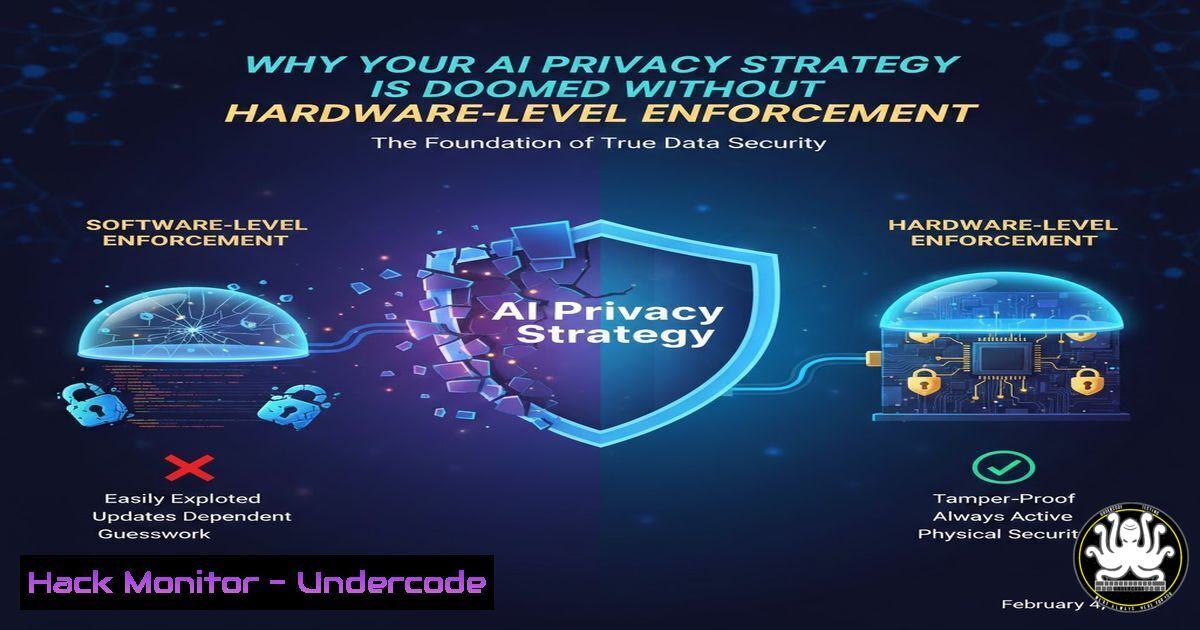
Privacy by design has evolved from a soft governance policy to a hard infrastructure mandate, driven by GDPR 25 and the impending EU AI Act. For high-risk AI systems in sectors like finance and healthcare, compliance now hinges on architectural decisions—such as on-premise deployments with hardware-level controls—rather than contractual promises. Retrofitting privacy into existing cloud AI stacks can cost 3-5x more, making proactive design a strategic imperative for avoiding regulatory penalties and data breaches.
Learning Objectives:
- Understand the regulatory drivers (GDPR, EU AI Act) forcing privacy by design into AI infrastructure.
- Learn how hardware-level security features like Trusted Execution Environments (TEEs) and Hardware Security Modules (HSMs) technically enforce privacy.
- Gain practical steps to assess and migrate AI workloads to privacy-centric architectures, including command-level configurations.
You Should Know:
- Decoding GDPR 25 and EU AI Act Compliance
Step‑by‑step guide explaining what this does and how to use it.
GDPR 25 requires data protection by design and default, meaning privacy must be embedded into processing activities. The EU AI Act (effective 2026-2027) extends this to high-risk AI systems, mandating design-time obligations and legacy system compliance by 2030. Start by mapping your AI data flows: identify where personal data is collected, processed, and stored. Use tools like Microsoft Compliance Manager or AWS Audit Manager to generate reports. On Linux, use `tcpdump` or `auditd` to log data transmissions:sudo auditctl -w /path/to/data -p rwxa -k ai_data_flow
This command audits file access for compliance tracking. Regularly review sub-processor chains under GDPR 28, maintaining a registry to mitigate liability.
-
Implementing Trusted Execution Environments (TEEs) for AI Workloads
Step‑by‑step guide explaining what this does and how to use it.
TEEs like AMD SEV-SNP or Intel TDX create encrypted memory regions, isolating AI training/inference from the OS and operators. To deploy, first verify hardware support on Linux:sudo dmesg | grep -i sev For AMD SEV sudo cat /proc/cpuinfo | grep -i tdx For Intel TDX
On Windows, use PowerShell:
Get-WindowsOptionalFeature -Online | Where-Object {$_.FeatureName -like "Virtualization"}. Configure a TEE for an AI model using OpenEnclave SDK. Install it on Ubuntu:sudo apt install openenclave oeedger8r model.edl --trusted Generate trusted code
This ensures sensitive data is processed only within encrypted memory, preventing exposure via logs or memory dumps.
-
Configuring Hardware Security Modules (HSMs) for Key Management
Step‑by‑step guide explaining what this does and how to use it.
HSMs (e.g., AWS CloudHSM, Azure Dedicated HSM) store cryptographic keys in FIPS 140-2 Level 3-compliant hardware. Set up an on-premise HSM like Thales Luna or YubiHSM. On Linux, initialize the HSM using PKCS11 tools:sudo apt install opensc-pkcs11 pkcs11-tool --module /usr/lib/libtpm2_pkcs11.so --init-token --label "AI_Keys"
Generate a key for encrypting AI datasets:
pkcs11-tool --keygen --key-type rsa:2048 --id 101 --label "AI_Encryption_Key"
On Windows, use CertUtil to integrate HSM keys: CertUtil -importPFX -csp "HSM Provider". This ensures keys never leave silicon, meeting GDPR and AI Act requirements for key sovereignty.
4. Enforcing In-Line Encryption in Data Pipelines
Step‑by‑step guide explaining what this does and how to use it.
In-line encryption decrypts data only within TEEs during processing, avoiding exposure in storage or backups. Implement using Linux kernel encryption APIs. For a data pipeline, use `dm-crypt` for disk encryption and `openssl` for stream encryption:
sudo cryptsetup luksFormat /dev/sdb1  Encrypt storage
openssl enc -aes-256-cbc -salt -in ai_input.csv -out encrypted.bin -k pass:$(cat /proc/keys/secure_key)
In Windows, use BitLocker with PowerShell: Enable-BitLocker -MountPoint "C:" -EncryptionMethod Aes256. For AI workloads, integrate with TensorFlow or PyTorch using libraries like Intel SGX, ensuring data is decrypted only within TEEs during model inference.
5. Conducting Privacy Impact Assessments for AI Systems
Step‑by‑step guide explaining what this does and how to use it.
Under GDPR, Data Protection Impact Assessments (DPIAs) are mandatory for high-risk AI. Use frameworks like ISO 27001 or NIST AI RMF. Start by inventorying AI models and data sources with tools like Apache NiFi. On Linux, script an assessment with `python` and pandas:
import pandas as pd
 Load data inventory
inventory = pd.read_csv('ai_assets.csv')
 Assess risk based on data sensitivity
inventory['risk_score'] = inventory['data_type'].apply(lambda x: 'high' if 'personal' in x else 'low')
Document findings and mitigate risks by applying encryption or access controls. Regularly audit with `lynis` on Linux: sudo lynis audit system.
6. Migrating from Cloud to On-Premise AI Infrastructure
Step‑by‑step guide explaining what this does and how to use it.
On-premise AI reduces sub-processor liability under GDPR 28. Plan migration using Kubernetes for containerized AI workloads. Set up a private cluster with Kubeflow for MLOps. On Linux, install Kubernetes and secure it:
sudo kubeadm init --pod-network-cidr=10.244.0.0/16
kubectl apply -f https://raw.githubusercontent.com/coreos/flannel/master/Documentation/kube-flannel.yml
Harden nodes with kube-bench: kube-bench run --targets node. Transfer AI models from cloud storage using encrypted SCP:
scp -o "ProxyCommand openssl s_client -connect cloud-host:443" model.pth user@on-prem-host:/secure_path/
Validate privacy controls with vulnerability scanners like OpenVAS.
7. Monitoring and Auditing Privacy Controls
Step‑by‑step guide explaining what this does and how to use it.
Continuous monitoring ensures architecture remains compliant. Use ELK Stack for logging and Grafana for dashboards. On Linux, deploy Auditbeat to track data access:
sudo auditbeat setup --index-management
sudo systemctl start auditbeat
Set alerts for unauthorized access attempts in `auditbeat.yml`:
auditbeat.modules:
- module: file_integrity
paths: ["/var/lib/ai_data"]
On Windows, use Event Viewer to monitor security logs: Get-EventLog -LogName Security -InstanceId 4663. Integrate with SIEM tools like Splunk for real-time analysis of privacy breaches.
What Undercode Say:
- Key Takeaway 1: Privacy by design is now an infrastructure imperative, not a policy choice, with hardware-level controls like TEEs and HSMs offering defensible compliance under evolving regulations.
- Key Takeaway 2: Retrofitting privacy into cloud AI stacks is cost-prohibitive; organizations must prioritize on-premise or hybrid architectures with embedded encryption to avoid 3-5x cost multipliers and regulatory scrutiny.
Analysis: The post underscores a paradigm shift where regulatory frameworks like GDPR and the EU AI Act are testing privacy as engineering, not governance. For IT leaders, this means moving beyond checklists to architecting systems with inherent data sovereignty. Hardware-level enforcement via TEEs and HSMs reduces the attack surface and liability chains, but requires upfront investment in skills and infrastructure. As cloud providers adapt, the gap between policy promises and technical execution will narrow, but on-premise solutions offer unmatched control for high-risk AI in regulated industries. Failure to adapt now could lead to massive fines and loss of trust post-2026.
Prediction:
By 2030, legacy AI systems lacking hardware-level privacy controls will face accelerated regulatory penalties and targeted exploits, as attackers capitalize on soft compliance layers. The convergence of data localization laws and AI ethics will drive a 40% increase in on-premise AI deployments, with TEEs becoming standard in critical infrastructure. Organizations that delay architectural shifts will incur not only retrofit costs but also reputational damage from inevitable data breaches, reshaping competitive landscapes in finance, healthcare, and government sectors.
▶️ Related Video (88% Match):
🎯Let’s Practice For Free:
IT/Security Reporter URL:
Reported By: Dr Monika – Hackers Feeds
Extra Hub: Undercode MoN
Basic Verification: Pass ✅


