
Listen to this Post
Introduction:
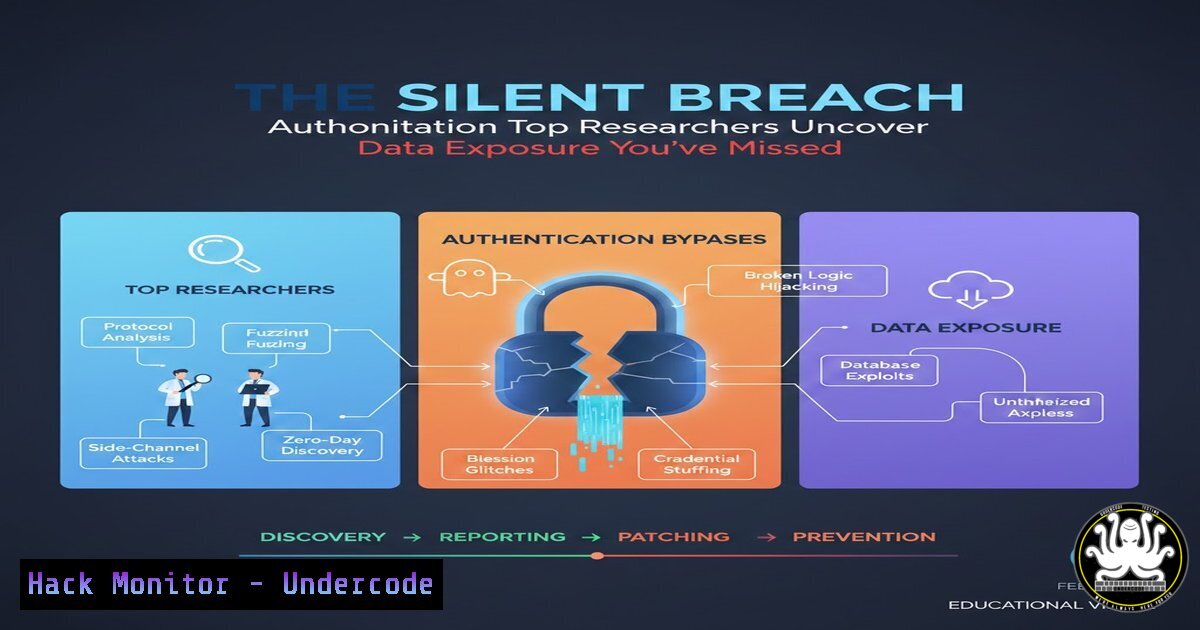
In the evolving landscape of cybersecurity, the most critical threats often stem from fundamental flaws in application logic and authorization, not just sophisticated malware. Recent disclosures by leading security researchers, including an MVR 2025 recipient, highlight a persistent trend: high-impact vulnerabilities like authentication bypasses and Broken Object Level Authorization (BOLA) remain prevalent in modern web applications and APIs. This article deconstructs these common yet devastating findings, providing a technical blueprint for both understanding and defending against them.
Learning Objectives:
- Understand the mechanics and real-world impact of Authentication Bypasses and BOLA (IDOR) vulnerabilities.
- Learn practical methods to hunt for client-side hardcoded secrets and prevent sensitive data exposure.
- Apply proven command-line and tool-based techniques to test for and mitigate these critical flaws in your own environments.
You Should Know:
1. Authentication Bypass: The Illusion of Security
An authentication bypass flaw allows an attacker to circumvent the login mechanism entirely or elevate privileges without valid credentials. This can occur through flawed logic, misconfigured security filters, or alternative path exploitation (e.g., accessing API endpoints that lack proper checks).
Step‑by‑step guide explaining what this does and how to use it.
Testing with Curl and Burp Suite:
- Map the Application: Use a proxy like Burp Suite to intercept all requests during normal authentication flow. Note all endpoints (
/login,/api/session,/admin/home). - Identify Weak Points: Look for endpoints that might be called post-login. Try accessing them directly without a session token.
Example: Direct access attempt to an admin panel
curl -v https://target.com/admin/dashboard
- Parameter Manipulation: If a request uses parameters like `user_id=123` or
role=user, try altering them.Attempt privilege escalation via parameter tampering curl -v -H "Cookie: session=invalid_or_empty" https://target.com/api/user/profile?user_id=ADMIN_SYSTEM_ID
- Path Traversal & Forced Browsing: Use wordlists to discover hidden paths that might not be protected.
Using ffuf for forced browsing
ffuf -w /usr/share/wordlists/dirb/common.txt -u https://target.com/FUZZ -mc 200,301,302
2. Exploiting Broken Object Level Authorization (BOLA/IDOR)
BOLA, a top API security risk, occurs when an API endpoint exposes a reference to an internal object (like a database ID) without verifying the authenticated user is authorized to access it. By changing an ID (e.g., from `/api/invoice/1001` to /api/invoice/1002), an attacker accesses another user’s data.
Step‑by‑step guide explaining what this does and how to use it.
Manual and Automated Testing:
- Discover Object References: Log in as a normal user and capture all API calls. Identify parameters like
id,uid,account,number. - Test for Insecure Direct Object References (IDOR): Use a second test account or simply increment/decrement the ID value.
Test a sequence of invoice IDs for i in {1000..1010}; do echo "Testing ID $i:" curl -s -H "Authorization: Bearer <YOUR_TOKEN>" https://target.com/api/invoice/$i | jq '.id' 2>/dev/null done - Use Automated Tools: Tools like `Autorize` (Burp Extension) can automate this by replaying requests with modified IDs from different user sessions.
3. Uncovering Client-Side Hardcoded Secrets
Developers often accidentally embed API keys, tokens, or passwords in client-side code (JavaScript, mobile app binaries). These can be harvested by static analysis or simple inspection.
Step‑by‑step guide explaining what this does and how to use it.
Static Analysis with Code Inspection & Grep:
- View Source & Debugger: Manually inspect the web page source (Ctrl+U) and examine loaded JS files in the “Sources” tab of Chrome DevTools for strings like
apiKey,secret,password,token. - Command-Line Pattern Scanning: For mobile apps (APK/IPA) or source code, use `grep` or specialized tools.
Simple regex search in decompiled code or JS files
grep -r -n "api[_-]key|secret|password.= ['\"][^'\"].['\"]" ./path/to/source/
- Use Dedicated Tools: Utilize `truffleHog` or `git-secrets` to scan git repositories for committed secrets.
Scan a repository's history for secrets
trufflehog git https://github.com/target/repo.git --only-verified
4. Mitigating Sensitive Data Exposure
This vulnerability involves the unnecessary exposure of data like PII, credit card details, or system information via APIs, error messages, or improper asset handling.
Step‑by‑step guide explaining what this does and how to use it.
Hardening Your API and Error Handling:
- Implement Strict Data Filtering: Never return full database objects. Use Data Transfer Objects (DTOs) to whitelist exposed fields.
- Sanitize Error Messages: Configure global exception handlers to return generic messages.
Python Flask example of a generic error handler @app.errorhandler(Exception) def handle_generic_error(e): app.logger.error(f"An error occurred: {e}") return jsonify({"error": "An internal error occurred"}), 500 - Encrypt Sensitive Data at Rest & in Transit: Enforce TLS 1.2+ and use strong, modern encryption algorithms (AES-256-GCM) for stored data.
- Audit Logs with Splunk/ELK: Ensure all access to sensitive data is logged and monitored for anomalous patterns.
-
Building a Proactive Security Posture: From Reaction to Prevention
The ultimate goal is to shift security left into the development lifecycle (DevSecOps).
Step‑by‑step guide explaining what this does and how to use it.
Integrating Security Scans:
- Static Application Security Testing (SAST): Integrate tools like
Semgrep,SonarQube, or `Checkmarx` into your CI/CD pipeline (e.g., GitHub Actions, GitLab CI).Example GitHub Actions step for Semgrep</li> </ol> - name: Run SAST Scan uses: returntocorp/semgrep-action@v1 with: config: p/security-audit
2. Dynamic Application Security Testing (DAST): Schedule regular scans with tools like OWASP ZAP.
 Automated ZAP baseline scan
docker run -v $(pwd):/zap/wrk/:rw -t owasp/zap2docker-stable zap-baseline.py \
-t https://target-test.com -g gen.conf -r testreport.html
3. Implement API Security Specifications: Use OpenAPI/Swagger to define strict schemas and validate all incoming requests against them.
What Undercode Say:
- The “Boring” Flaws Are the Most Dangerous: The vulnerabilities highlighted—bypasses, BOLA, secrets in code—are not zero-days. They are foundational security failures that automated scanners often miss but human researchers excel at finding, proving that rigorous manual testing and code review remain irreplaceable.
- Security is a Continuous Process, Not a Gate: The researcher’s contribution through responsible disclosure underscores that security is an ongoing dialogue. Building a culture that encourages internal bug bounties, threat modeling, and proactive hunting is more effective than relying solely on perimeter defense.
The repeated discovery of these same vulnerability classes across diverse organizations indicates a systemic gap in secure development training and code review processes. While new AI-powered offensive tools emerge, the defense lies in mastering the basics: principle of least privilege, rigorous input/output validation, and assuming your client-side is hostile. The researcher’s leaderboard status wasn’t earned by finding esoteric bugs, but by consistently executing fundamental flaw discovery at scale.
Prediction:
In the next 2-3 years, as AI-assisted code generation (e.g., GitHub Copilot, ChatGPT) becomes ubiquitous, we will see a spike in AI-introduced logic flaws and hardcoded secrets, unless security context is deeply integrated into these tools. Simultaneously, the role of the security researcher will evolve from mere vulnerability finder to an AI workflow auditor and security prompt engineer. The organizations that will thrive are those that institutionalize the lessons from these recurring findings—embedding security context into their development AI, making secure code the default, and fostering continuous adversarial testing integrated directly into the DevOps pipeline. The battle will be won not by finding flaws faster, but by making them impossible to write in the first place.
▶️ Related Video (80% Match):
🎯Let’s Practice For Free:
IT/Security Reporter URL:
Reported By: Shridhar Rajaput – Hackers Feeds
Extra Hub: Undercode MoN
Basic Verification: Pass ✅🔐JOIN OUR CYBER WORLD [ CVE News • HackMonitor • UndercodeNews ]
📢 Follow UndercodeTesting & Stay Tuned:


