Listen to this Post
Introduction
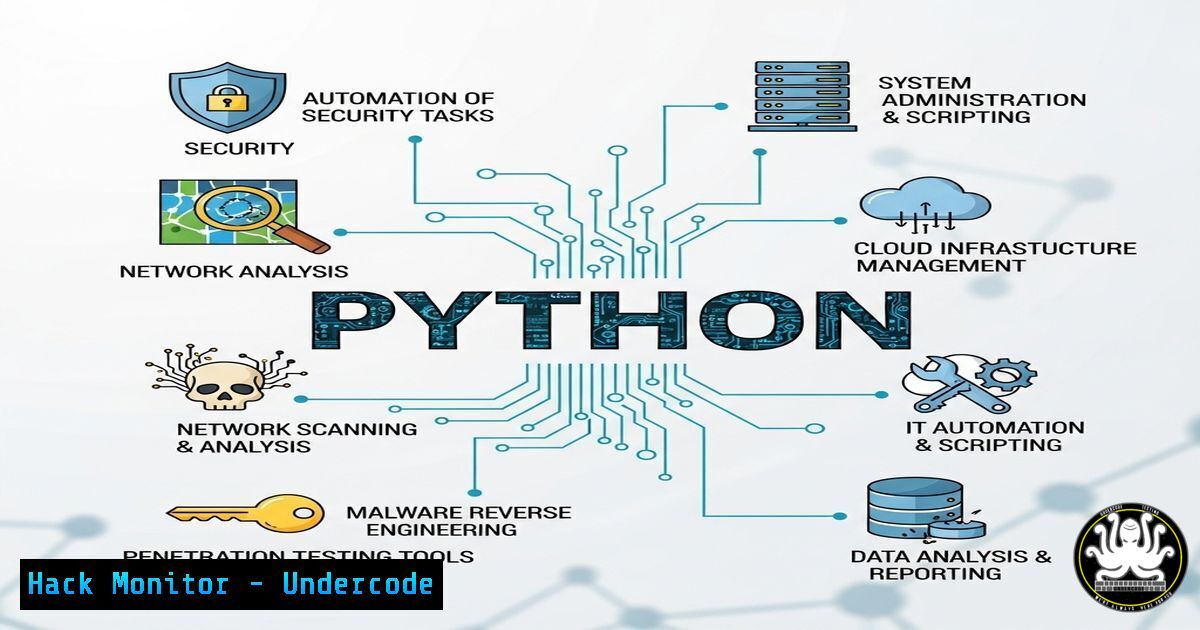
Python has become the lingua franca of cybersecurity, IT, and AI, with its versatility powering automation, penetration testing, and machine learning. As threats evolve, mastering Python is no longer optional—it’s a career imperative. This guide delivers actionable Python commands, security scripts, and automation techniques to make you “dangerous” in the field.
Learning Objectives
- Automate repetitive security tasks with Python scripts.
- Leverage Python for penetration testing and vulnerability scanning.
- Integrate Python with APIs for threat intelligence gathering.
1. Automating Network Scans with Python & Nmap
Command:
import nmap

scanner = nmap.PortScanner()
scanner.scan('192.168.1.1', '1-1024', '-sV')
print(scanner.scaninfo())
What It Does:
This script uses the `python-nmap` library to scan ports 1-1024 on a target IP (192.168.1.1), detecting service versions (-sV).
Step-by-Step:
1. Install `python-nmap`:
pip install python-nmap
2. Run the script to identify open ports and services.
2. Password Cracking with Python & Hashlib
Command:
import hashlib

def crack_hash(target_hash, wordlist):
with open(wordlist, 'r') as file:
for password in file:
hashed = hashlib.md5(password.strip().encode()).hexdigest()
if hashed == target_hash:
return password
return "Password not found."

print(crack_hash("5f4dcc3b5aa765d61d8327deb882cf99", "rockyou.txt"))
What It Does:
This script brute-forces an MD5 hash by comparing it against a wordlist (rockyou.txt).
Step-by-Step:
1. Download a wordlist (e.g., `rockyou.txt`).
2. Replace the `target_hash` with your MD5 hash.
3. Run the script to find plaintext matches.
3. Web Scraping for Threat Intelligence
Command:
import requests
from bs4 import BeautifulSoup

url = "https://example.com/threat-feed"
response = requests.get(url)
soup = BeautifulSoup(response.text, 'html.parser')

for link in soup.find_all('a'):
print(link.get('href'))
What It Does:
Extracts URLs from a threat intelligence feed for analysis.
Step-by-Step:
1. Install dependencies:
pip install requests beautifulsoup4
2. Modify the URL to a threat intel source (e.g., CISA alerts).
- API Security: Detecting Broken Object Level Authorization (BOLA)
Command:
import requests

user_id = "123"
url = f"https://api.example.com/users/{user_id}"
headers = {"Authorization": "Bearer YOUR_TOKEN"}

response = requests.get(url, headers=headers)
if response.status_code == 200:
print(f"Vulnerable: Unauthorized access to user {user_id}")
What It Does:
Tests for BOLA by accessing another user’s data without proper authorization.
Step-by-Step:
1. Replace `YOUR_TOKEN` with a valid JWT.
2. Change `user_id` to test IDOR vulnerabilities.
- Cloud Hardening: Automating AWS S3 Bucket Checks
Command:
import boto3

s3 = boto3.client('s3')
buckets = s3.list_buckets()

for bucket in buckets['Buckets']:
acl = s3.get_bucket_acl(Bucket=bucket['Name'])
if 'AllUsers' in str(acl):
print(f"Public bucket found: {bucket['Name']}")
What It Does:
Scans AWS S3 buckets for misconfigured public access.
Step-by-Step:
1. Install `boto3`:
pip install boto3
2. Configure AWS CLI credentials (`aws configure`).
What Undercode Say
- Key Takeaway 1: Python’s dominance in cybersecurity stems from its rich libraries (
nmap,requests,boto3) for automation and hacking. - Key Takeaway 2: Scripting repetitive tasks (log analysis, scans) frees up time for deep threat hunting.
Analysis:
The shift toward API-driven security and cloud automation means Python skills are now baseline for IT roles. As AI-powered attacks rise, defenders using Python for machine learning (e.g., anomaly detection) will lead the arms race.
Prediction
By 2026, 75% of red/blue team job postings will require Python proficiency, with demand spiking for AI-integrated security tools. Start scripting now—or risk obsolescence.
(Need the free Python course mentioned? Access it here.)
🎯Let’s Practice For Free:
IT/Security Reporter URL:
Reported By: Chuckkeith You – Hackers Feeds
Extra Hub: Undercode MoN
Basic Verification: Pass ✅


