
Listen to this Post
Introduction:
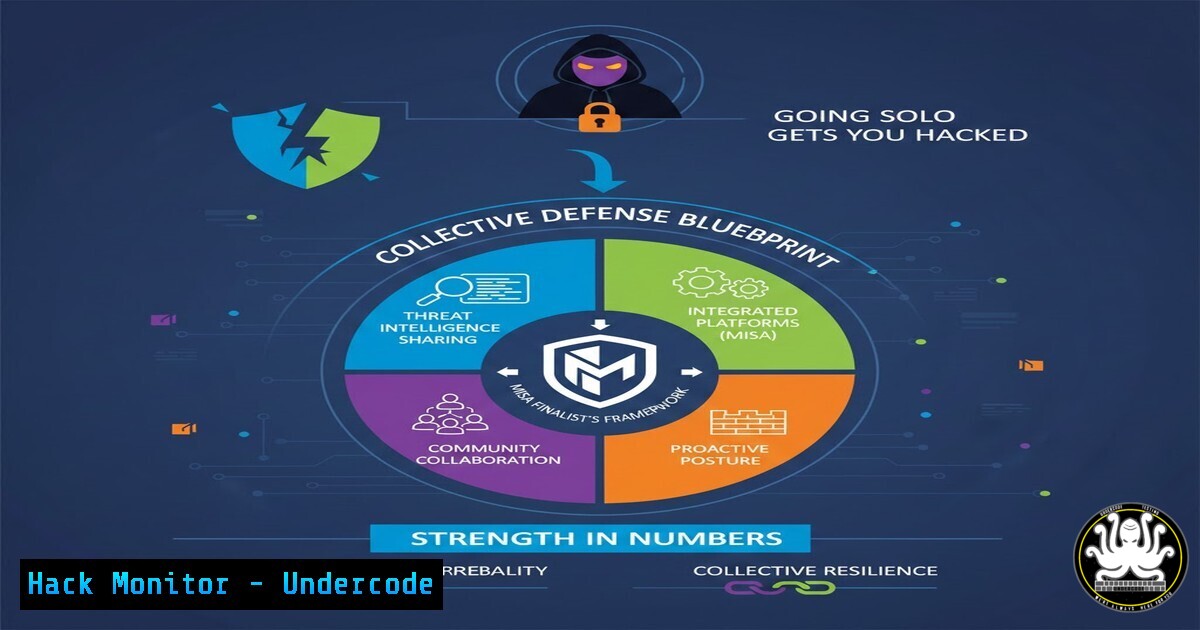
The recent announcement of the Microsoft Intelligent Security Association (MISA) finalists underscores a paradigm shift in cybersecurity: the era of the lone-wolf expert is over. Modern threats move faster than any individual can counter, making collaboration and shared intelligence the new critical security controls. This article deconstructs the “security as a team sport” ethos into actionable technical practices, moving from philosophy to implementation with cross-platform commands, cloud hardening, and orchestrated response protocols.
Learning Objectives:
- Implement cross-platform audit logging and centralized monitoring to create a shared “security truth.”
- Harden cloud identities and APIs using the principle of least privilege and automated compliance checks.
- Establish an integrated incident response workflow that leverages community intelligence and automated playbooks.
You Should Know:
- Building Your Collective Nervous System: Unified Audit Logging
A defensive team must see the same field. The first step is aggregating logs from every endpoint, server, and cloud service into a centralized SIEM. This creates the shared situational awareness alluded to by security communities like MISA.
Step‑by‑step guide:
On Linux (using auditd): To monitor a critical file like /etc/passwd:
sudo apt-get install auditd -y  Debian/Ubuntu
sudo systemctl start auditd && sudo systemctl enable auditd
sudo auditctl -w /etc/passwd -p wa -k identity_alteration
This rule (-watch file, for `w`rite or `a`ttribute change, with a `-k`ey for filtering) logs changes. View logs with sudo ausearch -k identity_alteration.
On Windows (via PowerShell): Enable detailed PowerShell logging to catch malicious scripts:
 Enable Script Block Logging
New-Item -Path "HKLM:\SOFTWARE\Policies\Microsoft\Windows\PowerShell\ScriptBlockLogging" -Force
Set-ItemProperty -Path "HKLM:\SOFTWARE\Policies\Microsoft\Windows\PowerShell\ScriptBlockLogging" -Name "EnableScriptBlockLogging" -Value 1
Forwarding: Use agents (like the Azure Log Analytics agent or Winlogbeat for Elasticsearch) to ship these logs to your central SIEM (e.g., Microsoft Sentinel, Splunk). Correlating Linux `auditd` events with Windows PowerShell logs can reveal cross-platform attack chains.
- The First Law of Cloud Defense: Assume Breach, Verify Explicitly
The referenced Microsoft’s Ten Laws of Cybersecurity Risk codify principles like “Assume breach.” This translates technically to enforcing Zero Trust for identities, your new perimeter.
Step‑by‑step guide:
Implement Conditional Access (Microsoft Entra ID / Azure AD): Go beyond basic MFA. Create a policy that blocks legacy authentication and requires compliant devices for access to sensitive data.
 Connect to Microsoft Graph (for demonstration of policy concept)
Connect-MgGraph -Scopes "Policy.ReadWrite.ConditionalAccess", "Application.Read.All"
 This is a conceptual step. Policies are typically built in the Azure Portal or defined as JSON templates.
Harden Service Principals & API Keys: Regularly audit and rotate secrets. Use Azure Privileged Identity Management (PIM) for just-in-time administrator access. For cloud resources, apply the principle of least privilege using granular RBAC roles.
3. Securing the Glue: API Security Hardening
APIs connect modern applications and are a primary attack vector. Community innovation often focuses on protecting these critical pathways.
Step‑by‑step guide:
Implement Rate Limiting & Input Validation: On an API gateway like NGINX, add rate limiting to a location block:
location /api/ {
limit_req zone=api_limit burst=10 nodelay;
proxy_pass http://api_backend;
 Validate Content-Type
if ($content_type !~ "application/json") {
return 415;
}
}
Use API Security Tools: Deploy a dedicated tool like Azure API Management with policies to check for SQLi, XSS, and validate JWT tokens. Regularly review API audit logs for anomalous patterns.
4. Orchestrating the Team Sport: Automated Incident Response
When a threat is detected, manual coordination is too slow. Security Orchestration, Automation, and Response (SOAR) platforms turn team playbooks into automated workflows.
Step‑by‑step guide:
Create a Basic Containment Playbook: In a tool like Microsoft Sentinel, automate the response to a malware detection from Microsoft Defender for Endpoint.
1. Trigger: Alert from Defender for Endpoint (e.g., “High confidence malware”).
2. Automated Actions:
Isolate the infected machine via the Defender API.
Query your SIEM for related lateral movement events.
Disable the affected user account in Active Directory via a PowerShell runbook.
Create a ticket in your ITSM system (e.g., ServiceNow).
3. Notification: Post a summary to a dedicated security team channel in Microsoft Teams or Slack.
5. Continuous Validation Through Threat Intelligence Sharing
Lifting each other higher, as the post states, means sharing indicators of compromise (IoCs). Integrate open-source and community threat feeds into your defenses.
Step‑by‑step guide:
Integrate a Threat Feed into a Firewall: Use `curl` and cron to regularly update block lists on a Linux-based firewall like iptables:
 Fetch a feed of malicious IPs and add them to an ipset
curl -s https://feodotracker.abuse.ch/downloads/ipblocklist.txt | grep -v '^' | xargs -I {} sudo ipset add malicious_ips {}
 Create an iptables rule to drop traffic from this set
sudo iptables -I INPUT -m set --match-set malicious_ips src -j DROP
Leverage MISA Integrations: Utilize built-in connectors in platforms like Microsoft Sentinel to ingest intelligence from MISA partners, effectively weaving community knowledge directly into your detection rules.
What Undercode Say:
- Key Takeaway 1: The most sophisticated technical control is worthless without a culture of collaboration and shared visibility. Tools like unified audit logs and SIEMs are the technical manifestation of “security as a team sport.”
- Key Takeaway 2: Adhering to foundational frameworks like Microsoft’s Ten Laws of Cybersecurity Risk provides the strategic direction, which must then be executed through granular technical policies—Conditional Access, API hardening, and automated playbooks.
The analysis here bridges motivational LinkedIn sentiment with the grim reality of security operations. The post’s celebration of community is, in fact, a strategic imperative. Adversaries share tools and tactics; defenders must share intelligence and automations with equal fervor. Implementing the technical controls outlined above operationalizes the community ethos, transforming warm sentiment into a hardened defensive posture. Failing to do so leaves gaps that automated ransomware and advanced persistent threats (APTs) will inevitably exploit, regardless of individual talent on the team.
Prediction:
The future of cybersecurity, as championed by communities like MISA, will be dominated by AI-driven collective defense. We will see the rise of automated, real-time threat intelligence marketplaces where anonymized detection logic, IoCs, and response playbooks are shared between organizations via secure, blockchain-verified channels within platforms. Machine learning models will be collaboratively trained on global attack data, creating a “community immune system” that can anticipate and neutralize novel attack vectors before they achieve widespread impact. The “team” will evolve from a company’s SOC to a global, automated network of defensive AI, overseen by human experts who curate and guide the collective response.
🎯Let’s Practice For Free:
IT/Security Reporter URL:
Reported By: Justinewolters Cybersecuritycommunity – Hackers Feeds
Extra Hub: Undercode MoN
Basic Verification: Pass ✅


