Listen to this Post
Introduction:
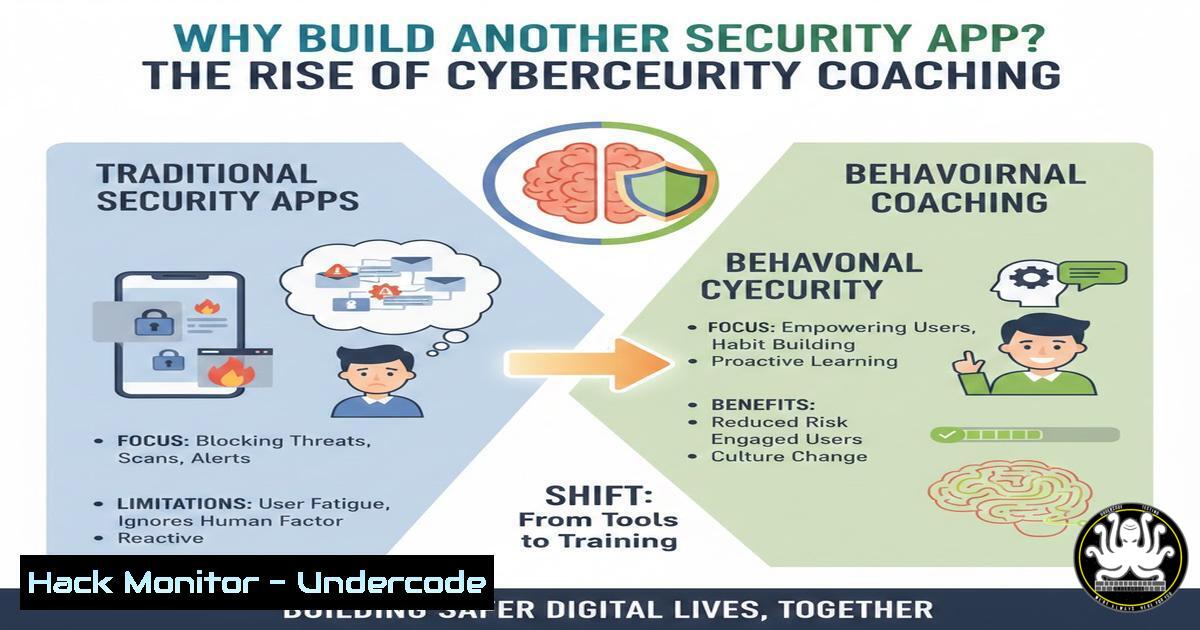
For years, the cybersecurity industry has been flooded with tools that tell users what to do—run this scan, enforce that policy, store this secret—but few actually guide them through the process of changing ingrained habits. The reality is that security is a behavior problem, not just a tools problem. As highlighted by the recent discussion around “Whispr,” a new paradigm is emerging: applications designed to coach better security habits rather than simply acting as passive repositories for credentials. This shift acknowledges that the human element remains the most volatile factor in any security posture, requiring a blend of psychological coaching and technical enforcement.
Learning Objectives:
- Understand the distinction between security tools and security coaching platforms.
- Learn to implement behavior-focused security practices using both Linux and Windows environments.
- Explore the integration of AI and automation in reinforcing secure habits within development workflows.
You Should Know:
1. Rebuilding Secrets Management with Behavioral Reinforcement
Traditional secrets managers (like HashiCorp Vault or AWS Secrets Manager) store credentials but do not prevent a developer from hardcoding a key out of convenience. Whispr’s philosophy suggests embedding coaching directly into the workflow. To emulate this, we can combine a secrets manager with proactive client-side hooks.
Step‑by‑step guide (Linux):
Instead of just pulling a secret, we force a check for hardcoded secrets pre-commit.
 Install a secret scanner like truffleHog or Gitleaks
sudo apt update && sudo apt install -y git
pip3 install truffleHog

Create a pre-commit hook to scan for secrets
cat > .git/hooks/pre-commit << 'EOF'
!/bin/sh
echo "Scanning for hardcoded secrets..."
if trufflehog --regex --entropy=False file://. | grep -i "secret"; then
echo "Commit blocked: Potential hardcoded secret found."
exit 1
fi
EOF
chmod +x .git/hooks/pre-commit

Simulate a bad commit
echo "API_KEY=12345" >> test.txt
git add test.txt
git commit -m "Test commit"  This should fail if the hook detects entropy.
Step‑by‑step guide (Windows PowerShell):
For Windows environments, we use a PowerShell script to enforce secure behavior in CI/CD pipelines.
 Windows PowerShell script to scan for secrets before build
Write-Host "Scanning for secrets in source code..." -ForegroundColor Yellow
if (Select-String -Path ".\src\" -Pattern "(api_key|secret|password)\s=\s['""][A-Za-z0-9]{20,}" -CaseSensitive:$false) {
Write-Host "Secret found! Halting build to enforce secure storage." -ForegroundColor Red
exit 1
} else {
Write-Host "No secrets found. Proceeding." -ForegroundColor Green
}
2. Coaching via AI-Powered Code Reviews
The “coaching” aspect involves using AI (LLMs) to review code not just for syntax, but for bad security habits. By integrating a local LLM (like Llama 3 or Mistral) into the IDE, we can provide real-time feedback.
Step‑by‑step guide (AI Integration with VS Code):
This assumes you have Ollama installed and a model pulled.
 Linux: Install Ollama and pull a model
curl -fsSL https://ollama.com/install.sh | sh
ollama pull codellama:13b

Create a Python script to act as a local API for code review
cat > security_coach.py << 'EOF'
import requests
import sys

def review_code(code_snippet):
prompt = f"Review this code for security flaws (hardcoded creds, SQLi, XSS):\n{code_snippet}\nExplain the risk and suggest a fix."
response = requests.post('http://localhost:11434/api/generate',
json={"model": "codellama:13b", "prompt": prompt, "stream": False})
return response.json()['response']

if <strong>name</strong> == "<strong>main</strong>":
code = sys.argv[bash]
print(review_code(code))
EOF

Usage
python3 security_coach.py "password = 'admin123'"
Windows users can use WSL to run the above or use the Windows binary for Ollama.
- Automating Habit Formation with Cron Jobs and Task Schedulers
Security habits require repetition. Automating reminders and checks enforces the behavior without manual intervention.
Step‑by‑step guide (Linux Cron):
Set up a weekly audit reminder that checks for world-readable sensitive files.
 Create a script to check for exposed files
cat > ~/security_check.sh << 'EOF'
!/bin/bash
echo "Weekly Security Habit Check: $(date)" >> ~/security_log.txt
find /home -type f -name ".pem" -o -name ".key" 2>/dev/null | while read file; do
perms=$(stat -c "%a" "$file")
if [ "$perms" -gt 600 ]; then
echo "Warning: $file has loose permissions ($perms)" >> ~/security_log.txt
fi
done
EOF
chmod +x ~/security_check.sh

Add to crontab (runs Monday at 9 AM)
(crontab -l 2>/dev/null; echo "0 9   1 /home/user/security_check.sh") | crontab -
Step‑by‑step guide (Windows Task Scheduler):
 PowerShell script to run via Task Scheduler
$action = New-ScheduledTaskAction -Execute "powershell.exe" -Argument "-File C:\scripts\audit_permissions.ps1"
$trigger = New-ScheduledTaskTrigger -Weekly -DaysOfWeek Monday -At 9am
$principal = New-ScheduledTaskPrincipal -UserId "SYSTEM" -LogonType ServiceAccount
Register-ScheduledTask -TaskName "SecurityHabitAudit" -Action $action -Trigger $trigger -Principal $principal
4. Hardening Cloud Configurations via Behavior-Driven Infrastructure
Moving from “tool-based” to “coaching-based” means Infrastructure as Code (IaC) should not just deploy, but also educate.
Step‑by‑step guide (Terraform with Validation):
We use Terraform’s `check` blocks (available in v1.5+) to validate security posture and output coaching messages.
 main.tf
resource "aws_s3_bucket" "example" {
bucket = "my-coaching-bucket"
}

check "bucket_public_access" {
data "aws_s3_bucket" "example" {
bucket = aws_s3_bucket.example.id
}

assert {
condition = data.aws_s3_bucket.example.policy == null
error_message = "Habit Check: You just made this bucket public. Remember the principle of least privilege? Let's fix that."
}
}
5. Exploitation and Mitigation Drills (Red vs. Blue)
To truly coach behavior, we must simulate the consequences of bad habits. Here is a simple simulation of a credential dump (mimicking a developer leaving secrets in a public repo) and its mitigation.
Step‑by‑step guide (Linux – Attack Simulation):
 Attacker simulates scraping GitHub for exposed keys
mkdir recon && cd recon
 Simulate cloning a repo that accidentally committed a .env file
echo "DB_PASSWORD=SuperSecret123" > .env
git init && git add .env && git commit -m "Initial commit"

Attacker uses grep to find passwords
grep -r "DB_PASSWORD" .
 Output: DB_PASSWORD=SuperSecret123
Mitigation (Defender):
 Use BFG Repo-Cleaner to purge the file from history
java -jar bfg.jar --delete-files .env .git
git reflog expire --expire=now --all && git gc --prune=now --aggressive
 Force push to remote
git push --force
This exercise coaches the developer on why pre-commit hooks matter, as rewriting history is painful.
What Undercode Say:
- Key Takeaway 1: Security tools are ineffective if they don’t account for human psychology; embedding “coaching” into the development lifecycle (via pre-commit hooks, AI reviews, and automated habit reminders) creates a resilient security culture.
- Key Takeaway 2: Automation must be paired with education. By using cron jobs, Terraform checks, and simulated attacks, we shift the narrative from “the scanner said no” to “I understand why this is secure.”
The analysis of this approach reveals a fundamental truth: the most sophisticated firewall cannot stop a developer from pasting an API key into a public GitHub repository. The Whispr philosophy suggests we must treat security as a continuous feedback loop, where every tool interaction reinforces a positive behavior. This requires a blend of technical controls—like the Linux commands and Windows scripts detailed above—and a cultural shift towards empathy and coaching. By integrating these practices, organizations can reduce the “security fatigue” that leads to shadow IT and risky shortcuts.
Prediction:
In the next 2-3 years, we will see a decline in standalone, passive security tools and a rise in “Integrated Security Coaches.” These will be AI-driven agents embedded directly within IDEs, CI/CD pipelines, and even communication platforms like Slack or Teams. They will not just flag issues but will engage in conversational remediation, asking developers why they chose a certain insecure method and offering contextual, real-time training. The future of security is conversational, behavioral, and deeply integrated into the human workflow.
▶️ Related Video (86% Match):
🎯Let’s Practice For Free:
IT/Security Reporter URL:
Reported By: Bitwisedhruv Why – Hackers Feeds
Extra Hub: Undercode MoN
Basic Verification: Pass ✅


