Listen to this Post
Introduction:
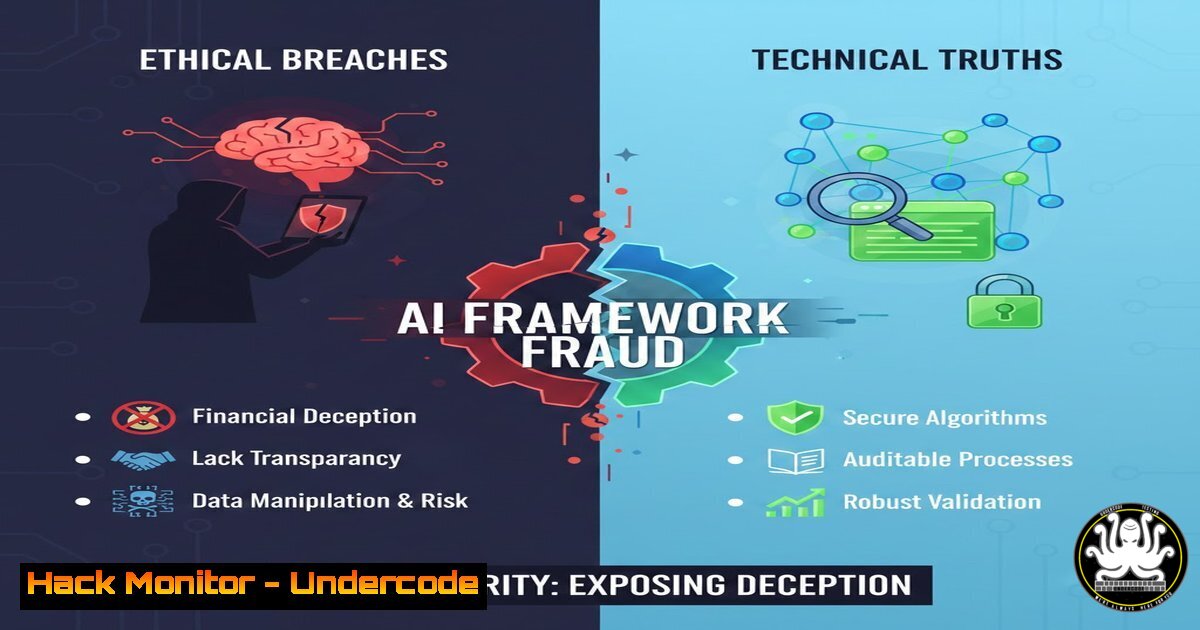
The cybersecurity industry operates on a foundation of trust, where accurate threat intelligence and proprietary research inform critical policy and purchasing decisions. A recent whistleblower allegation against a major vendor, Palo Alto Networks, claims this trust was violated through the misrepresentation of an AI-driven attack framework to Congress and investors, sparking a crisis of integrity that extends from the C-suite to national security dialogues.
Learning Objectives:
- Understand the alleged ethical breach involving the misattribution of an AI attack framework and its potential impact on policy and trust.
- Learn the technical components of a modern AI-driven attack framework, including automation, evasion, and command execution.
- Gain practical skills for investigating command-and-control (C2) infrastructure, analyzing process injections, and hardening systems against such AI-augmented threats.
You Should Know:
1. Deconstructing the AI-Driven Attack Framework
The core allegation involves a framework that automates cyber attacks using artificial intelligence. Such frameworks typically integrate reconnaissance, vulnerability exploitation, lateral movement, and data exfiltration into a cohesive, automated cycle. The “AI” component often involves machine learning models that select targets, modify exploit code in real-time to evade signature-based detection, or generate convincing phishing content.
Step-by-Step Guide: Simulating a Basic Automated Reconnaissance Module
While we condemn malicious use, understanding the mechanics is crucial for defense. A simplified Python script using common libraries can demonstrate automation concepts.
import subprocess
import requests
import json
 Example: Automated Subdomain Enumeration
target_domain = "example.com"
wordlist_path = "/usr/share/wordlists/subdomains.txt"
try:
with open(wordlist_path, 'r') as file:
for word in file:
subdomain = f"{word.strip()}.{target_domain}"
try:
 Using system host command for simplicity (ethical use on authorized domains only)
result = subprocess.run(['host', subdomain], capture_output=True, text=True, timeout=2)
if "has address" in result.stdout:
print(f"[+] Found: {subdomain}")
except subprocess.TimeoutExpired:
continue
except FileNotFoundError:
print("Wordlist not found. Install seclists package: 'sudo apt install seclists'")
What this does and how to use it: This script automates the brute-force discovery of subdomains, a typical first step in cyber kill chains. For defensive practice, run this only against domains you own or have explicit permission to test. It highlights how attackers use automation to scale reconnaissance.
2. Investigating Command-and-Control (C2) Infrastructure
AI frameworks require robust C2 servers to orchestrate attacks. Defenders must know how to identify and sinkhole such infrastructure.
Step-by-Step Guide: Analyzing Network Traffic for C2 Beacons
Use Linux command-line tools to detect periodic, beaconing network connections, a hallmark of C2 communication.
 Monitor established outbound connections frequently
sudo netstat -tanp | grep ESTABLISHED | awk '{print $4, $5, $7}'
 Use tcpdump to capture DNS traffic (common C2 channel)
sudo tcpdump -i any -n udp port 53 -v
 Filter for suspicious patterns (e.g., high frequency, long domain names)
sudo tcpdump -i any -n udp port 53 | awk '{print $NF}' | grep -oE '[a-zA-Z0-9-]+.(com|net|org|io)' | sort | uniq -c | sort -nr
What this does and how to use it: These commands help spot beaconing. `netstat` shows live connections tied to processes. `tcpdump` captures DNS queries; anomalous patterns like very long subdomains (e.g., d8f7sj2h.data.exfil[.]com) may indicate DNS tunneling for C2. Correlate this with process IDs (-p flag in netstat) to identify malicious binaries.
3. Exploiting & Mitigating Process Injection Techniques
Advanced frameworks use process injection (e.g., DLL, Process Hollowing) to run malicious code within legitimate processes like `explorer.exe` or svchost.exe.
Step-by-Step Guide: Detecting Process Injection with Windows Command Line
REM Use Windows Management Instrumentation Command-line (WMIC) to list processes with suspicious parent-child relationships
wmic process get Name,ProcessId,ParentProcessId,CommandLine | findstr /i "powershell wscript cmd"
REM Use Sysinternals Process Explorer (procexp.exe) manually to check for:
REM - Mismatched company names in a process.
REM - Memory regions with execute/read-write (RWX) permissions.
What this does and how to use it: Legitimate processes spawned by unexpected parents (e.g., `notepad.exe` launched by `cmd.exe` from a temp directory) are red flags. The `CommandLine` column can reveal malicious arguments. For deeper analysis, import Sysinternals Suite and use `procexp.exe` to examine process memory and loaded DLLs graphically.
4. Hardening API Security Against AI Enumeration
AI frameworks can brutally enumerate and attack exposed APIs. Securing them is non-negotiable.
Step-by-Step Guide: Implementing Rate Limiting and Token Validation with Linux/Cloud
For an API behind an Nginx reverse proxy on Linux:
 In /etc/nginx/nginx.conf or a site configuration
http {
limit_req_zone $binary_remote_addr zone=api_limit:10m rate=10r/s;
server {
location /api/ {
limit_req zone=api_limit burst=20 nodelay;
 Validate JWT token presence (example)
if ($http_authorization !~ "Bearer .+") {
return 401;
}
proxy_pass http://localhost:8080;
}
}
}
 Test configuration and reload
sudo nginx -t
sudo systemctl reload nginx
What this does and how to use it: This configures a rate limit of 10 requests per second per IP address for the `/api/` path, preventing AI-driven brute force. It also performs a basic check for a Bearer token. Always use proper JWT validation libraries in your backend for full security.
5. Cloud Infrastructure Hardening for IAM Attacks
AI tools excel at discovering misconfigured Identity and Access Management (IAM) roles in clouds like AWS.
Step-by-Step Guide: Auditing AWS IAM with the CLI
 List all IAM users and their attached policies
aws iam list-users --query "Users[].UserName"
aws iam list-attached-user-policies --user-name <USERNAME>
 Simulate what permissions a user has (using IAM Simulator)
aws iam simulate-principal-policy --policy-source-arn arn:aws:iam::<ACCOUNT_ID>:user/<USERNAME> --action-names "s3:" "ec2:"
 Check for overly permissive identity-based policies
aws iam list-policies --query "Policies[?AttachmentCount>0]" --output json | jq -r '.[] | select(.PolicyName | contains("Admin") or contains("FullAccess")) | .Arn'
What this does and how to use it: These commands audit IAM for excessive privileges. The `simulate-principal-policy` is critical for understanding effective permissions. Enforce the principle of least privilege: replace “ (wildcard) actions with specific ones like s3:GetObject.
6. Forensic Analysis: Timelining and Evidence Preservation
When an incident occurs, preserving evidence for potential legal proceedings (like an SEC whistleblower case) is vital.
Step-by-Step Guide: Creating a Basic Forensic Timeline on Linux
 Collect system logs (adjust paths as needed)
sudo cat /var/log/auth.log | grep -i "failed|accepted" > auth_audit.txt
 Get file system timestamps of sensitive directories
sudo find /etc /bin /sbin -type f -exec stat --format='%Y %n' {} \; 2>/dev/null | sort -n > fs_timeline.txt
 Capture current network state and processes
sudo netstat -tuanp > network_state.txt
sudo ps auxef > process_tree.txt
 Hash all collected files for integrity
sha256sum .txt > collection_hashes.txt
What this does and how to use it: This creates a rudimentary forensic timeline. `auth.log` shows login attempts. The `find` command gets file modification times, which can reveal backdoors. Hashing with `sha256sum` ensures evidence integrity for legal admissibility.
7. Mitigating Supply Chain Poisoning in AI Models
The alleged framework’s origins raise supply chain concerns. Attackers may poison the data or models used by AI security tools.
Step-by-Step Guide: Validating ML Model Integrity Before Deployment
import hashlib
import pickle
import numpy as np
 Step 1: Verify model file hash against a trusted source
model_path = "malware_classifier.pkl"
expected_hash = "a1b2c3...def"
with open(model_path, 'rb') as f:
file_hash = hashlib.sha256(f.read()).hexdigest()
if file_hash != expected_hash:
print("CRITICAL: Model integrity compromised!")
 Step 2: Run sanity checks on model predictions with known inputs
with open(model_path, 'rb') as f:
model = pickle.load(f)
test_sample = np.array([[0.1, 0.5, ...]])  A known benign feature vector
prediction = model.predict(test_sample)
assert prediction == 0, "Model produced unexpected result on known sample."
What this does and how to use it: This code performs a basic integrity check. Always obtain model hashes from a secure, separate channel. Sanity-check predictions against a curated “golden dataset” to detect significant drift caused by potential poisoning.
What Undercode Say:
- Trust, But Verify Vendor Claims: This incident underscores that even top-tier cybersecurity vendors must be scrutinized. Technical claims, especially those influencing policy and investment, require independent verification and transparent methodology.
- The Human Element is the Ultimate Layer: The most sophisticated AI framework or security product is rendered moot by ethical failures within an organization. Cultivating a culture of integrity is as critical as any technical control.
The whistleblower case presents a watershed moment. It’s not merely about intellectual property theft; it’s about the deliberate injection of falsified technical narratives into the highest levels of policy and finance. The technical dissection of such an AI framework reveals dual-use tools that defenders must understand intimately. However, the larger lesson is that the cybersecurity ecosystem’s health depends on courageous individuals and robust, transparent processes to validate the truth behind the technology.
Prediction:
This event will catalyze stricter scrutiny of vendor claims by governments and enterprise buyers, potentially leading to new regulations requiring auditable proof-of-origin for cited threat research. We will see a rise in independent, community-driven validation of security tools and AI models. Furthermore, “integrity due diligence” will become a standard clause in procurement, alongside technical assessments. In the long term, trust will decentralize from vendor brand names to verifiable, open-source tools and transparent research methodologies, reshaping the cybersecurity market’s power dynamics.
▶️ Related Video (76% Match):
🎯Let’s Practice For Free:
IT/Security Reporter URL:
Reported By: Robertringer Wendi – Hackers Feeds
Extra Hub: Undercode MoN
Basic Verification: Pass ✅


