Listen to this Post
Introduction:
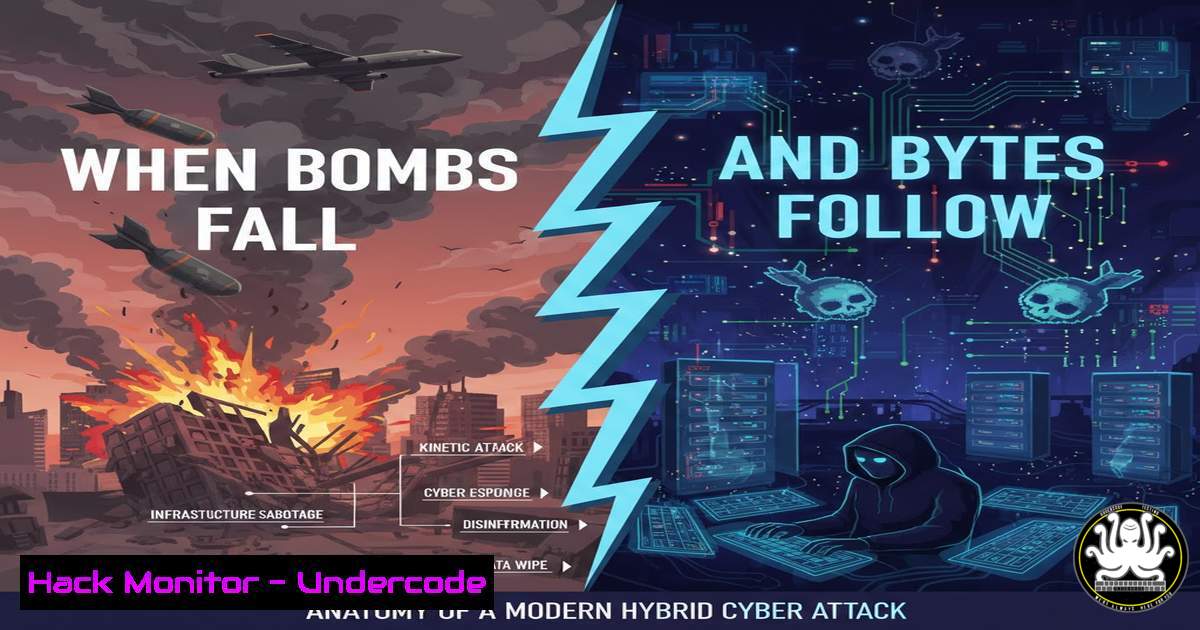
In late February 2026, the long-simmering shadow war between Israel and Iran erupted into a clear demonstration of 21st-century warfare, where kinetic strikes were synchronized with large-scale cyber offensives. This operation transformed the Iranian cyber landscape into a battlefield, with nation-state actors and affiliated hacker collectives deploying digital sabotage to amplify physical damage. By targeting internet infrastructure, government portals, and essential services, the campaign highlights a new reality: cyber warfare is no longer a support function but a primary theater of conflict designed to create psychological and operational chaos.
Learning Objectives:
- Objective 1: Analyze the convergence of kinetic military action and offensive cyber operations in hybrid warfare.
- Objective 2: Identify the technical vectors used to disrupt national internet infrastructure and deface government platforms.
- Objective 3: Develop defensive strategies to build resilience against state-sponsored attacks targeting Critical National Infrastructure (CNI).
You Should Know:
1. Dissecting the Attack: DDoS and Infrastructure Takedowns
The reported offensive included “coupures d’accès au réseau” (network access outages) and a “chute drastique du trafic internet” (drastic drop in internet traffic). While physical destruction of fiber lines is possible, the speed and scale of these outages typically point to cyber-induced disruption.
- What happened: Attackers likely utilized massive Distributed Denial of Service (DDoS) attacks against Internet Exchange Points (IXPs) or Border Gateway Protocol (BGP) hijacking to reroute or drop traffic. They may have also targeted DNS infrastructure, making domain resolution impossible for Iranian citizens.
- Technical Deep Dive (Linux): Security professionals analyzing such traffic can use `tcpdump` to spot anomalies.
Capture traffic to analyze a potential DDoS flood (SYN flood example)
sudo tcpdump -i eth0 'tcp[bash] & (tcp-syn) != 0' -c 10000
- Mitigation (Linux – iptables): To mitigate a SYN flood on a Linux server, rate-limiting can be applied.
Limit the number of new TCP connections per second to a specific port (e.g., port 80)
sudo iptables -A INPUT -p tcp --dport 80 -m limit --limit 25/minute --limit-burst 100 -j ACCEPT
2. Website Defacement as Psychological Warfare
The post mentions “plateformes populaires compromises, affichant des messages destinés à influencer des opinions.” Website defacement is a classic cyber tactic used to signal dominance and demoralize the target population.
- The Method: Attackers likely exploited unpatched vulnerabilities in Content Management Systems (CMS) or compromised administrative credentials to gain access to web servers and replace index pages with propaganda.
- Defensive Hardening (Linux): System administrators must secure file integrity.
Install and run AIDE (Advanced Intrusion Detection Environment) to monitor changes to web directories
sudo apt install aide
sudo aideinit
sudo mv /var/lib/aide/aide.db.new /var/lib/aide/aide.db
To check for changes:
sudo aide --check
3. Targeting Critical Infrastructure: Payment and Fuel Systems
The article references historical attacks on “systèmes de paiement de carburant” (fuel payment systems). This is a high-impact target. Taking down fuel stations causes immediate public panic and economic strain, achieving strategic goals without bloodshed.
- The Attack Surface: Industrial Control Systems (ICS) and SCADA (Supervisory Control and Data Acquisition) managing pumps and point-of-sale systems. These are often legacy systems running outdated software, connected to networks with poor segmentation.
- Defensive Strategy (Network Segmentation): Using firewalls to separate the corporate network from the operational network is crucial. On a Linux-based firewall (like pfSense or iptables), you would enforce strict rules.
Example iptables rule to block the OT network from initiating connections to the internet
Assuming OT network is 192.168.100.0/24
sudo iptables -A FORWARD -s 192.168.100.0/24 -m state --state NEW -j REJECT
4. The Role of “Hacktivist” Front Groups
The post notes “collectifs de hackers identifiés comme liés à des réseaux de renseignement.” State actors often use proxy groups to maintain plausible deniability. These groups utilize readily available tools to conduct disruptive attacks.
- Common Tooling: These groups frequently use DDoS-for-hire services (booter/stresser) or ransomware variants to cause disruption.
- Defensive Measures (Windows Endpoint): Organizations should harden Windows endpoints against initial access. PowerShell logging is key to detecting malicious scripts.
Enable PowerShell script block logging via Group Policy or Registry
This command sets the registry key to enable logging
reg add "HKLM\SOFTWARE\Policies\Microsoft\Windows\PowerShell\ScriptBlockLogging" /v EnableScriptBlockLogging /t REG_DWORD /d 1 /f
5. Influence Operations and Hybrid Messaging
Beyond technical sabotage, the “messages destinés à influencer des opinions” represent Information Operations (IO). Compromised platforms and media channels are used to spread disinformation or fear.
- The Mechanism: Attackers compromise media databases or news distribution lists to send false alerts (e.g., “surrender now” or false reports of imminent attacks).
- Verification Protocols: Organizations must implement out-of-band communication verification. This is a policy, not a code fix, but can be supported by technical checks like DKIM/SPF for email to prevent spoofing of official communications.
6. Building a Resilient Framework Against Hybrid Threats
The key takeaway from this Israeli-Iranian escalation is the need for resilience. Organizations and states must assume breach and prepare for service degradation.
- Incident Response Drills: Simulate a scenario where internet connectivity is lost (BGP attack) and critical web services are defaced.
- Offline Backups: Ensure critical system configurations and data are backed up offline or in an air-gapped environment to recover from wiper malware that often accompanies such attacks.
- Red Teaming: Employ red teams to simulate hybrid attacks, combining phishing (to gain access for defacement) with physical social engineering.
What Undercode Say:
- The Cyber-Physical Nexus is Here: The February 2026 operations prove that cyber attacks are now a primary enabler of physical military campaigns, designed to blind, confuse, and economically cripple an adversary before troops or missiles even arrive.
- National Resilience is the New Goal: Defense can no longer focus solely on keeping hackers out. The focus must shift to “assured operations in a degraded state.” How does a government function if the fuel pumps don’t work? How do hospitals operate if the internet is down?
The events in Iran are a blueprint for future conflicts. We are moving into an era where every missile strike is preceded or accompanied by a digital wave intended to maximize its impact. For defenders, this means the attack surface is no longer just the network, but the very perception of reality by the civilian population. The line between cyber warfare and information warfare has been permanently blurred, demanding a unified defense strategy that protects both data and public trust.
Prediction:
We will see a proliferation of “hybrid response” doctrines. Nations will no longer respond to a cyber attack with only a cyber counter-attack. The next logical step in escalation, as demonstrated here, is the coupling of cyber sabotage with conventional military force. This lowers the threshold for kinetic conflict, as a major cyber attack on critical infrastructure (power grids, financial systems) will increasingly be viewed as a casus belli equivalent to a physical strike, leading to faster, more aggressive real-world retaliation. Expect to see the rise of “active defense” units that not only defend networks but are pre-authorized to disrupt the digital infrastructure of an aggressor nation preemptively during times of heightened tension.
▶️ Related Video (82% Match):
🎯Let’s Practice For Free:
IT/Security Reporter URL:
Reported By: Sandra Aubert – Hackers Feeds
Extra Hub: Undercode MoN
Basic Verification: Pass ✅


