
Listen to this Post
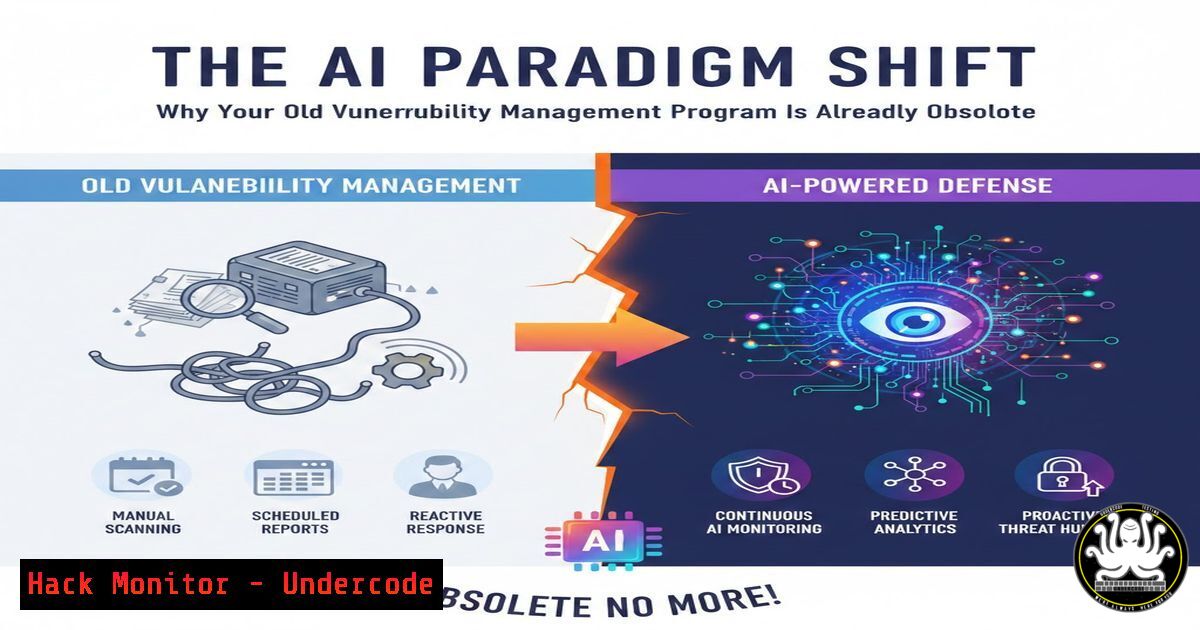
Introduction:
The traditional vulnerability management lifecycle—scan, prioritize, patch, repeat—is crumbling under the weight of modern artificial intelligence pipelines. AI systems are not just software; they are dynamic, data-driven ecosystems where a poisoned dataset or a compromised model weight poses a greater risk than an unpatched Windows Server 2012 box. This shift demands a new security philosophy that moves beyond CVSS scores and into the realm of adversarial machine learning, supply chain integrity, and runtime behavioral analysis. Security professionals must now defend not only the infrastructure but the intelligence that runs on top of it.
Learning Objectives:
- Understand the fundamental differences between traditional IT vulnerability management and AI-specific security risks.
- Learn to identify and mitigate attack vectors unique to machine learning pipelines, including data poisoning and model inversion.
- Gain practical skills in implementing runtime security controls and integrity checks for AI models and containers.
You Should Know:
- The Failure of CVSS in the Age of Large Language Models
The Common Vulnerability Scoring System (CVSS) was designed for software vulnerabilities like buffer overflows or misconfigurations. It fails to account for the nuances of AI models, such as model theft, prompt injection, or training data extraction. A model that outputs sensitive training data due to a membership inference attack doesn’t have a traditional CVE, yet its business impact is catastrophic.
Step‑by‑step guide: Auditing an AI Model for Data Leakage
To understand if a model is leaking training data, security teams can perform basic membership inference tests.
Linux Command (Using TensorFlow Privacy Toolkit):
 Install the TensorFlow Privacy library
pip install tensorflow-privacy

Run a membership inference attack on a trained model
 (Assuming you have a saved model 'my_model' and a test dataset)
python -m tf_privacy.membership_inference_attack \
--model_dir=/path/to/my_model \
--n_train=5000 \
--n_test=1000 \
--output_dir=/tmp/attack_results
Windows Command (PowerShell – Checking for exposed data in logs):
 Search Windows event logs or application logs for potential model output leaks
Get-ChildItem -Path "C:\AI_Logs\" -Recurse -File | Select-String "PII|SSN|Credit Card" | Out-GridView
What this does: The Linux command simulates an attacker trying to determine if a specific data record was used to train the model. If the attack accuracy is significantly above 50%, the model is likely leaking training data. The Windows command helps auditors find accidental logging of sensitive inputs or outputs.
- Supply Chain Security: From NPM to Hugging Face
Traditional IT worried about `package.json` vulnerabilities. AI security must worry about `modelcard.json` and malicious PyTorch hub downloads. Attackers are now uploading models with pickled Python objects that execute arbitrary code when loaded.
Step‑by‑step guide: Scanning Models for Malicious Code
Before loading any model from a public repository, security teams must inspect the files.
Linux Command (Using `pickle` inspector and `clamav`):
 1. Download a model for inspection (example from Hugging Face)
git clone https://huggingface.co/bert-base-uncased

<ol>
<li>Use 'fickling' to decompile and inspect pickle files for malicious code
pip install fickling
fickling -s /path/to/model/pytorch_model.bin --inspect</p></li>
<li><p>Scan all files with ClamAV for known malware
clamscan -r /path/to/model/
Windows Command (Using PowerShell to check for suspicious file extensions):
Identify unusual files in model directories that could be droppers
Get-ChildItem -Path "C:\Models\" -Recurse -Include .exe, .dll, .scr, .vbs
What this does: The `fickling` tool decompiles the binary pickle format into Python AST, allowing you to see if the model executes system commands (os.system, subprocess.Popen) upon loading. This stops zero-day supply chain attacks disguised as AI models.
3. Hardening the MLOps Pipeline: Kubernetes and Kubeflow
AI workloads predominantly run on Kubernetes. Misconfigurations in these clusters expose internal APIs and allow privilege escalation to the underlying GPU nodes, which are high-value targets for cryptominers.
Step‑by‑step guide: Auditing Kubernetes RBAC for AI Namespaces
Linux/macOS Command (using kubectl):
 1. Check who can create pods in the 'ml-workloads' namespace
kubectl auth can-i create pods -n ml-workloads --as=system:serviceaccount:ml-workloads:default

<ol>
<li>List all roles and clusterroles that grant 'create' permissions on pods
kubectl get clusterroles -o yaml | grep -A5 -B5 "verbs:.create" | grep -A5 -B5 "resources:.pods"</p></li>
<li><p>Check for overly permissive service accounts mounting host paths
kubectl get pods -n ml-workloads -o jsonpath='{range .items[]}{.spec.serviceAccountName}{" : "}{.spec.volumes[].hostPath}{"\n"}{end}'
Windows Command (Using `kubectl` in PowerShell):
 Get detailed pod info to see if any are running as root (bad practice)
kubectl get pods -n ml-workloads -o json | ConvertFrom-Json | Select -ExpandProperty items | Select -ExpandProperty spec | Select containers, securityContext
What this does: These commands reveal if a machine learning pipeline has the ability to create new containers (leading to container escapes) or mount sensitive host directories, which breaks tenant isolation.
- Runtime Defense: Monitoring Model Drift and Adversarial Inputs
AI models can be subtly manipulated at runtime (adversarial attacks) to misclassify data, causing autonomous systems to fail. Monitoring for statistical drift in inputs and outputs is a new security control.
Step‑by‑step guide: Implementing Basic Input Sanitization
While complex defenses require data scientists, security engineers can enforce input validation at the API gateway.
YAML Configuration (OpenAPI/Swagger for an AI endpoint):
 Example of enforcing input size limits and type to prevent resource exhaustion
paths:
/predict:
post:
requestBody:
content:
application/json:
schema:
type: object
properties:
image_array:
type: array
items:
type: number
maxItems: 784  Prevent sending a million items to DoS the model
text_prompt:
type: string
maxLength: 512  Prevent prompt injection via extreme length
required:
- image_array
Linux Command (Monitoring nginx logs for weird inputs):
 Tail the AI model server logs and look for anomalous request patterns
tail -f /var/log/nginx/ai_access.log | awk '{if(length($0) > 10000) print "Potential attack: huge request from " $1}'
What this does: The YAML ensures the API rejects malformed inputs before they hit the model. The Linux command acts as a simple behavioral monitor, flagging abnormally large requests that could indicate a denial-of-service or buffer overflow attempt against the model server.
- Data Security: Encrypting Training Sets and Model Weights
Data is the new oil, and models are the refineries. If an attacker gains access to the storage bucket containing training data or final model weights, they have stolen the company’s intellectual property.
Step‑by‑step guide: Implementing Envelope Encryption on Cloud Storage (AWS S3 Example)
AWS CLI Commands (Linux/Windows/macOS):
 1. Create a KMS key for model encryption
aws kms create-key --description "Key for AI Model Encryption"

Note the KeyId returned

<ol>
<li>Upload a model file with server-side encryption enabled
aws s3 cp final_model.bin s3://ai-models-bucket/ --sse aws:kms --sse-kms-key-id <your-key-id></p></li>
<li><p>Set a bucket policy to enforce encryption on all new uploads
aws s3api put-bucket-policy --bucket ai-models-bucket --policy file://enforce-encryption-policy.json
Example `enforce-encryption-policy.json`:
{
"Version": "2012-10-17",
"Statement": [
{
"Sid": "DenyIncorrectEncryptionHeader",
"Effect": "Deny",
"Principal": "",
"Action": "s3:PutObject",
"Resource": "arn:aws:s3:::ai-models-bucket/",
"Condition": {
"StringNotEquals": {
"s3:x-amz-server-side-encryption": "aws:kms"
}
}
}
]
}
What this does: This ensures that all model files in the S3 bucket are encrypted at rest with a managed key. The bucket policy denies any upload attempt that does not specify the correct encryption header, preventing accidental exposure.
What Undercode Say:
- Shift Left, but Shift Different: Moving security left in the SDLC now means validating Jupyter notebooks and data pipelines, not just code. Security teams must integrate with tools like DVC (Data Version Control) and MLflow to ensure data integrity from the start.
- Runtime is the New Perimeter: You cannot pre-scan a neural network for a vulnerability. The only way to catch inference attacks or model theft is through runtime behavioral analysis and anomaly detection on the model’s outputs.
The era of treating AI systems like standard servers is over. Organizations that fail to adapt their vulnerability management philosophy will find their most valuable intellectual property—their trained models—exfiltrated or poisoned, often without a single traditional security alert firing.
Prediction:
Within the next 24 months, regulatory bodies will mandate “AI Bill of Materials” (AI-BOM) and require penetration testing specifically targeting adversarial machine learning attacks. The market will see a surge in “Model Firewall” appliances that sit between the user and the model, inspecting inputs and outputs for malicious intent, mirroring the evolution of the web application firewall (WAF) two decades ago.
▶️ Related Video (82% Match):
🎯Let’s Practice For Free:
IT/Security Reporter URL:
Reported By: Nilesh Gade – Hackers Feeds
Extra Hub: Undercode MoN
Basic Verification: Pass ✅


