Listen to this Post
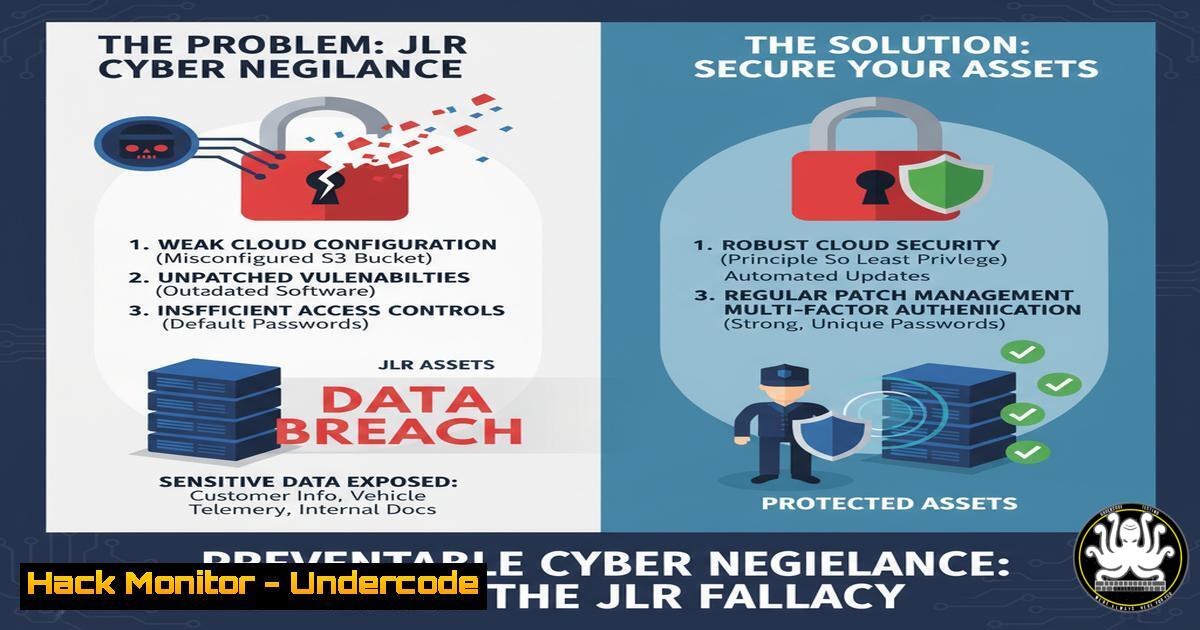
Introduction:
The recent cyber attack on Jaguar Land Rover (JLR), now stretching into its fourth week, exposes a critical truth in modern cybersecurity: catastrophic breaches are often the result of fundamental, preventable failures, not sophisticated zero-day exploits. This incident, mirroring failures at major organizations like the NHS and UK Ministry of Defence, highlights a systemic neglect of basic cyber hygiene, including unsecured domains, misconfigurations, and vulnerable servers, despite massive investments in security contracts. This article deconstructs the technical lapses likely at play and provides actionable commands and steps to fortify your organization’s external attack surface.
Learning Objectives:
- Identify and remediate common network and domain misconfigurations that expose organizations to initial compromise.
- Implement robust vulnerability scanning and patch management processes for critical servers.
- Harden cloud and API security postures to prevent data exfiltration.
- Utilize logging and monitoring to detect and respond to suspicious activities.
- Understand the attacker’s mindset and common exploitation techniques to better defend against them.
You Should Know:
1. External Asset Discovery and Footprinting
Before attackers can breach a network, they first map its digital footprint. The negligence cited in the JLR breach suggests poor oversight of external assets.
Verified Commands & Tools:
– `nmap -sS -sV -O [bash]` (Linux/macOS)
– `whois [bash]`
– `dig ANY [bash] @8.8.8.8`
– `theHarvester -d [bash] -b all`
– `subfinder -d [bash]`
Step-by-Step Guide:
This reconnaissance phase is critical. Attackers use tools like Nmap to discover live hosts and services. The `-sS` flag performs a stealthy SYN scan, `-sV` probes service versions, and `-O` attempts OS detection. Simultaneously, `whois` and `dig` queries reveal domain registration details and DNS records, potentially exposing forgotten subdomains or misconfigured name servers. Regularly running these same tools against your own organization helps you see what an attacker sees and identify unauthorized or poorly configured assets.
2. Identifying Misconfigured Servers and Open Ports
Exposed services on unnecessary ports are a primary attack vector. The JLR breach commentary points directly to this issue.
Verified Commands & Configurations:
– `nmap -p- –open [bash]` (Scans all ports)
– `netstat -tuln` (Windows: netstat -an | findstr LISTENING)
– `ss -tuln` (Linux)
– Remediation: Firewall rule to block all unnecessary ports (e.g., `ufw deny out 23` for Telnet on Linux).
Step-by-Step Guide:
A full port scan (-p-) identifies services running on non-standard ports. On your own servers, use `netstat` or `ss` to audit listening ports. Any service not explicitly required for business function should be disabled or firewalled. For example, an exposed Remote Desktop Protocol (RDP) port (3389) without strong authentication is a common entry point for ransomware.
3. Vulnerability Assessment with OpenVAS
Once services are identified, their vulnerabilities must be assessed. An £800 million security contract should guarantee rigorous scanning.
Verified Commands & Tools:
– `gvm-setup` (Initial OpenVAS/GVM setup)
– `gvm-start` (Start the services)
– Access the web interface (https://localhost:9392) and create a new task targeting your IP range.
Step-by-Step Guide:
OpenVAS is a powerful open-source vulnerability scanner. After installation and setup, configure a scan task against your internal or external IP addresses. The scanner will probe each service for known CVEs (Common Vulnerabilities and Exposures), providing a detailed report with risk scores and remediation advice. Regular weekly or monthly scans are non-negotiable for compliance and security.
4. Hardening Web Servers (Apache/Nginx)
Web servers are high-value targets. Misconfigurations can lead to directory traversal, information leakage, or worse.
Verified Configuration Snippets (Apache .htaccess):
– `Options -Indexes` (Prevents directory listing)
– `ServerTokens Prod` (Hides server version)
– `Header always set X-Content-Type-Options nosniff`
Step-by-Step Guide:
Disabling directory listings (-Indexes) prevents attackers from easily browsing your web directories for sensitive files. Hiding the server version information (ServerTokens Prod) makes it harder for attackers to launch version-specific exploits. These settings, added to the main configuration file or a `.htaccess` file, are basic yet essential hardening steps.
5. API Security Testing with OWASP ZAP
Modern applications rely on APIs, which are often poorly secured and a rich source for data leaks.
Verified Commands & Tools:
– `docker run -v $(pwd):/zap/wrk/:rw -t owasp/zap2docker-stable zap-baseline.py -t https://[api-endpoint]`
– Using ZAP GUI: Configure the target URL and run an “Active Scan”.
Step-by-Step Guide:
APIs can expose endpoints that leak data or allow unauthorized actions. OWASP ZAP (Zed Attack Proxy) automates the discovery of common API vulnerabilities like broken object level authorization (BOLA) and injection flaws. The Docker command provides a quick baseline scan, while the GUI offers deeper, interactive testing. Integrate this into your CI/CD pipeline for continuous security.
6. Cloud Storage Misconfiguration Check
Unsecured cloud storage buckets are a plague, often exposing sensitive data directly to the public internet.
Verified AWS CLI Command:
– `aws s3api get-bucket-acl –bucket [bucket-name]- `aws s3api get-bucket-policy --bucket [bucket-name]`
<h2 style="color: yellow;">Step-by-Step Guide:</h2>
These AWS CLI commands check the Access Control List (ACL) and policy of an S3 bucket. If the output shows grants forhttp://acs.amazonaws.com/groups/global/AllUsers`, the bucket is publicly readable. This is a critical misconfiguration. Buckets should be private by default, with access granted explicitly via IAM roles only to necessary principals.
7. Detecting Lateral Movement with Log Analysis
After initial access, attackers move laterally. Detecting this requires sharp log analysis.
Verified SIEM Query (Splunk SPL example):
– `index=windows (EventCode=4624 LogonType=3) OR (EventCode=4625) | stats count by src_ip, user`
– `index=linux “sudo:” OR “su:” | search “session opened” | stats count by user, src`
Step-by-Step Guide:
This Splunk query looks for Windows network logons (EventCode 4624, Type 3) which indicate SMB/RDP connections between machines, and failed logons (4625). A spike in connections from a single source IP to multiple destination hosts is a strong indicator of lateral movement. Similarly, monitoring `su` and `sudo` sessions on Linux systems can reveal privilege escalation attempts. Correlating these logs is key to cutting off an attacker’s progress.
What Undercode Say:
- Negligence is the Primary Vulnerability. The JLR case demonstrates that the most significant risks are not exotic technical flaws but a culture of negligence and a failure to execute on security fundamentals. No amount of financial investment can compensate for this.
- Accountability is Absent. The potential for a government bailout following a breach linked to alleged negligence creates a dangerous precedent, effectively socializing the losses of private corporate failures and removing the incentive for robust security.
The analysis of the JLR breach points not to a technological failure but a profound organizational and accountability failure. The technical misconfigurations mentioned—unsecured domains, exposed IPs, vulnerable servers—are symptoms of a deeper malaise: the decoupling of financial expenditure from effective security outcomes. When large contracts are awarded without verifiable performance metrics, and when the consequences of failure are mitigated by public funds, the incentive to build a truly resilient security posture evaporates. This incident should serve as a stark warning to all organizations: prioritize verifiable security controls and foster a culture of accountability, or become the next case study in preventable cyber negligence.
Prediction:
The JLR breach will catalyze stricter regulatory scrutiny for critical national infrastructure and large enterprises, particularly around supply chain security and the verification of cybersecurity spending. We predict the emergence of mandatory, public-facing security audits for companies that receive significant government contracts or subsidies. Failure to meet basic hardening benchmarks will result in financial penalties and disqualification from future public funds. This shift will force a move from checkbox compliance to demonstrable technical security, fundamentally changing how large-scale cybersecurity contracts are managed and audited.
🎯Let’s Practice For Free:
IT/Security Reporter URL:
Reported By: Andy Jenkinson – Hackers Feeds
Extra Hub: Undercode MoN
Basic Verification: Pass ✅


