Listen to this Post
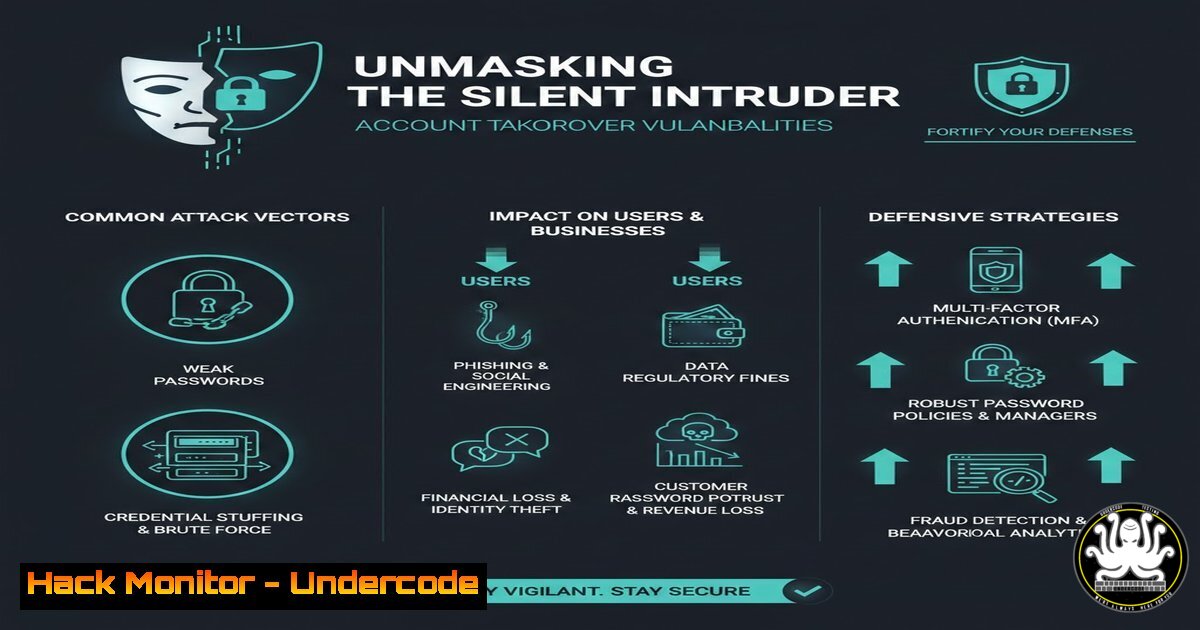
Introduction:
Account Takeover (ATO) attacks represent one of the most pervasive and damaging threats in the modern digital landscape. By exploiting flaws in authentication mechanisms, particularly the password reset functionality, attackers can bypass security controls and seize complete control of user accounts. This article deconstructs the techniques behind these attacks, focusing on common vulnerabilities like Insecure Direct Object References (IDOR) and SQL Injection, providing a red-team and blue-team perspective for comprehensive understanding and defense.
Learning Objectives:
- Understand the critical role of password reset functionality as an attack vector for Account Takeover.
- Learn to identify and exploit IDOR and SQL Injection vulnerabilities within password reset flows.
- Implement robust mitigation strategies to harden authentication systems against these exploits.
You Should Know:
1. The Anatomy of a Password Reset Request
A typical password reset process involves several steps: the user requests a reset, the application generates a unique token, sends it to the user’s registered email or phone, and the user submits the token to set a new password. The vulnerability often lies in how the application handles the identity of the user during this process. Instead of relying on the user’s session, the application might directly use parameters from the HTTP request, such as user_id, email, or username, to associate the reset token. If an attacker can manipulate these parameters, they can redirect the token to an account they control.
Step‑by‑step guide explaining what this does and how to use it.
Step 1: Intercept the Request. Use a proxy tool like Burp Suite or OWASP ZAP to intercept the HTTP request sent when you click “Forgot Password” for your own account.
Step 2: Analyze the Parameters. Look for parameters that identify the user. Common examples include user_id=12345, [email protected], or username=admin.
Step 3: Modify the Parameter. Change the identifying parameter to that of a target user. For instance, change `user_id=12345` to `user_id=12346` or `[email protected]` to [email protected].
Step 4: Forward the Request. If the application is vulnerable, the password reset link or token will be sent to the attacker’s communication channel, allowing them to change the victim’s password.
2. Exploiting IDOR in the Reset Flow
Insecure Direct Object Reference (IDOR) occurs when an application provides direct access to objects based on user-supplied input. In the context of password reset, this could mean the reset token itself is predictable or accessible. For example, the token might be a simple sequential number, or the endpoint to set the new password might accept any user ID.
Step‑by‑step guide explaining what this does and how to use it.
Step 1: Request a Token. Request a password reset for your own account and receive the token via email. The token might look like a long string, e.g., aBcDeFgH12345.
Step 2: Identify the Pattern. If the token appears in a URL, such as https://example.com/reset-password?token=aBcDeFgH12345`, try to understand if it's predictable. Request another token and see if it's sequential or time-based.curl`):
Step 3: Enumerate Tokens. Use a tool like `curl` or `wget` to automate requests with guessed tokens.
<h2 style="color: yellow;"> Linux/macOS (
for token in {00000..99999}; do
curl -s "https://example.com/reset-password?token=$token" | grep -q "Set New Password" && echo "Valid token found: $token" && break
done
This script iterates through a numerical range, checking for a success message on the page.
Step 4: Hijack the Account. Once a valid token for another user is found, use it to set a new password and complete the account takeover.
- SQL Injection: The Classic Killer in Reset Endpoints
Sometimes, the user identifier in the password reset request is passed directly to a database query without proper sanitization. This allows an attacker to inject malicious SQL code, potentially altering the query’s logic to change another user’s password or leak their reset token.
Step‑by‑step guide explaining what this does and how to use it.
Step 1: Find the Injection Point. In the password reset request, try injecting a single quote (') into the `user_id` or `email` parameter. If the application returns a database error, it is likely vulnerable.
Step 2: Craft a Union-Based or Boolean-Based Payload. The goal is to manipulate the query. A classic payload might force the application to reset the administrator’s password.
Example Payload for `user_id` parameter: `1′ OR ‘1’=’1′ — -`
This payload transforms the query logic to always be true, potentially affecting the first user in the database (often an admin).
Step 3: Execute the Attack. Send the crafted payload. If successful, the password reset email might be sent for the admin account, or the password might be changed directly.
Step 4: Mitigation (For Developers): The only robust defense is using parameterized queries (prepared statements).
Python (with SQLite) Example:
 VULNERABLE
cursor.execute("SELECT email FROM users WHERE user_id = " + user_id)

SECURE
cursor.execute("SELECT email FROM users WHERE user_id = ?", (user_id,))
4. Bypassing Token Validation Entirely
Some flawed implementations check the token’s validity but do not re-associate it with the user’s session when the new password is submitted. An attacker can use their own valid token to change another user’s password.
Step‑by‑step guide explaining what this does and how to use it.
Step 1: Intercept the Final Submit. After obtaining a valid reset token for your own account, intercept the POST request that submits the new password.
Step 2: Locate the User Identifier. This request will likely contain the token and the new password, but it might also contain a hidden `user_id` or `username` field.
Step 3: Change the User Identifier. Modify the `user_id` parameter to that of the target victim while keeping your valid token in the request.
Step 4: Forward the Request. The application validates the token (which is correct) but applies the password change to the user specified in the `user_id` parameter, not the user who originally requested the token.
5. Hardening Your Password Reset Mechanism
From a defensive standpoint, securing the password reset flow is non-negotiable. The principle of least privilege and robust session handling are paramount.
Step‑by‑step guide explaining what this does and how to use it.
Step 1: Use Session-Based Association. Never trust client-supplied user identifiers after the initial request. Once a reset is requested, link the generated token to the user in the server-side session. The final password change should only be possible by providing the token, with no other user identifier.
Step 2: Implement Short-Lived, Unpredictable Tokens. Use cryptographically secure random number generators to create tokens. They should be long (e.g., 128-bit) and have a short expiration time (e.g., 15-30 minutes).
Linux Command to Generate a Secure Token:
openssl rand -hex 32
Step 3: Rate Limiting and Logging. Implement strict rate limiting on all password reset endpoints (e.g., 5 attempts per IP per hour). Log all reset attempts, including IP addresses, user agents, and timestamps, for security monitoring.
Step 4: Secure Code with Parameterized Queries. As shown in Section 3, this is the definitive mitigation for SQL Injection.
What Undercode Say:
- The password reset function is a primary attack vector that is often overlooked during development and testing, making it a low-hanging fruit for attackers.
- A multi-layered defense is crucial; relying on a single control (like a complex token) is insufficient. Session management, input validation, and logging must work in concert.
- The conflation of “identity” (who you are claiming to be) and “authorization” (what you are allowed to do) in a single client-side parameter is the root cause of most ATO vulnerabilities in this context.
Analysis:
The LinkedIn post highlights a critical, real-world threat that sits at the intersection of broken access control and injection flaws. The mention of both IDOR and SQL Injection is significant because it shows that while simple logic flaws (IDOR) are common, the attack surface can extend to deep technical vulnerabilities. For bug bounty hunters, this is a prime target. For developers and security teams, it underscores the necessity of secure coding practices beyond just input sanitization; the entire workflow’s logic must be designed with an adversarial mindset. Penetration testing must rigorously test every step of the authentication process, not just the login page.
Prediction:
The future of ATO attacks will leverage AI to automate the discovery of these logic flaws at scale, probing thousands of applications for subtle inconsistencies in their reset flows. Furthermore, as traditional vulnerabilities like SQLi become less common due to improved frameworks, attackers will shift focus to more complex business logic abuses and chained attacks, such as combining a weak reset mechanism with SSRF to leak tokens to an internal server. Defensively, we will see a greater adoption of passwordless authentication (e.g., WebAuthn) which, by design, eliminates the password reset risk vector entirely.
🎯Let’s Practice For Free:
IT/Security Reporter URL:
Reported By: Ahmadmugheera Bugbounty – Hackers Feeds
Extra Hub: Undercode MoN
Basic Verification: Pass ✅


