Listen to this Post
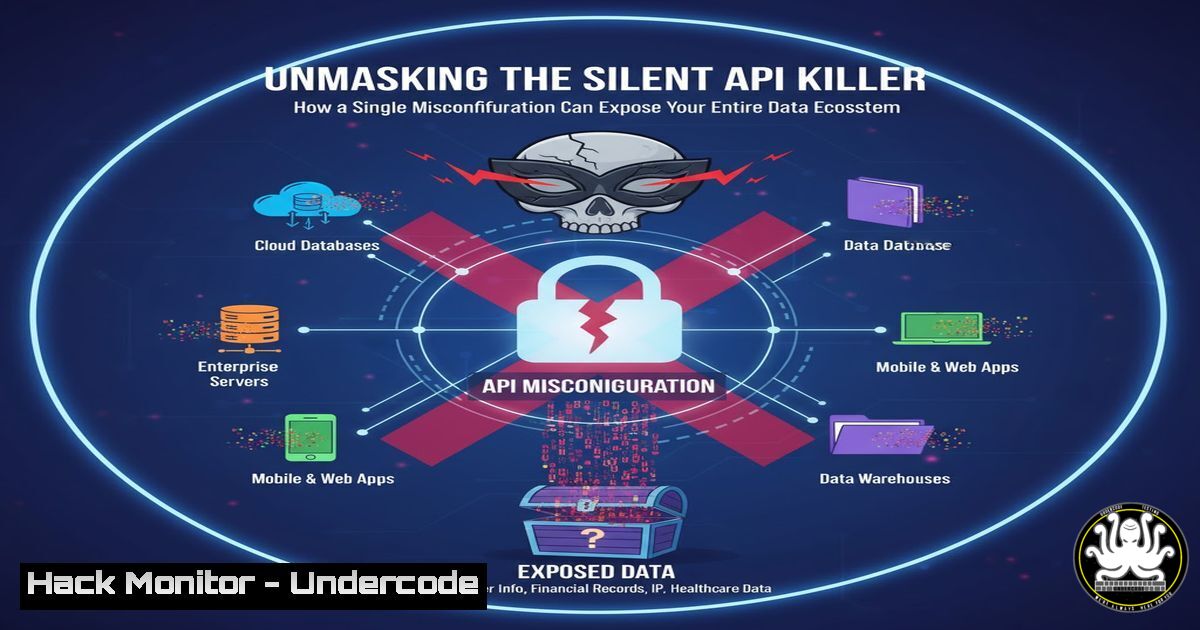
Introduction:
Application Programming Interfaces (APIs) are the silent engines of modern digital business, powering everything from mobile apps to cloud services. However, their pervasive connectivity creates a massive attack surface often overlooked by traditional security measures. A single misconfigured endpoint can serve as a gateway for attackers to exfiltrate terabytes of sensitive data, leading to catastrophic breaches.
Learning Objectives:
- Understand the critical nature of API security and common misconfigurations.
- Learn to identify and exploit excessive data exposure vulnerabilities.
- Implement robust mitigation strategies using API gateways, input validation, and security testing.
You Should Know:
- The Anatomy of an Excessive Data Exposure Vulnerability
Modern APIs, especially GraphQL and RESTful endpoints, often return rich, nested data objects. A common development anti-pattern is to return the entire internal data object to the client, relying on the front-end to filter what the user should see. This “lazy programming” approach is the root cause of excessive data exposure.
For example, a `/api/v1/users/me` endpoint might return:
{
"id": 12345,
"username": "jdoe",
"email": "[email protected]",
"password_hash": "$2y$10$E9wBkZ3b9bH9d9bH9bH9bO",
"internal_id": "AD-789-XYZ",
"ssn": "123-45-6789",
"roles": ["user", "admin"],
"billing_info": { ... }
}
Even if the front-end only displays the username, all the other sensitive fields are exposed in the API response, easily visible using browser developer tools or a proxy interceptor.
2. Step-by-Step Exploitation Using Common Tools
You don’t need advanced hacking skills to exploit this vulnerability. The process is often trivial.
Step 1: Reconnaissance
Intercept API traffic using a tool like OWASP ZAP or Burp Suite. Alternatively, use browser Developer Tools (F12) to monitor the “Network” tab while using an application.
Step 2: Analysis
Identify API endpoints and examine the responses. Look for JSON objects containing more data than is displayed on the user interface.
Step 3: Manipulation
For GraphQL, try querying for additional fields not normally requested by the client:
query {
getUser(id: "12345") {
username
email
passwordHash
creditCard { number expirationDate }
}
}
For REST, simply change the endpoint. If `/api/v1/users/me` returns your data, try `/api/v1/users/` to list all users, or `/api/v1/users/1` to access another user’s record (Insecure Direct Object Reference).
3. Automating Discovery with Scripting
Manual testing is slow. Security teams can use `curl` and `jq` to automate the discovery of these issues.
Linux/MacOS Bash Script Example:
!/bin/bash
API_BASE="https://target.com/api/v1"
TOKEN="your_bearer_token_here"

Test for user enumeration
for user_id in {1..10}; do
echo "Testing user ID: $user_id"
curl -s -H "Authorization: Bearer $TOKEN" "$API_BASE/users/$user_id" | jq .
done
PowerShell Equivalent for Windows:
$apiBase = "https://target.com/api/v1"
$headers = @{ Authorization = "Bearer your_bearer_token_here" }

1..10 | ForEach-Object {
Write-Host "Testing user ID: $<em>"
Invoke-RestMethod -Uri "$apiBase/users/$</em>" -Headers $headers | ConvertTo-Json
}
- Mitigation Strategy 1: Principle of Least Privilege & Data Filtering
The core mitigation is to never trust the client to filter data. Implement strict data filtering on the server-side.
Backend Implementation (Node.js/Express Example):
// BAD: Returns entire user object
app.get('/api/users/:id', (req, res) => {
User.findById(req.params.id).then(user => res.json(user));
});

// GOOD: Returns only whitelisted fields
app.get('/api/users/:id', (req, res) => {
User.findById(req.params.id, 'username email public_profile').then(user => {
// Further sanitize based on requester's role
if (req.user.role !== 'admin') {
user = _.pick(user, ['username', 'public_profile']);
}
res.json(user);
});
});
- Mitigation Strategy 2: API Schema Enforcement & Validation
Enforce strict request and response schemas. Use OpenAPI/Swagger specifications to define exactly what each endpoint can return.
Example OpenAPI Schema Snippet:
/components/schemas/User:
type: object
properties:
id:
type: integer
username:
type: string
email:
type: string
public_profile:
$ref: '/components/schemas/PublicProfile'
 NO sensitive fields like password_hash or ssn are defined here!
6. Mitigation Strategy 3: Implementing an API Gateway
An API gateway acts as a policy enforcement point, providing a centralized location for security controls.
Key Gateway Policies:
- Rate Limiting: Prevent brute force and scraping attacks.
- JSON Threat Protection: Block requests with overly deep nesting or large payloads.
- Data Masking: Automatically redact sensitive patterns (e.g., credit card numbers) from responses.
- Schema Validation: Reject any requests or responses that don’t conform to the defined schema.
7. Continuous Security Testing for APIs
Integrate API security testing into your CI/CD pipeline. Use specialized tools to automatically scan for misconfigurations.
Using OWASP ZAP CLI in a Pipeline:
docker run -v $(pwd):/zap/wrk/:rw -t owasp/zap2docker-stable zap-baseline.py \
-t https://your-api.com/swagger.json \
-g gen.conf \
-r testreport.html
Key Scans to Perform:
- Unauthenticated Endpoint Testing: Check if endpoints are accessible without proper credentials.
- Broken Object Level Authorization (BOLA): Test if you can access other users’ objects by changing IDs.
- Injection Flaws: Test for SQLi, NoSQLi, and Command Injection in API parameters.
What Undercode Say:
- The root cause of API breaches is often architectural, not a lack of complex security controls. Simplifying data flow and adhering to basic principles like “never trust the client” is more effective than bolting on advanced security after the fact.
- Automated security testing is no longer optional for APIs. The scale and interconnectedness of modern microservices architectures make manual testing and code review insufficient for catching data exposure flaws.
Analysis:
The pervasive nature of excessive data exposure highlights a fundamental disconnect between development velocity and security maturity. Developers, under pressure to deliver features, often take shortcuts by returning full data objects, inadvertently creating a data exfiltration goldmine. This vulnerability is particularly insidious because it doesn’t require bypassing authentication or exploiting a software bug; it simply abuses intended functionality. The mitigation is not about implementing a shiny new tool but about enforcing disciplined software design patterns, rigorous code review processes focused on data output, and a shift-left mentality where security requirements are baked into the initial API schema design. Organizations that treat their API specifications as security contracts will be significantly more resilient.
Prediction:
The frequency and scale of API-driven data breaches will continue to accelerate as digital transformation deepens. We will see a rise in automated “API-bots” that do nothing but scrape publicly exposed endpoints for valuable data, making unsecured APIs a primary data leakage vector. In response, the industry will shift towards a “Zero-Trust API” model, where every request and response is explicitly validated against a strict schema, and behavioral analytics will be used to detect anomalous data access patterns. API security will cease to be a niche concern and will become the central pillar of organizational cybersecurity strategy, driven by the realization that in a connected world, your API is your perimeter.
🎯Let’s Practice For Free:
IT/Security Reporter URL:
Reported By: Ashishrajan Personalfinance – Hackers Feeds
Extra Hub: Undercode MoN
Basic Verification: Pass ✅


