Listen to this Post
Introduction:
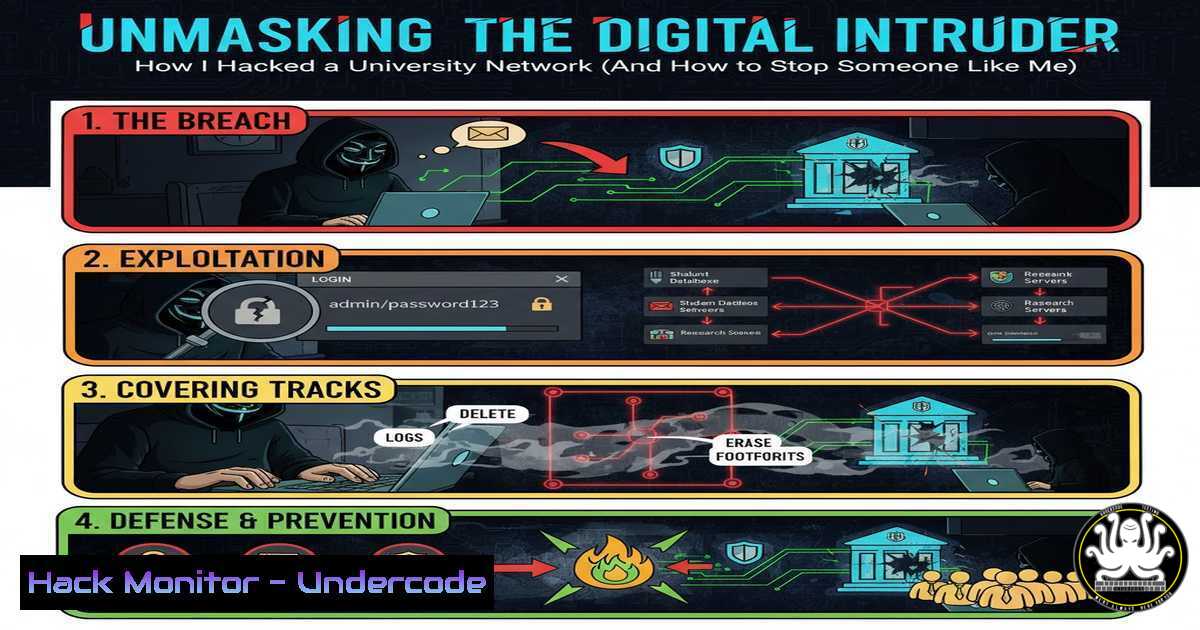
The line between ethical hacking and malicious intrusion is often defined solely by permission. A recent demonstration by a security researcher, using common tools like Nmap and the EternalBlue exploit, breached a university’s digital defenses with alarming ease. This incident serves as a stark reminder of the critical importance of proactive system hardening, consistent patch management, and comprehensive network segmentation to protect against well-known but devastating vulnerabilities.
Learning Objectives:
- Understand the methodology of a network intrusion, from reconnaissance to exploitation.
- Learn how to use essential security tools like Nmap for legitimate defense auditing.
- Implement critical mitigation strategies to protect against exploits like EternalBlue and similar threats.
You Should Know:
1. The Initial Reconnaissance: Mapping the Target
The first step in any network engagement, offensive or defensive, is reconnaissance. The attacker used Nmap, the industry-standard network scanning tool, to discover live hosts and identify open ports on the university’s network range. This process, known as “fingerprinting,” reveals the digital blueprint of a target, highlighting potential entry points.
Step-by-step guide:
Objective: To identify active devices and their open services on a network segment.
Tool: Nmap (Available for both Linux and Windows)
Command (Linux Terminal):
 Basic SYN scan to discover live hosts and common ports
nmap -sS 192.168.1.0/24

Service version detection to identify what software is running
nmap -sV 192.168.1.50

Aggressive scan, enabling OS detection, version detection, script scanning, and traceroute
nmap -A 192.168.1.50
How to Use It Defensively: Regular internal and external Nmap scans of your own network are a cornerstone of security hygiene. By seeing what an attacker sees, you can identify and shut down unauthorized services, close unused ports, and ensure only necessary systems are exposed.
2. Vulnerability Identification: The EternalBlue Exploit
Following reconnaissance, the attacker identified a system running an outdated version of the Server Message Block (SMB) protocol. This specific vulnerability, documented as MS17-010 and famously exploited by the EternalBlue exploit, allows remote code execution. The attacker leveraged a public tool, often associated with the Metasploit framework, to weaponize this finding.
Step-by-step guide:
Objective: To understand and defend against the EternalBlue exploit.
What it does: EternalBlue exploits a flaw in the SMBv1 protocol to upload and execute a malicious payload on the target system without user interaction.
Mitigation Commands (Windows Administrator Command Prompt or PowerShell):
 Permanently disable SMBv1, which is the vulnerable protocol
Disable-WindowsOptionalFeature -Online -FeatureName SMB1Protocol

Check the status of SMBv1 (Should show 'False' if disabled)
Get-WindowsOptionalFeature -Online -FeatureName SMB1Protocol

Ensure the MS17-010 patch is installed. You can check via:
Get-HotFix -Id KB4012212
How to Use It Defensively: The primary defense is immediate and systematic patching. For legacy systems that cannot be patched, strict network segmentation is mandatory to isolate them from general network traffic. Disabling SMBv1 entirely is a critical best practice.
3. Gaining Foothold and Privilege Escalation
With the exploit successful, the attacker gained an initial foothold on the system. The next phase involved privilege escalation to gain SYSTEM-level or administrative access. On a poorly configured system, this can be achieved through various local exploits or by dumping cached credentials from memory using tools like Mimikatz.
Step-by-step guide:
Objective: To prevent local privilege escalation and credential theft.
Defensive Strategies:
Principle of Least Privilege: Ensure users and services run with the minimum permissions required.
Credential Guard (Windows): Enable this feature to protect NTLM password hashes and Kerberos tickets from theft.
PowerShell Command to check Credential Guard:
 List all security features and their status
Get-CimInstance -ClassName Win32_DeviceGuard -Namespace root\Microsoft\Windows\DeviceGuard
Linux Example – Sudo Hardening: Avoid using `NOPASSWD` in `/etc/sudoers` and limit sudo access to specific commands.
4. Lateral Movement and Pivoting
After compromising one host, an attacker will “pivot” to move laterally across the network, searching for more valuable targets like domain controllers or file servers. They use captured credentials and techniques like Pass-the-Hash to authenticate to other systems.
Step-by-step guide:
Objective: To contain a breach and prevent lateral movement.
Defensive Strategies:
Network Segmentation: Divide the network into segments (e.g., user VLAN, server VLAN, DMZ) and control traffic between them with firewalls.
Windows Firewall Rule to restrict SMB: Create rules to block SMB traffic (ports 445, 139) between workstation subnets.
Linux iptables Example:
 Block all incoming SMB/CIFS traffic on a Linux server
iptables -A INPUT -p tcp --dport 445 -j DROP
iptables -A INPUT -p tcp --dport 139 -j DROP
LAPS (Local Administrator Password Solution): Ensure all local administrator accounts have unique, randomly generated passwords to thwart Pass-the-Hash attacks.
5. Data Exfiltration and Covering Tracks
The final phase involves exfiltrating valuable data and covering tracks. Attackers may compress and transfer data using stealthy protocols, then clear event logs to evade detection.
Step-by-step guide:
Objective: To detect and prevent data exfiltration and maintain audit integrity.
Defensive Strategies:
Data Loss Prevention (DLP): Implement DLP solutions to monitor and block unauthorized data transfers.
Centralized Logging (e.g., SIEM): Aggregate logs from all systems to a secure, central server. If an attacker clears local logs, a record remains elsewhere.
Windows Command to check Audit Policy:
 Display the current system audit policy
auditpol /get /category:
Enable Detailed Logging: Ensure Process Creation (4688) and Command Line Auditing are enabled in Windows Advanced Audit Policy.
What Undercode Say:
- The Perpetual Weaponization of Known Flaws. This hack did not rely on a zero-day, but on a years-old vulnerability for which a patch has long been available. This underscores that the greatest cyber risk often isn’t novel attacks, but unmitigated known ones.
- The Attacker’s Path of Least Resistance. The intrusion followed a textbook kill-chain, demonstrating that attackers will consistently exploit the easiest targets: unpatched systems, weak network architecture, and insufficient monitoring.
Analysis:
The university hack is a canonical example of modern cyber intrusion. It highlights a critical failure in fundamental cybersecurity hygiene rather than a sophisticated, nation-state attack. The reliance on EternalBlue, an exploit weaponized by state actors but subsequently leaked and democratized, shows how quickly advanced tools become accessible to a broader threat landscape. For defenders, this incident is a blessing in disguise; every step of the attack is preventable with disciplined IT management. The real challenge is not technical but organizational: enforcing patching policies across complex, often underfunded environments like educational institutions. This case study should serve as a mandatory training exercise for all sysadmins, demonstrating that robust, layered defense is not about stopping every theoretical threat, but about raising the cost of an attack to a point where most attackers will simply move on to a softer target.
Prediction:
The techniques demonstrated in this hack will remain effective for years to come against poorly maintained networks. However, the future impact will be amplified by the integration of AI. We predict the emergence of AI-powered penetration testing tools that can autonomously chain together exploits like EternalBlue with newer vulnerabilities, performing complex, multi-stage attacks at machine speed. This will make manual “script-kiddie” attacks even more potent and force a paradigm shift towards AI-driven defense systems capable of predicting attack paths and auto-remediating vulnerabilities before they can be exploited. The arms race will escalate from human-vs-human to AI-vs-AI, with organizational resilience depending entirely on the quality and timeliness of their defensive automation.
🎯Let’s Practice For Free:
IT/Security Reporter URL:
Reported By: Ah M – Hackers Feeds
Extra Hub: Undercode MoN
Basic Verification: Pass ✅


