
Listen to this Post
Introduction:
Software supply chain attacks are a critical modern threat vector, with dependency confusion exploits ranking among the most insidious. A new open-source tool, “super-confused,” automates the discovery of these vulnerabilities by scanning package manifests and SBOMs, directly addressing a key gap in DevSecOps pipelines.
Learning Objectives:
- Understand the mechanics and critical risks of a dependency confusion attack.
- Learn to use the `super-confused` tool to audit local files, Git repositories, and remote URLs for vulnerable dependencies.
- Implement mitigation strategies to harden your software development lifecycle against such supply chain threats.
You Should Know:
1. The Anatomy of a Dependency Confusion Attack
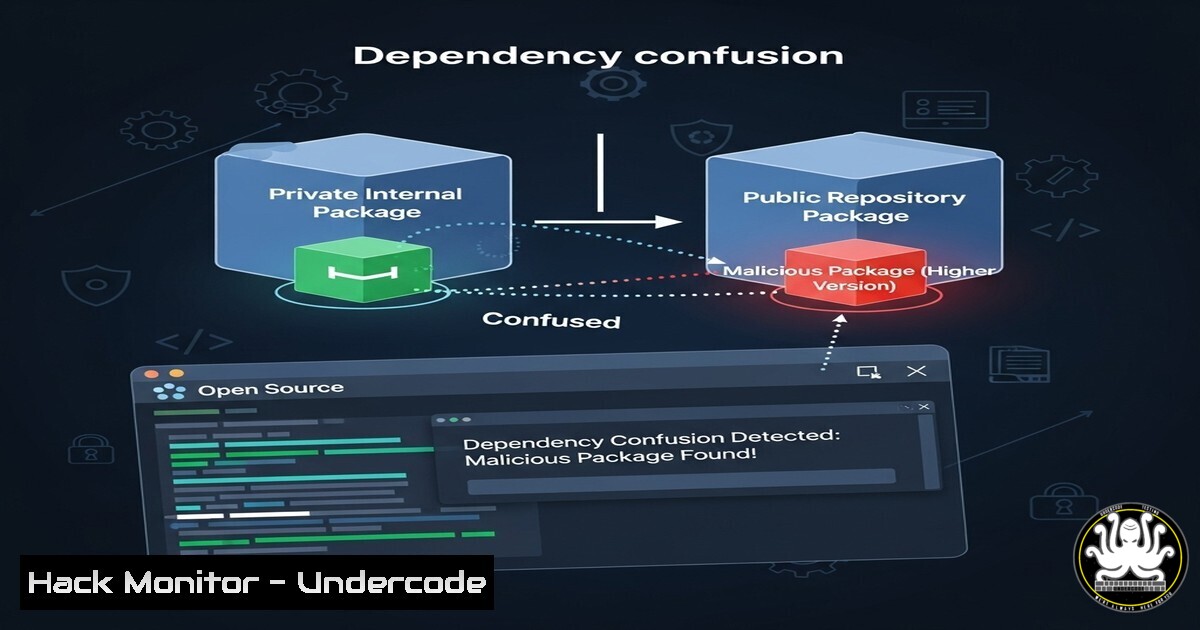
Dependency confusion exploits how package managers (e.g., npm, pip, NuGet) resolve dependencies. If a private internal package `@mycompany/internal-lib` is not published on a public registry, an attacker can publish a malicious package with the same name on a public registry. The package manager, often configured to check public repositories, may then download and install the malicious version instead of the intended private one, leading to a compromise.
2. Installing and Running `super-confused`
The tool is written in Go, requiring a single binary download. Clone the repository and build it from source.
 Clone the repository
git clone https://github.com/6mile/super-confused.git
cd super-confused

Build the binary
go build -o super-confused main.go

Verify installation
./super-confused --help
This sequence clones the tool’s source code, compiles it into a binary named super-confused, and runs the help command to verify installation and display all available options.
3. Scanning a Local Package Manifest
The most straightforward audit is against a local file, such as a `package.json` or requirements.txt.
 Scan a local package.json file
./super-confused --file ./path/to/package.json

Scan a local requirements.txt
./super-confused --file ./path/to/requirements.txt
The tool parses the manifest file, extracts all dependency names, and checks public registries (npmjs.com, PyPI, etc.) to see if a package with that name exists. If a public package exists and the version in your manifest is a lower version number, it flags it as a potential confusion opportunity for an attacker.
4. Auditing a Remote Git Repository
`super-confused` can automatically clone and analyze a remote code repository, streamlining the audit process.
 Scan a remote GitHub repository
./super-confused --git https://github.com/example/project.git

Scan a specific branch of a repository
./super-confused --git https://github.com/example/project.git --branch develop
The tool will temporarily clone the specified repository (and branch, if indicated) into a temporary directory, recursively search for all supported manifest files (package.json, pom.xml, requirements.txt, .csproj, etc.), and run the dependency check on each one.
5. Direct URL Scanning for SBOMs
The tool can ingest a Software Bill of Materials (SBOM), a critical feature for modern security practices.
 Scan a remote CycloneDX SBOM JSON file
./super-confused --url https://example.com/sbom.json

Scan an SPDX document
./super-confused --url https://example.com/spdx.xml
This command fetches the SBOM from the provided URL, parses its format (CycloneDX or SPDX), extracts the comprehensive list of components, and checks each one for potential public registry conflicts.
6. Mitigation: Configuring Scoped Registries
The primary mitigation is to configure your package manager to use scoped registries, ensuring private dependencies are never fetched from public sources.
 Configuring npm for a scoped registry (@mycompany)
npm config set @mycompany:registry https://your.private.registry/

Example .npmrc file content
 @mycompany:registry=https://your.private.registry/
 always-auth=true
This configuration tells npm that any package whose name is scoped with `@mycompany` should only ever be resolved from the specified private registry URL, completely eliminating the confusion vector for those packages.
7. Mitigation: Using Dependency Lock Files
Enforcing the use of lock files can pin dependencies to a specific, verified checksum, adding a layer of integrity verification.
 Generate a package-lock.json for npm (should be committed to source)
npm install --package-lock-only

Generate a requirements.txt with hashes for pip
pip-compile --generate-hashes requirements.in
The `package-lock.json` and hashed `requirements.txt` ensure that subsequent installs will use the exact same package artifact, preventing a newly published malicious public package from being installed even if the version number is higher.
What Undercode Say:
- The automation of dependency confusion scanning is no longer a luxury but a necessity for any organization with a custom software supply chain. Manual audits are impractical at scale.
- Tools like `super-confused` represent a proactive shift-left security approach, enabling developers to find and fix these issues long before they reach production, effectively democratizing advanced supply chain security.
- Analysis: The release of `super-confused` highlights the growing maturity of the offensive security community’s response to software supply chain threats. By providing a free, accessible, and automated tool, Paul McCarty is forcing a raised security baseline. This follows a pattern where cutting-edge research presented at conferences like Black Hat and DEFCON is quickly operationalized into practical tools, accelerating the adoption of defensive measures across the industry. It puts pressure on organizations to scrutinize their dependency management practices and on platform vendors to build even more robust protections into their products.
Prediction:
The ease of use and automation provided by tools like `super-confused` will lead to a short-term spike in the discovery and disclosure of dependency confusion vulnerabilities across countless public and private projects. However, in the longer term, this will catalyze widespread adoption of mandatory scoped registries and hashed dependencies, fundamentally hardening software development practices. Consequently, the low-hanging fruit for dependency confusion attacks will largely disappear within 2-3 years, forcing threat actors to develop more sophisticated software supply chain attack vectors.
🎯Let’s Practice For Free:
IT/Security Reporter URL:
Reported By: Mccartypaul I – Hackers Feeds
Extra Hub: Undercode MoN
Basic Verification: Pass ✅


