Listen to this Post
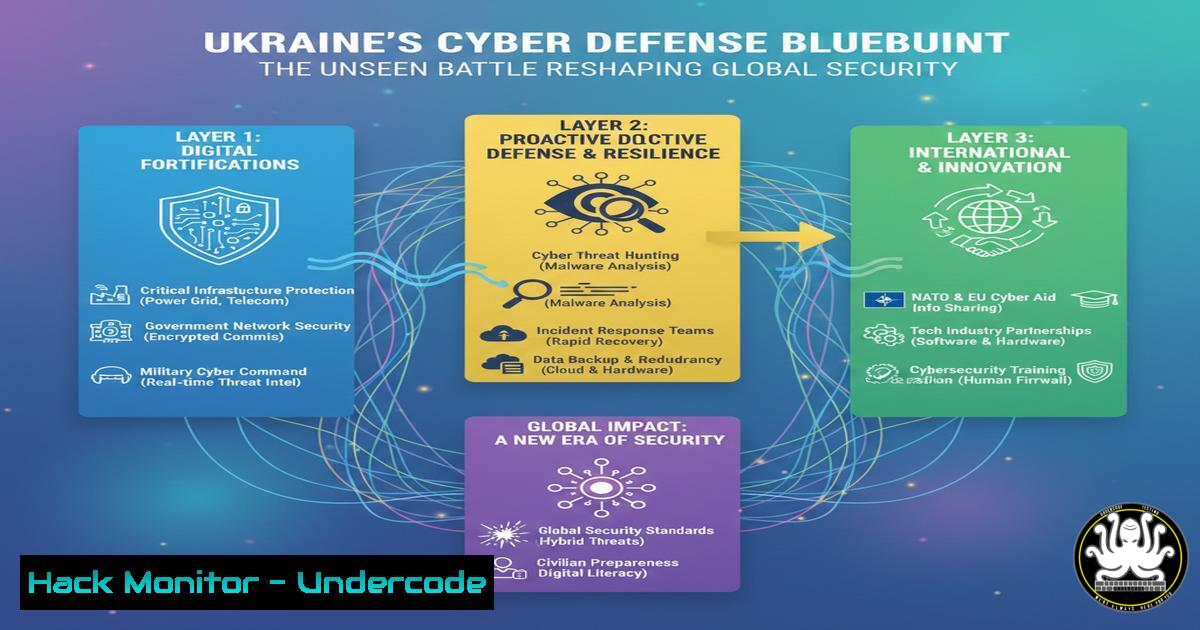
Introduction:
The ongoing conflict in Ukraine has proven that modern warfare is as much about bits and bytes as it is about bullets and battalions. As Russia’s full-scale invasion progressed, Ukraine mounted an unprecedented cyber defense operation that has become a living laboratory for digital resilience, offering critical lessons for NATO, the EU, and democratic nations worldwide facing sophisticated state-sponsored threats.
Learning Objectives:
- Understand the operational framework of Ukraine’s coordinated cyber defense system
- Implement technical hardening measures inspired by Ukraine’s resilience strategies
- Develop proactive threat intelligence sharing protocols for organizational security
You Should Know:
1. Building a National Cyber Defense Coordination Center
Ukraine’s National Cybersecurity Coordination Center (NCSCC) represents a paradigm shift in how nations can organize against digital threats. This centralized body enables real-time threat sharing between government agencies, military units, and critical infrastructure operators.
Step-by-step guide explaining what this does and how to use it:
Step 1: Establish a 24/7 Security Operations Center (SOC)
– Deploy SIEM solutions like Wazuh or Splunk for centralized logging
– Configure log aggregation from critical systems:
 Linux syslog configuration to forward logs
. @central-soc-server:514

Windows Event Forwarding configuration
wecutil qc /quiet
winrm quickconfig
Step 2: Implement Cross-Sector Information Sharing
- Create standardized incident reporting templates (STIX/TAXII)
- Establish encrypted communication channels using Signal or Matrix
- Develop playbooks for rapid threat indicator dissemination
Step 3: Coordinate Public-Private Partnerships
- Set up secure portals for vulnerability disclosure
- Conduct joint tabletop exercises simulating critical infrastructure attacks
- Establish clear protocols for emergency government assistance
2. Critical Infrastructure Hardening: Lessons from the Frontlines
Ukraine’s energy, financial, and government sectors have survived relentless attacks through systematic hardening. The approach combines traditional security with adaptive measures developed under fire.
Step-by-step guide explaining what this does and how to use it:
Step 1: Network Segmentation and Access Control
- Implement Zero Trust architecture with micro-segmentation
- Configure firewall rules to limit lateral movement:
iptables rules for critical infrastructure segments
iptables -A FORWARD -s 192.168.100.0/24 -d 10.0.100.0/24 -j DROP
iptables -A FORWARD -m state --state ESTABLISHED,RELATED -j ACCEPT
Step 2: Application Whitelisting and Execution Control
- Deploy AppLocker (Windows) or SELinux (Linux) policies:
AppLocker base policy
<RuleCollection Type="Exe">
<FilePathRule Action="Allow" Description="Allow Windows" Path="%WINDIR%\"/>
<FilePathRule Action="Allow" Description="Allow Program Files" Path="%PROGRAMFILES%\"/>
</RuleCollection>

SELinux targeted policy for specific services
semanage permissive -a httpd_t
setsebool -P httpd_execmem on
Step 3: Multi-Factor Authentication Enforcement
- Require hardware security keys for administrative access
- Implement time-based access for critical systems
- Deploy biometric verification for SCADA systems
3. Proactive Threat Intelligence Gathering and Analysis
Ukraine’s success stems from anticipating attacks rather than merely responding. This involves collecting, analyzing, and acting on threat intelligence before damage occurs.
Step-by-step guide explaining what this does and how to use it:
Step 1: Establish Intelligence Collection Framework
- Deploy honeypots to gather attacker TTPs:
Deploy T-Pot honeypot platform
git clone https://github.com/telekom-security/tpotce
cd tpotce/iso/installer
./install.sh --type=auto
Step 2: Analyze Malware and IOCs
- Use automated sandboxing with Cuckoo or Joe Sandbox
- Extract and share indicators with MISP threat intelligence platform:
Import IOCs to MISP
misp@localhost> Event importfrom 1234  Event ID
misp@localhost> Publish 1234
Step 3: Implement Predictive Analysis
- Develop machine learning models to detect attack patterns
- Correlate global threat data with local network telemetry
- Establish early warning systems for emerging campaigns
4. Rapid Incident Response and Cyber Firefighting
When attacks breach defenses, Ukraine’s coordinated response teams contain damage within minutes. This requires pre-positioned tools and clear authority chains.
Step-by-step guide explaining what this does and how to use it:
Step 1: Pre-Deploy Incident Response Tools
- Maintain forensic kits on critical systems:
Linux IR kit deployment
apt install sleuthkit foremost volatility3
wget https://github.com/SigmaHQ/sigma/releases/latest/download/sigma.zip

Windows: Deploy KAPE for rapid evidence collection
KAPE.exe --tsource C: --tdest E:\Evidence --target !SANS_Triage
Step 2: Establish Clear Escalation Protocols
- Define severity-based response timelines (P1: 15 minutes, P2: 1 hour, etc.)
- Create decision trees for containment actions
- Pre-authorize disruptive measures for critical scenarios
Step 3: Conduct After-Action Analysis
- Perform root cause analysis using the 5 Whys methodology
- Update playbooks based on lessons learned
- Share anonymized findings with trusted partners
5. Building Organizational Cyber Resilience Through Training
Ukraine’s Institute of Cyber Warfare Research demonstrates that knowledge transfer transforms defense capabilities. Regular, realistic training creates muscle memory for crisis situations.
Step-by-step guide explaining what this does and how to use it:
Step 1: Develop Role-Specific Training Curricula
- Create customized modules for executives, IT staff, and end-users
- Simulate phishing campaigns with controlled payloads:
Simple phishing simulation with GoPhish
./gophish
Configure campaign targeting different departments
Step 2: Conduct Realistic Tabletop Exercises
- Simulate multi-vector attacks (cyber + physical + psychological)
- Inject unexpected complications to test adaptability
- Measure response effectiveness with clear metrics
Step 3: Establish Continuous Improvement Cycles
- Implement weekly threat briefings for technical staff
- Conduct quarterly red team/purple team exercises
- Maintain lessons learned repository accessible to all partners
What Undercode Say:
- Ukraine’s cyber defense model proves that centralized coordination combined with decentralized execution creates resilient security architectures that can withstand nation-state pressure
- The integration of traditional military defense with cyber operations represents the future of hybrid warfare, requiring new command structures and skill sets
- Public-private partnerships aren’t just beneficial—they’re essential for national survival in modern conflicts, with information sharing acting as a force multiplier
Ukraine’s experience demonstrates that cyber resilience isn’t primarily about technology—it’s about organization, trust, and speed. Their ability to rapidly share threat intelligence across sectors, maintain operations during attacks, and adapt to new threats in real-time offers a blueprint for democratic nations facing sophisticated adversaries. The most significant lesson may be that pre-established relationships and clear protocols matter more during crises than any specific security product.
Prediction:
Ukraine’s cyber defense innovations will catalyze a fundamental restructuring of NATO and EU cybersecurity doctrine, moving from perimeter-based defense to resilient, adaptive networks capable of operating while compromised. Within two years, we’ll see standardized cyber militia frameworks where civilian experts can be rapidly mobilized during national emergencies, and automated threat sharing between allied nations will become instantaneous. The private sector will be formally integrated into national defense postures through mandatory cybersecurity standards for critical infrastructure, with Ukraine’s NCSCC model being adopted across Eastern Europe and eventually influencing global norms for cyber warfare conduct.
🎯Let’s Practice For Free:
IT/Security Reporter URL:
Reported By: Serhii Demediuk – Hackers Feeds
Extra Hub: Undercode MoN
Basic Verification: Pass ✅


