Listen to this Post
Introduction:
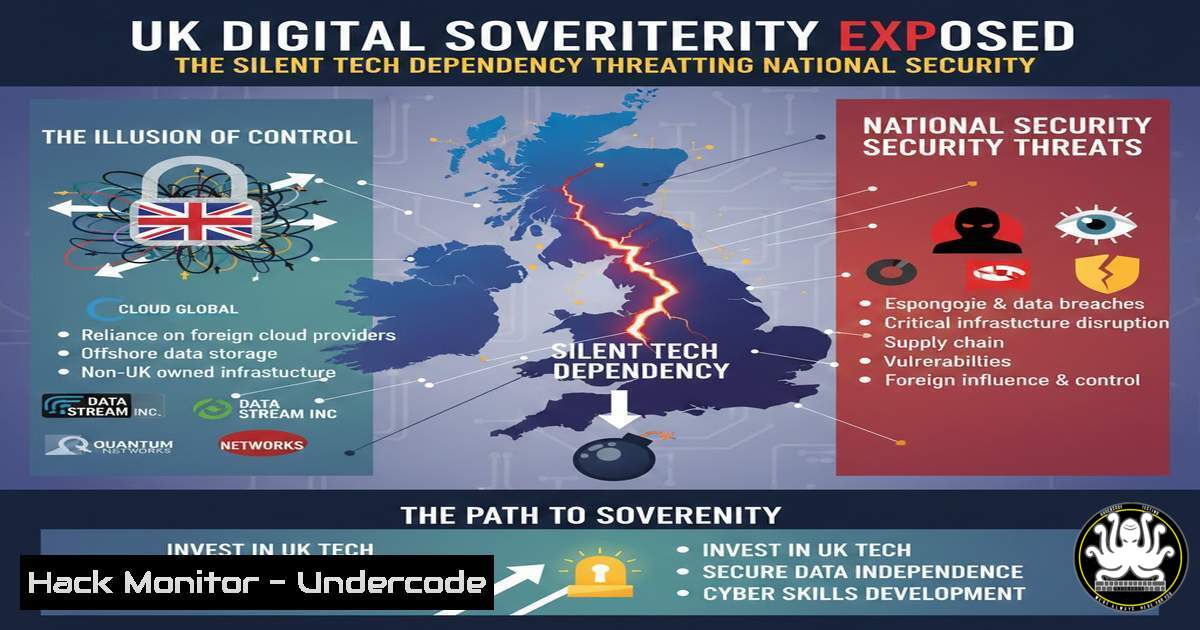
The growing reliance on a handful of non-domestic technology giants for critical national infrastructure has created a profound digital sovereignty crisis. This dependency exposes nations to extraterritorial legal pressures, vendor lock-in, and geopolitical shocks, as exemplified by the International Criminal Court’s forced migration from Microsoft platforms due to US sanctions. The emerging global response involves legislative action, like the UK’s Cybersecurity and Resilience Bill, and a strategic pivot toward sovereign, resilient digital infrastructure managed by trusted, local partners.
Learning Objectives:
- Understand the concrete cybersecurity and operational risks posed by excessive reliance on foreign-owned technology stacks.
- Learn actionable technical strategies for assessing digital dependencies and executing a sovereign migration plan.
- Master key infrastructure hardening, zero-trust implementation, and compliance automation techniques to build and maintain resilient, sovereign systems.
You Should Know:
1. Assessing Your Foreign Tech Dependency Footprint
The first step toward digital sovereignty is a clear, technical audit of your existing dependencies on foreign-owned platforms and software. This involves mapping out where your data resides, which external entities control your core services, and identifying single points of failure that could be leveraged for geopolitical or economic coercion.
Step‑by‑step guide:
Inventory Software and Cloud Assets: Use automated discovery tools across your network. On Linux systems, inventory installed packages and their origins: `dpkg-query -l` (Debian/Ubuntu) or `rpm -qa` (RHEL/CentOS). For cloud environments, leverage provider CLI tools like `aws ec2 describe-instances` or `az vm list` to catalog resources.
Analyze Data Flows and Jurisdiction: Deploy network monitoring tools (e.g., Wireshark, Zeek) to log traffic destinations. Cross-reference IP addresses with geolocation databases to identify which countries your data transits. Scrutinize SaaS contracts to pinpoint the legal jurisdiction and data governance rules for each service.
Evaluate Licensing and Lock-in: Create a matrix of all proprietary software licenses. Pay special attention to proprietary data formats, custom APIs, and integration layers that would make transitioning to an alternative vendor difficult or costly. This technical debt is a primary sovereignty risk.
2. Executing a Sovereign Data Migration Strategy
Migrating data from a global provider to a sovereign alternative is a high-stakes operation requiring meticulous planning to ensure integrity, confidentiality, and minimal downtime. The core challenge is a secure, verifiable transfer out of a vendor’s ecosystem.
Step‑by‑step guide:
Stage 1: Extract and Encrypt: Use the vendor’s export tools or APIs to create data dumps. Immediately encrypt this data before it moves over any network. For example, use `gpg –symmetric –cipher-algo AES256 your-data-dump.tar` to create an encrypted archive with a strong passphrase.
Stage 2: Secure Transfer: Transfer the encrypted dumps using resilient, verified protocols. The `rsync` command with checksum verification is ideal: rsync -avc --progress encrypted-dump.gpg user@sovereign-server:/backup/. Always compare SHA256 checksums (sha256sum <filename>) before and after transfer.
Stage 3: Validate and Decommission: After importing data into the new sovereign system, run integrity checks and validate a subset of records manually. Only after successful validation should you begin the decommissioning process for the old foreign service, ensuring no data remnants are left behind.
3. Hardening Sovereign Infrastructure: Core Principles
A sovereign infrastructure must be more secure and resilient than the platform it replaces. This involves applying stringent, standardized security baselines across all systems to reduce the attack surface.
Step‑by‑step guide:
Apply Security Baselines: Implement widely recognized benchmarks. For Linux servers, use OpenSCAP to apply the CIS (Center for Internet Security) Benchmark: oscap xccdf eval --profile cis_server_l1 --results /tmp/scan-report.xml /usr/share/xml/scap/ssg/content/ssg-ubuntu2204-ds.xml. Remediate all high and medium findings.
Minimize Network Exposure: Configure host-based firewalls rigorously. On Ubuntu, use UFW: ufw default deny incoming, ufw allow ssh, ufw allow from 192.168.1.0/24 to any port 443. On Windows, use PowerShell: New-NetFirewallRule -DisplayName "AllowInternalHTTPS" -Direction Inbound -RemoteAddress 192.168.1.0/24 -Protocol TCP -LocalPort 443 -Action Allow.
Harden SSH Access: Disable root login and password authentication in /etc/ssh/sshd_config:
PermitRootLogin no
PasswordAuthentication no
AuthenticationMethods publickey
Then restart the service: `systemctl restart sshd`.
4. Implementing a Zero-Trust Architecture for Sovereignty
Digital sovereignty requires the assumption that threats can originate from inside or outside the network. Zero-Trust Architecture (ZTA) enforces strict identity verification for every person and device attempting to access resources, irrespective of their location.
Step‑by‑step guide:
Deploy an Identity-Aware Proxy (IAP): Use open-source solutions like OpenZiti or commercial offerings to broker all access to internal applications. This replaces traditional VPNs and ensures no service is directly exposed to the public internet. All connection requests are authenticated and authorized before being established.
Enforce Device Posture Checks: Integrate your endpoint management solution with the ZTA controller. Configure policies that block access from devices that are not encrypted, are missing security patches, or lack approved antivirus software.
Adopt Micro-Segmentation: Use network policies (e.g., Kubernetes Network Policies, native cloud firewalls) to enforce communication rules between workloads. A database pod should only accept connections from specific application pods on a specific port, denying all other traffic by default.
5. Automating Compliance for Sovereign Frameworks
Maintaining continuous compliance with standards like the UK’s Cybersecurity and Resilience Bill, GDPR, or other national frameworks is non-negotiable. Manual audits are unsustainable; infrastructure must be defined as code and continuously monitored.
Step‑by‑step guide:
Define Policy as Code: Use tools like HashiCorp Sentinel, Open Policy Agent (OPA), or AWS Config Rules to codify security and compliance rules. For example, an OPA/Rego policy can enforce that all cloud storage buckets are encrypted:
default allow = false
allow {
input.resource_type == "aws_s3_bucket"
input.server_side_encryption_configuration.enabled == true
}
Integrate into CI/CD Pipelines: Scan infrastructure-as-code (IaC) templates (Terraform, CloudFormation) for policy violations before deployment. Use tools like `terraform plan` output with `conftest` (which uses OPA) to fail the pipeline if a non-compliant resource is detected.
Continuous Monitoring and Reporting: Deploy agents that continuously collect system configuration data. Use a centralized dashboard (e.g., built with Elasticsearch, Logstash, and Kibana) to visualize compliance posture in real-time and generate automated audit reports for regulators.
What Undercode Say:
- Strategic Dependency is a Critical Vulnerability: The technical reliance on foreign platforms creates a soft-power lever that can be activated by geopolitical events, sanctions, or unilateral changes in terms of service. This transcends typical business continuity risk, becoming a matter of national strategic interest.
- Sovereignty Demands Superior Security: Merely switching to a local provider is insufficient. The migration must be leveraged as an opportunity to implement security and resilience standards that are higher than those of the incumbent global provider. This involves a fundamental architectural shift toward zero-trust and comprehensive automation, not just a “lift-and-shift” of existing problems.
The analysis reveals that digital sovereignty is not an isolationist or protectionist concept, but a pragmatic cybersecurity imperative. The incident with the ICC and Microsoft is not an anomaly but a precedent. As global tensions manifest in digital policy, organizations running critical functions must architect their systems to withstand not just technical failures and malicious actors, but also legal and political shocks from foreign jurisdictions. This requires a blend of strategic procurement, deep technical skill, and a relentless focus on owning and controlling the core layers of one’s digital stack.
Prediction:
The trend toward digital sovereignty will accelerate, driven by geopolitics and evolving regulation like the UK’s bill. This will fuel a significant expansion of sovereign cloud and software markets within national borders and allied blocs (e.g., the EU). Technology providers will bifurcate into “global” and “sovereign” categories, with the latter competing on compliance, jurisdictional alignment, and security guarantees rather than just scale and cost. The most resilient future systems will be hybrid, leveraging global innovation where appropriate but ensuring critical data and controls remain within sovereign, verifiable, and legally predictable boundaries.
▶️ Related Video (86% Match):
🎯Let’s Practice For Free:
IT/Security Reporter URL:
Reported By: Davecookbt Ive – Hackers Feeds
Extra Hub: Undercode MoN
Basic Verification: Pass ✅


