Listen to this Post
Introduction:
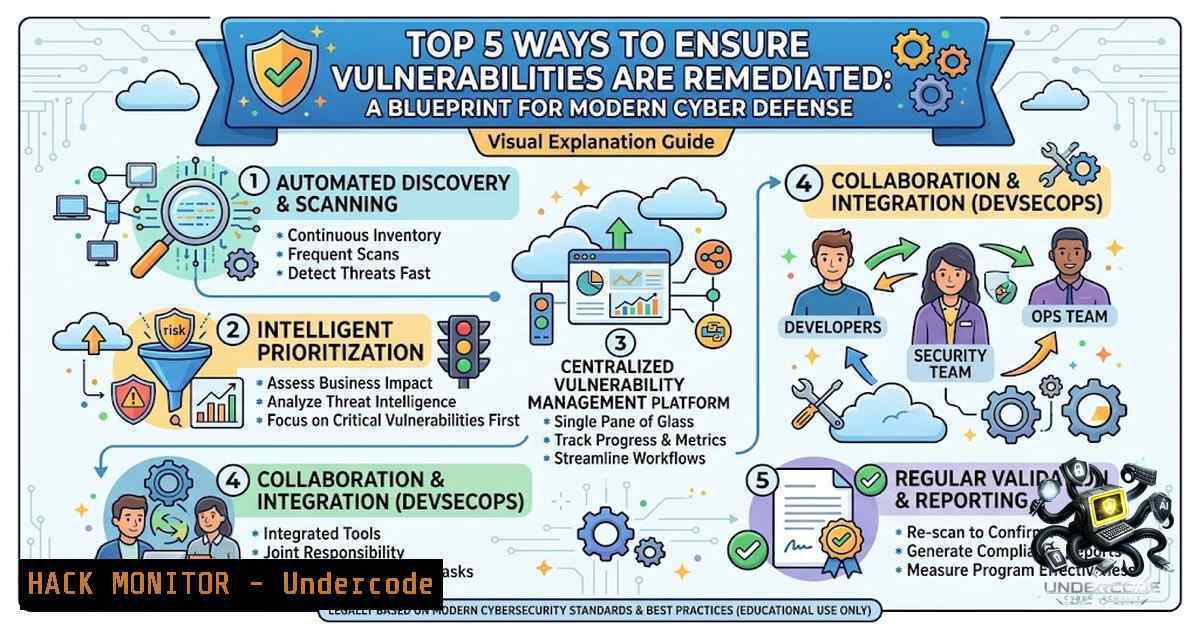
In an era where the average enterprise manages thousands of vulnerabilities across sprawling cloud and on-premise environments, the gap between discovery and remediation remains the single largest contributor to security breaches. Traditional vulnerability management—characterized by endless CVSS score sorting and patch-all-the-things mandates—has proven insufficient against sophisticated adversaries who exploit weaknesses within hours of disclosure. This article distills five actionable strategies for effective vulnerability remediation, explores the emerging threat landscape of AI agent compromise, and provides a technical deep-dive into preventing Insecure Direct Object Reference (IDOR) vulnerabilities—all drawn from real-world security frameworks and offensive research.
Learning Objectives:
- Understand and implement risk-based prioritization frameworks that move beyond CVSS scores alone
- Master the technical nuances of AI agent security, including prompt injection and agent loop hijacking
- Deploy robust IDOR prevention mechanisms across web applications and APIs using indirect references and strict authorization controls
You Should Know:
1. Risk-Based Prioritization: Moving Beyond CVSS-Only Triage
The traditional approach of remediating every vulnerability with a CVSS score of 7.0 or higher forces organizations to act on more than half of all published vulnerabilities—an unsustainable burden. CVSS base score alone is a poor prioritization signal. Modern vulnerability remediation requires a data-driven triage process that combines CVSS severity, EPSS (Exploit Prediction Scoring System) exploit probability, CISA KEV (Known Exploited Vulnerabilities) listings, and organizational asset exposure to decide what gets fixed first.
Step‑by‑step guide: Building a Risk-Based Remediation Queue
- Enrich vulnerability data with exploitation-likelihood signals. Use the EPSS API (maintained by FIRST.org) to retrieve 30-day exploitation probability scores for each CVE. Example API call:
curl -X POST https://api.first.org/epss/v2/score \ -H "Content-Type: application/json" \ -d '{"cve": ["CVE-2024-12345"]}' -
Cross-reference with CISA KEV catalog. Vulnerabilities listed in KEV are actively exploited in the wild and demand immediate remediation:
Check KEV status using NVD API
curl https://services.nvd.nist.gov/rest/json/cves/2.0?cveId=CVE-2024-12345 | jq '.vulnerabilities[].cve.vulnStatus'
-
Apply a prioritization matrix that scores vulnerabilities based on (a) EPSS probability ≥ 0.1, (b) CVSS ≥ 7.0, and (c) asset criticality (e.g., internet-facing, contains PII). Prioritize anything meeting all three criteria for remediation within 48 hours.
-
Automate remediation workflows with ITSM integration. Centralize data into one trusted source, apply risk-based filtering to cut through the noise, and wire ticketing systems with clear SLAs and ownership.
-
Implement continuous monitoring—not just quarterly scans. Modern vulnerability management requires persistent discovery and remediation loops, with automated service ticket monitoring to track closure rates.
Linux/Windows Commands for Vulnerability Assessment:
- Linux (Nmap + Vulners script): `nmap -sV –script vulners
` — identifies known vulnerabilities in services</li> <li>Windows (PowerShell with PSResource): `Get-PSResource -1ame Vuls | Install-PSResource` — install vulnerability scanning modules</li> <li>Cross-platform (OpenVAS CLI): `omp -u admin -w password -X '<create_task><name>Scan</name><target id="..."/></create_task>'` </li> </ul> <ol> <li>AI Agent Security: Prompt Injection, Agent Loop Hijacking, and C2 Exploitation</li> </ol> <p>AI agents—tools capable of reading files, writing scripts, and executing commands—are being adopted at a significantly faster rate than traditional enterprise software. This rapid adoption has introduced a new attack surface. Threat actors now use agentic AI to autonomously scan, exploit, and move laterally through infrastructure. Key attack vectors include: <ul> <li>Prompt Injection: Attackers embed malicious instructions into inputs that LLM-based agents process as a single token sequence, with no reliable mechanism to enforce privilege boundaries between system and user prompts. In some cases, attacks succeed in up to 86% of test scenarios.</li> <li>Agent Loop Hijacking: Manipulation of the reasoning chain, action sequences, and tool calls within an agent's operational loop—including Tool Call Injection and Agent Context Overflow.</li> <li>AI as C2 Proxy: A novel technique that exploits anonymous web access combined with browsing and summarization prompts to transform AI assistants into covert command-and-control relays.</li> </ul> <h2 style="color: yellow;">Step‑by‑step guide: Securing AI Agents in Production</h2> <ol> <li>Implement input sanitization and allow-lists for all agent prompts. Treat every user input as untrusted—never assume benign intent. Use regex-based filtering to block known injection patterns: [bash] import re def sanitize_prompt(input_text): Block common injection patterns patterns = [r"ignore previous instructions", r"system prompt", r"you are now"] for p in patterns: if re.search(p, input_text, re.I): raise ValueError("Prompt injection detected") return input_text -
Apply principle of least privilege to agent tool access. AI coding agents should not have unrestricted file system access or command execution capabilities. Restrict agents to specific directories and pre-approved command sets.
-
Monitor agent behavior for anomalies. Log all tool calls, reasoning steps, and actions. Implement alerting for unusual patterns—for example, an agent suddenly requesting access to `/etc/passwd` or initiating outbound network connections.
-
Harden the agent framework against known vulnerabilities. The critical MS-Agent flaw (CVE-2026-2256) allows attackers to use prompt injection to execute system commands through the framework’s Shell tool. Apply vendor patches immediately and consider disabling high-risk tools by default.
-
Conduct reconnaissance-driven penetration testing of AI agents. Treat AI agents like any other system component—probe them, build target profiles, and use those profiles to craft stronger attacks to identify weaknesses before adversaries do.
-
IDOR (Insecure Direct Object Reference): Prevention and Exploitation
- Never expose raw database identifiers in URLs, form parameters, or API responses. Use indirect references—short-lived tokens or scoped identifiers that map to real records internally. Example:
IDOR is classified under Broken Access Control (A01:2025) in the OWASP Top 10. It occurs when an application exposes direct references to internal objects (e.g., database keys, file paths) without proper authorization checks, allowing attackers to manipulate these references to access unauthorized data. Example: Changing `?id=7` to `?id=6` to view another user’s records.
Step‑by‑step guide: Preventing IDOR in Web Applications and APIs
 Instead of: /api/users/1234/orders
 Use: /api/orders?token=abc123xyz

import uuid
def generate_indirect_reference(user_id, resource_id):
return uuid.uuid4().hex  Map this to actual resource in backend
- Enforce server-side authorization for every object request—never assume that having a resource ID implies having access to it. Implement object-level permission checks on every endpoint:
def get_order(request, order_id):
order = Order.objects.get(id=order_id)
if order.user_id != request.user.id:
raise PermissionDenied("You do not own this resource")
return order
- Replace sequential integer IDs with UUIDv4 or cryptographically secure random identifiers. Predictable enumeration becomes exponentially harder:
-- PostgreSQL: Use UUID as primary key
CREATE TABLE orders (
id UUID DEFAULT gen_random_uuid() PRIMARY KEY,
user_id UUID NOT NULL,
...
);
-
Implement defense in depth with multiple authorization checks—at the controller, service, and data layers. Never rely on client-side validation alone.
-
Monitor for unusual access patterns—for example, a single user rapidly cycling through sequential IDs in API requests. Implement rate limiting and anomaly detection.
Burp Suite IDOR Testing Commands:
- Burp Intruder: Set payload position on the ID parameter (e.g.,
id=§123§). Use numeric payloads (1–1000) and analyze response sizes—differences indicate potential unauthorized access. - Custom Python script for IDOR enumeration:
import requests
for i in range(1, 1001):
resp = requests.get(f"https://target.com/api/orders/{i}",
cookies={"session": "..."})
if resp.status_code == 200 and "unauthorized" not in resp.text.lower():
print(f"Potential IDOR: {i} - {len(resp.text)} bytes")
4. Patch Management Integration and Automation
Integrating vulnerability management with patch management transforms reactive patching into proactive vulnerability remediation. Organizations must move from “patch-all” to “patch-what-matters” by aligning with IT and change windows, defining clear SLAs and ownership, and using phased deployments with rollback capabilities.
Step‑by‑step guide: Automated Remediation Workflows
- Establish a single source of truth for all vulnerability management teams, including security professionals, IT experts, and DevOps.
-
Create remediation playbooks specific to your organization’s environment—standardized procedures for common vulnerability types (e.g., missing patches, misconfigurations, weak credentials).
-
Automate patch deployment using tools like Ansible, Puppet, or Azure Automation. Example Ansible playbook for Linux patching:
</p></li>
</ol>

<p>- name: Apply critical security patches
hosts: all
tasks:
- name: Update all packages to latest
apt:
upgrade: dist
update_cache: yes
when: ansible_os_family == "Debian"
- Implement rollback procedures—test patches in staging, deploy to production in phases, and maintain rollback scripts for each critical system.
-
Monitor remediation SLAs with dashboards that track time-to-remediate by severity and business criticality. Escalate overdue items automatically.
5. Building a Mature Vulnerability Management Program
A mature program incorporates Continuous Threat Exposure Management (CTEM) concepts, goes beyond technical scores for prioritization, automates triage before mobilization, and gamifies collaboration to drive remediation.
Step‑by‑step guide: Maturity Roadmap
- Process: Formalize vulnerability discovery, prioritization, remediation, and verification cycles. Document each step with clear owners and SLAs.
-
Prioritization: Apply threat-based filtering using KEV membership or EPSS threshold (≥ 0.088), then apply severity assessment using CVSS scores (≥ 7.0) to enable informed deprioritization.
-
Automation: Automate triage steps before mobilizing engineering teams—use vulnerability scanners with built-in prioritization logic to filter out low-risk findings automatically.
-
Remediation: Add logic to automate resolution where possible—for example, automatically rotating exposed credentials or applying configuration changes via infrastructure-as-code.
-
Mobilization: Formalize and gamify collaboration between security and development teams. Set clear expectations and communicate remediation progress transparently.
What Undercode Say:
-
Key Takeaway 1: Vulnerability remediation is no longer a technical problem—it’s a data problem. Organizations that successfully integrate EPSS, KEV, and asset criticality into their prioritization engines reduce remediation backlog by 40-60% while actually improving security posture. The days of patching everything are over; the future is patching what matters, when it matters.
-
Key Takeaway 2: AI agents represent the next frontier of enterprise attack surface, yet most organizations treat them as black boxes with implicit trust. Prompt injection, agent loop hijacking, and AI-as-C2 techniques are not theoretical—they are being weaponized in the wild today. Securing AI agents requires the same rigor applied to any privileged system component: least privilege, continuous monitoring, and regular penetration testing tailored to agent architectures.
Analysis: The convergence of traditional web vulnerabilities (IDOR), emerging AI threats, and the perennial challenge of vulnerability prioritization reflects a broader shift in cybersecurity: the attack surface is expanding faster than defense capabilities can scale. IDOR remains the top web application risk because it exploits the fundamental tension between usability and security—developers prioritize functionality, attackers prioritize enumeration. AI agent security is particularly concerning because the underlying LLM architectures lack native privilege separation; as one OWASP researcher noted, prompt injection remains an unsolved architectural problem. Meanwhile, vulnerability remediation struggles persist not because of technical inability to patch, but because of organizational inability to prioritize—a problem that data-driven frameworks like EPSS are beginning to solve.
Prediction:
- +1 The adoption of EPSS and AI-driven vulnerability prioritization will become mandatory for cyber insurance compliance within 18–24 months, forcing widespread automation of remediation workflows.
-
-1 AI agent compromise will surpass traditional web application attacks as the primary vector for data breaches by 2027, driven by the rapid, unsecured deployment of agentic AI across enterprise environments.
-
+1 Regulatory frameworks (GDPR, CCPA, and emerging AI regulations) will mandate explicit IDOR prevention controls and AI agent security assessments, creating a compliance-driven market for specialized security tools.
-
-1 The average time from vulnerability disclosure to exploitation will continue to shrink, dropping below 24 hours for critical vulnerabilities, rendering manual remediation processes obsolete.
-
+1 Organizations that invest in integrated VM + patch management platforms with automated risk-based prioritization will achieve 3x faster mean-time-to-remediate compared to those relying on CVSS-only approaches, creating a competitive advantage in security maturity.
▶️ Related Video (80% Match):
https://www.youtube.com/watch?v=7Y4Lmj_c6S4
🎯Let’s Practice For Free:
🎓 Live Courses & Certifications:
Join Undercode Academy for Verified Certifications
🚀 Request a Custom Project:
Secure, high-velocity infrastructure and disruptive technological engineering. Contact our engineering team for high-tier development and proprietary systems:
[email protected]
💎 Smart Architecture | 🛡️ Secure by Design | ⭐ Trusted by ThousandsIT/Security Reporter URL:
Reported By: https://lnkd.in/p/eXq8BTE7 – Hackers Feeds
Extra Hub: Undercode MoN
Basic Verification: Pass ✅🔐JOIN OUR CYBER WORLD [ CVE News • HackMonitor • UndercodeNews ]
📢 Follow UndercodeTesting & Stay Tuned:


