Listen to this Post
Introduction:
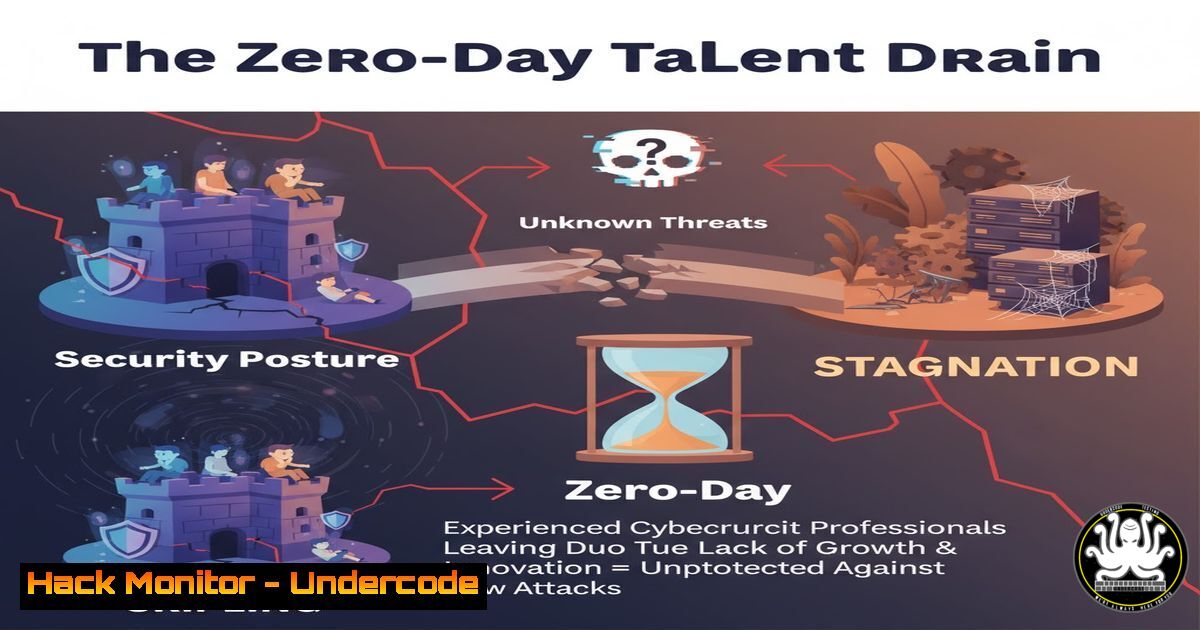
In the high-stakes world of cybersecurity, your most significant vulnerability may not be a software flaw, but a human resources policy. Talent retention has become a critical component of organizational defense, as the loss of seasoned security professionals directly equates to a degradation of your security posture. When your best people leave, they take with them institutional knowledge, threat intelligence, and hard-won experience in defending your unique infrastructure, creating dangerous gaps that adversaries are all too ready to exploit.
Learning Objectives:
- Identify the root causes of burnout and career stagnation among cybersecurity professionals.
- Implement strategic upskilling programs that leverage modern training platforms and hands-on labs.
- Develop a retention-focused culture that aligns with the continuous learning requirements of top-tier security talent.
You Should Know:
- The Stagnation Bomb: Why Your Top Talent Is Quiet Quitting
The most common reason high-performing cybersecurity analysts and engineers disengage is a lack of challenging work and skill development. In an field that evolves daily, working with the same tools on the same alerts leads to rapid skill decay. Proactive security teams must move beyond routine monitoring to threat hunting and adversarial simulation.
Step‑by‑step guide explaining what this does and how to use it.
Step 1: Conduct a Skills Gap Analysis. Map your team’s current capabilities against frameworks like the NICE Framework or MITRE ATT&CK Defender (Mad) skills.
Step 2: Introduce Threat Hunting Fridays. Dedicate 20% of operational time to proactive hunting. Start with a hypothesis based on recent threat intelligence.
Example Hypothesis: “An adversary may be using living-off-the-land techniques to execute PowerShell scripts without triggering common alerts.”
Basic Hunt Command (Windows Event Logs):
`Get-WinEvent -LogName “Microsoft-Windows-PowerShell/Operational” | Where-Object { $_.Id -eq 4104 -and $_.Message -like “ScriptBlockText” } | Select-Object -First 20`
This command parses PowerShell Operational logs to review executed script blocks, a common technique for identifying suspicious activity.
Step 3: Rotate Tool Ownership. Prevent siloing by rotating team members through primary responsibility for different security tools (SIEM, EDR, Firewall, etc.) quarterly.
2. Upskilling with Cyber Ranges and CTF Platforms
Theoretical training is insufficient. Security professionals need hands-on, practical experience in a safe environment. Integrating cyber ranges and Capture The Flag (CTF) platforms into your training regimen is non-negotiable for keeping skills sharp.
Step‑by‑step guide explaining what this does and how to use it.
Step 1: Choose Your Platform. Select platforms based on your team’s focus area.
Defensive Skills: TryHackMe (https://tryhackme.com) or LetsDefend (https://letsdefend.io) offer SOC analyst learning paths.
Offensive Skills: Hack The Box (https://www.hackthebox.com) or PentesterLab (https://pentesterlab.com) provide real-world vulnerability exploitation scenarios.
Step 2: Mandate Lab Time. Allocate 4-8 paid hours per month for employees to work on these platforms. Create a private “company team” to foster healthy competition.
Step 3: Conduct Internal Walkthroughs. Have team members who solve a difficult machine or module present their methodology to the rest of the team, turning individual learning into collective knowledge.
3. Mentorship and a Clear Technical Career Ladder
Not every expert wants to become a manager. Forcing your best technical talent onto a management track is a guaranteed path to losing them. Establish a dual-track career ladder that rewards technical excellence as much as leadership.
Step‑by‑step guide explaining what this does and how to use it.
Step 1: Define Technical Tiers. Create clear titles and responsibilities (e.g., Security Analyst I/II, Senior Security Engineer, Principal Security Architect).
Step 2: Pair Juniors with Seniors. Formalize a mentorship program. A sample first project for a mentor/mentee pair could be to develop a custom SIEM detection rule.
Example: Creating a Sigma Rule for Suspicious Service Creation.
Save the following as `suspicious_service_creation.yml`:
title: Suspicious Service Creation
id: a89a5f6a-9334-4de0-b4ca-1234567890ab
status: experimental
description: Detects the creation of a service with a suspicious image path or by a non-system user.
author: Your Name
logsource:
category: process_creation
product: windows
detection:
selection:
CommandLine|contains: 'sc.exe create'
filter:
CommandLine|contains: 'TrustedInstaller'
condition: selection and not filter
falsepositives:
- Legitimate system administration
level: medium
This Sigma rule can be converted for use in your SIEM to alert on new service creation that isn’t done by the system.
Step 3: Empower and Fund Research. Provide a budget for senior technical staff to attend conferences (like DEF CON, Black Hat) or pursue advanced certifications (GSE, OSCE3).
- Competitive Compensation and the True Cost of Turnover
Failing to pay market rate for cybersecurity talent is a false economy. The cost of recruiting, onboarding, and the operational risk during the ramp-up period of a new hire far exceeds the cost of retaining an experienced professional with a competitive salary and bonus structure.
Step‑by‑step guide explaining what this does and how to use it.
Step 1: Benchmark Salaries Annually. Use resources like CyberSeek (https://www.cyberseek.org) and industry-specific salary surveys to ensure your compensation is in the 75th percentile or higher for your region.
Step 2: Implement Performance-Based Bonuses. Tie bonuses not just to corporate performance, but to individual and team security metrics, such as MTTD (Mean Time to Detect) and MTTR (Mean Time to Respond).
Step 3: Calculate the Real Cost of Turnover. Build a simple model: (Recruiter Fees + Hiring Manager Hours + Onboarding & Training Time) + (Estimated Productivity Loss during vacancy). Present this to leadership to justify retention investments.
- Automating the Grunt Work: Freeing Up Time for High-Value Work
Nothing burns out a skilled analyst faster than manually sifting through false positives. Strategic automation of repetitive tasks is a force multiplier that demonstrates a commitment to your team’s intellectual well-being.
Step‑by‑step guide explaining what this does and how to use it.
Step 1: Identify Repetitive Tasks. Log all Tier 1 alert types for two weeks. The most frequent, low-complexity alerts are prime candidates for automation.
Step 2: Build a Simple SOAR Playbook. Start with automating the initial triage of a common alert, like a phishing email report.
Conceptual Playbook:
1. Trigger: Email reported to [email protected].
- Action 1: Query email gateway API to extract headers and sender reputation.
- Action 2: Check file hash (if attachment) against VirusTotal API.
Example cURL to VirusTotal:
`curl –request GET –url https://www.virustotal.com/api/v3/files/{hash} –header ‘x-apikey:
4. Decision: If VT detection rate is > 5, auto-quarantine email and send a template to the user. If not, create a ticket for analyst review.
Step 3: Measure Success. Track the percentage of alerts auto-resolved and the corresponding reduction in MTTD.
What Undercode Say:
- A neglected security professional is an active liability. Their disengagement creates the very security gaps that adversaries seek.
- Investing in continuous, hands-on learning is not a perk; it is a fundamental requirement for maintaining a defensible infrastructure. The cost of training is always less than the cost of a breach caused by outdated skills.
The link between talent retention and cybersecurity resilience is inextricable. Organizations that view their security team as a cost center, rather than a strategic investment, are building their defenses on a foundation of sand. The “talent drain” is not just an HR metric; it is a leading indicator of future security incidents. When experienced defenders leave, the organization’s institutional memory of past attacks, its nuanced understanding of its own network architecture, and its ability to respond instinctively to novel threats evaporates overnight. The modern CISO must be as skilled a career architect and mentor as they are a security strategist, because the battle is won not only with technology, but with the people who wield it.
Prediction:
Within the next 18-24 months, we will see the first public breach disclosures that explicitly cite “key personnel loss” and “institutional knowledge gaps” as primary contributing factors in the post-incident reports. This will force a industry-wide reckoning, elevating talent strategy to a board-level security concern on par with software supply chain risk and AI governance. Companies that fail to adapt will find themselves in a perpetual cycle of hiring junior staff to clean up the messes created by the departure of their seniors, ultimately resulting in higher costs and a demonstrably weaker security posture.
🎯Let’s Practice For Free:
IT/Security Reporter URL:
Reported By: Mako254 The – Hackers Feeds
Extra Hub: Undercode MoN
Basic Verification: Pass ✅


