Listen to this Post
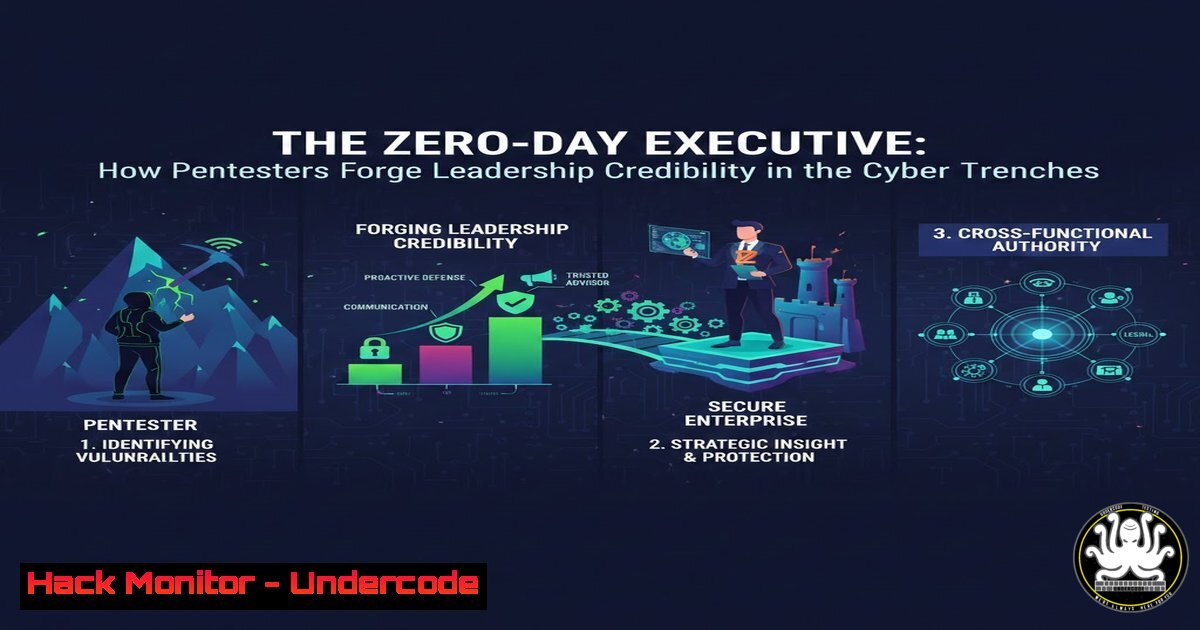
Introduction:
In today’s digital battleground, technical prowess alone is no longer the sole currency of advancement. Cybersecurity professionals, especially pentesters and ethical hackers, are discovering that the deep, systems-level thinking honed in security assessments is a unique foundation for executive leadership. This article explores how the methodological rigor of penetration testing translates directly into strategic decision-making and organizational influence.
Learning Objectives:
- Decode how pentest methodologies build strategic frameworks for business risk management.
- Translate technical vulnerability assessment into compelling executive‑level communication.
- Architect a continuous learning path that bridges hands‑on technical skills and leadership development.
You Should Know:
- From Recon to Strategy: The Pentester’s Mindset as a Business Framework
The initial reconnaissance phase of a penetration test is analogous to corporate environmental scanning. A pentester systematically enumerates assets, just as a leader must map organizational resources and external threats.
Step‑by‑step guide:
Step 1: Passive Information Gathering (OSINT). Use tools like `theHarvester` and `sherlock` to build a profile. This mirrors market and competitor analysis.
 Linux Command Example
theHarvester -d targetcompany.com -b google,linkedin
sherlock target_username
Step 2: Active Enumeration. Technically, this involves port scanning with nmap. Strategically, it’s about identifying active business units and their interfaces.
nmap -sV -sC -O -p- target_IP -oA initial_scan
Step 3: Vulnerability Correlation. Cross‑reference findings with databases like the NVD or exploit‑db. In business, this is akin to SWOT analysis, matching internal weaknesses with external opportunities/threats.
- Exploitation to Explanation: Communicating Technical Risk to the Board
Finding a critical vulnerability like a SQL injection is only half the battle. The real skill is framing its business impact in terms of financial, reputational, and operational risk.
Step‑by‑step guide:
Step 1: Demonstrate the Technical Flaw. Safely exploit the vulnerability in a lab environment to understand its full potential.
 Using sqlmap in a controlled test environment
sqlmap -u "http://test.vuln.site/view.php?id=1" --risk=3 --level=5 --dbs
Step 2: Quantify the Impact. Translate the flaw into business metrics. Could it lead to a data breach of X records? What is the regulatory fine (GDPR, CCPA) exposure? Use frameworks like FAIR (Factor Analysis of Information Risk) for modeling.
Step 3: Craft the Narrative. Prepare a concise briefing: “The identified flaw allows direct access to our customer database. A successful attack could compromise 2M records, with a projected incident response cost of $4.5M and significant brand damage.”
- Post‑Exploitation to Strategic Roadmapping: Building a Defense‑in‑Depth Plan
The post‑exploitation phase, where you establish persistence and move laterally, reveals systemic security failures. This directly informs a strategic, layered defense roadmap.
Step‑by‑step guide:
Step 1: Privilege Escalation Analysis. Document how you gained admin rights (e.g., unpatched Windows kernel exploit, `sudo` misconfiguration). Each method points to a missing control.
 Linux privilege escalation check
sudo -l
find / -perm -4000 -type f 2>/dev/null
Step 2: Lateral Movement Mapping. Chart how you pivoted from a workstation to a database server. This exposes network segmentation failures.
Step 3: Build the Mitigation Blueprint. Prioritize patches, recommend network micro‑segmentation, advocate for mandatory Least Privilege enforcement, and propose enhanced logging/monitoring for the identified attack paths.
4. Tool Mastery to Technology Leadership
Command‑line fluency and tool expertise are the bedrock. Leaders must understand the capabilities and limitations of the technologies governing their security posture.
Step‑by‑step guide:
Step 1: Core Tool Proficiency. Maintain hands‑on skill with core suites:
Recon: `nmap`, `amass`, `whois`
Exploitation: `metasploit`, `burpsuite`, `john`
Post‑Exploitation: `mimikatz` (Windows), `linpeas` (Linux), `cobalt strike`
Step 2: Automation & Scripting. Automate repetitive tasks to free time for strategic analysis. Write Python scripts to parse logs or Bash scripts to automate initial recon.
 Example: Simple Python log parser for failed SSH attempts
import re
with open('/var/log/auth.log', 'r') as f:
for line in f:
if 'Failed password' in line:
ip = re.search(r'from (\S+)', line)
if ip: print(f"Failed login from: {ip.group(1)}")
Step 3: Vendor & Solution Evaluation. Use this deep technical knowledge to critically assess security vendors, avoiding marketing hype and focusing on measurable efficacy.
- Continuous Learning: Building Your Personal “Threat Intelligence” Feed
The hacker mindset thrives on curiosity. A leader must institutionalize this for themselves and their team.
Step‑by‑step guide:
Step 1: Curate Inputs. Follow CVE databases, security researchers on Twitter/X, blogs (Krebs, Schneier), and podcasts (Darknet Diaries).
Step 2: Practice Consistently. Use platforms like Hack The Box, TryHackMe, or PentesterLab to keep skills sharp. Set up a home lab with vulnerable VMs (e.g., from VulnHub).
Step 3: Formalize Knowledge. Pursue certifications that blend technical and managerial aspects, such as GIAC Security Leadership (GSLC) or Certified Information Security Manager (CISM), while maintaining technical certs like OSCP or GPEN.
What Undercode Say:
- Technical Depth is Strategic Advantage. The ability to drill into the “how” of an attack provides unparalleled credibility when defining the “why” of a security investment. Leaders who retain this depth make more informed, defensible decisions.
- The Hacker Methodology is a Universal Problem‑Solving Framework. The iterative process of Reconnaissance, Enumeration, Exploitation, and Reporting is directly transferable to diagnosing complex business problems, testing solutions, and presenting findings.
Analysis: The intersection of deep technical skill and leadership is where modern cybersecurity strategy is forged. The sponsored message regarding a DBA highlights the market’s recognition of the need for formalized strategic authority. For the pentester, this authority is uniquely earned through a proven ability to deconstruct and defend complex systems. The future CISO or security‑focused CEO will not be a manager who outsources technical understanding, but a leader who has personally navigated the network’s shadows, understands the attacker’s playbook intimately, and can therefore architect genuinely resilient organizations. The career path no longer diverges; it ascends from the command line to the boardroom, with each step informed by the last.
Prediction:
The next five years will see a significant rise in CISOs and tech executives with direct backgrounds in offensive security and penetration testing. As regulatory pressures mount and board‑level accountability for breaches intensifies, the demand for leaders who can speak both the language of business risk and the technical specifics of exploit chains will skyrocket. This will reshape executive education, with more blended programs emerging that validate strategic leadership while requiring the maintenance of hard technical competencies, effectively creating a new breed of “Doctor of Security Science” or “Executive Hacker.”
▶️ Related Video (84% Match):
🎯Let’s Practice For Free:
IT/Security Reporter URL:
Reported By: Noobsixt9 January – Hackers Feeds
Extra Hub: Undercode MoN
Basic Verification: Pass ✅


