Listen to this Post
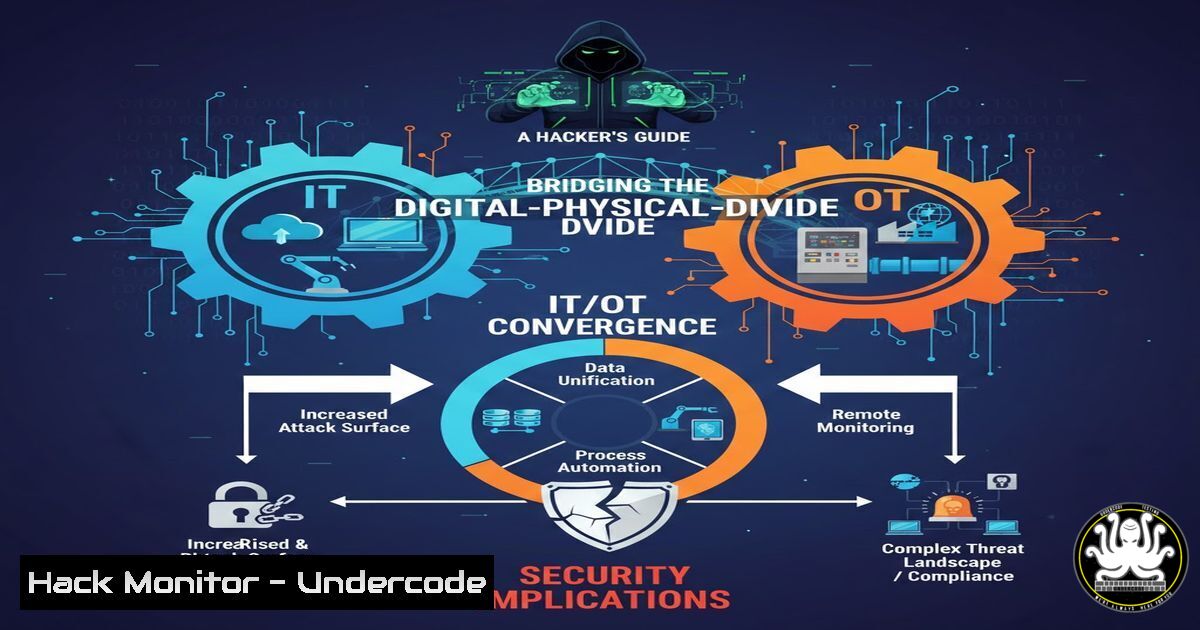
Introduction:
The convergence of Information Technology (IT) and Operational Technology (OT) is reshaping the cybersecurity landscape, merging the digital realm with the physical world. While IT focuses on data flow and business systems, OT governs physical processes in industrial environments—from power grids to manufacturing lines. This fusion creates a complex attack surface where traditional IT security models often clash with OT’s paramount needs for safety, reliability, and continuity, demanding a nuanced understanding from security professionals.
Learning Objectives:
- Understand the fundamental philosophical and operational differences between IT and OT environments.
- Learn practical technical commands and methods for assessing and securing converged IT/OT networks.
- Develop strategies to bridge communication and security gaps between IT and OT teams.
You Should Know:
- The Core Mindset Clash: “Tech” Means Different Things
The foundational friction stems from a difference in perspective. In a typical IT department, “technology” is synonymous with computers, networks, and software. IT is often the business’s backbone. In OT environments—like a water treatment plant or an automotive factory—”technology” primarily refers to physical machinery: pumps, valves, robots, and safety interlocks. The digital control systems (OT) are just one layer within this older, broader technological ecosystem. An OT engineer prioritizes preventing a pipeline rupture over patching a server, as the physical consequence is immediate and catastrophic.
Step‑by‑step guide explaining what this does and how to use it.
Security Implication: This mindset gap means OT systems are often managed with lifecycle expectations of 15-20 years, not the 3-5 year refresh cycles of IT. Pushing aggressive IT-style patching can destabilize fragile, mission-critical OT processes.
Technical Reconnaissance: Before engaging, understand the OT landscape. Use passive network mapping tailored for industrial networks.
 On a Linux system, use specialized tools like nmap with OT-friendly scripts
 First, a gentle ping sweep to identify live hosts on the OT network segment (Use only if explicitly authorized!)
nmap -sn -PE 192.168.1.0/24

Follow with a cautious port scan for common OT/ICS protocols (e.g., Modbus, S7, BACnet)
 The `--script` option can use safe discovery scripts from Nmap's arsenal
nmap -p 502,102,47808,20000 --script modbus-discover,s7-info 192.168.1.50

On Windows, PowerShell can be used for network discovery (requires admin rights)
Get-NetTCPConnection -State Listen | Where-Object {$_.LocalPort -in @(502,102,47808)} | Format-Table
- Network Architecture: Flat OT Networks vs. Segmented IT
OT networks were historically designed for simplicity and low latency, leading to flat architectures where controllers, sensors, and HMIs (Human-Machine Interfaces) can communicate freely. This is anathema to IT’s zero-trust, heavily segmented model. Directly applying IT network policies can break essential OT process communication.
Step‑by‑step guide explaining what this does and how to use it.
Security Implication: A single breach in a flat OT network can move laterally to critical control assets. The goal is to segment thoughtfully, not disruptively.
Practical Segmentation Strategy: Implement a “defense-in-depth” model using a DMZ (Demilitarized Zone) between IT and OT.
1. Identify Critical Assets: Use network traffic analysis (with tools like Wireshark with OT protocol dissectors) to map communication dependencies between OT devices.
2. Establish a Perimeter Firewall: Deploy a next-gen firewall between the corporate IT network and the OT network. Configure explicit allow-rules only for necessary traffic.
 Example iptables (Linux) rules to restrict access to an OT network segment
 Allow established connections back from OT
sudo iptables -A FORWARD -i ot_interface -m state --state ESTABLISHED,RELATED -j ACCEPT
 Only allow specific IT admin station (e.g., 10.0.1.100) to talk to the HMI (e.g., 192.168.1.10) on port 3389 (RDP)
sudo iptables -A FORWARD -s 10.0.1.100 -d 192.168.1.10 -p tcp --dport 3389 -j ACCEPT
 Drop all other traffic from IT to OT
sudo iptables -A FORWARD -i it_interface -d 192.168.1.0/24 -j DROP
3. Implement OT Micro-Segmentation: Use OT-aware firewalls or switches to create smaller zones within the OT network (e.g., separating manufacturing zone A from packaging zone B), containing potential breaches.
- Vulnerability Management: Patching is Not Always the Answer
IT security relies on regular, automated patching. In OT, an unplanned reboot of a decades-old controller can halt production for days. Patches must be rigorously tested in an identical offline environment before deployment, a process that can take months.
Step‑by‑step guide explaining what this does and how to use it.
Security Implication: OT systems often run unpatched, known vulnerabilities for extended periods. Compensating controls are essential.
Compensating Control Implementation:
- Network-Based Detection: Deploy an Intrusion Detection System (IDS) like Snort or Suricata with rules tuned for OT protocols to detect exploit attempts.
Example Suricata rule to detect a common Modbus probe
alert tcp $IT_NET any -> $OT_NET 502 (msg:"Modbus Function Code Scan"; flow:to_server; content:"|00 00 00 00 00 06 00|"; depth:7; sid:1000001; rev:1;)
- Host-Based Hardening: On Windows-based OT HMIs and engineering workstations, enforce strict application whitelisting (e.g., using Microsoft AppLocker) to prevent unauthorized software execution, a common malware vector.
PowerShell to create a basic AppLocker policy allowing only executables from C:\Program Files\
New-AppLockerPolicy -RuleType Path -User Everyone -Action Allow -Path "C:\Program Files\" -Name "OT_Whitelist"
- Virtual Patching: Use firewalls or IPS to block traffic attempting to exploit a specific CVE, providing a temporary shield until the OT vendor-approved patch can be applied.
4. Protocol Insecurity: Legacy vs. Modern
IT protocols like HTTPS and SSH are built with encryption and authentication. OT protocols like Modbus TCP, PROFINET, and DNP3 were designed for efficiency and reliability in trusted environments, lacking basic security features, making them susceptible to eavesdropping and manipulation.
Step‑by‑step guide explaining what this does and how to use it.
Security Implication: An attacker on the network can easily read process data or send malicious commands to devices.
Securing Protocol Communication:
- Discovery and Analysis: Use a tool like `Wireshark` to capture OT traffic. Filter for common industrial protocols to understand the “conversation.”
wireshark filter: tcp.port == 502 || udp.port == 47808
- Implement Protocol Gateways: Deploy secure protocol translators or gateways that can take an insecure OT protocol, wrap it in a secure TLS tunnel, and communicate with a counterpart gateway in the OT zone. This encapsulates legacy traffic without modifying the endpoints.
- Network Monitoring: Deploy passive monitoring appliances (like Nozomi Networks or Claroty) that decode OT protocols to establish a behavioral baseline and alert on anomalous commands (e.g., a command to unexpectedly open a critical valve).
-
Identity and Access Management (IAM): Shared Credentials in OT
IT has moved towards multi-factor authentication and individual accounts. OT systems frequently use shared, default, or hard-coded credentials for HMIs and controllers, with no central IAM system, making accountability and access revocation nearly impossible.
Step‑by‑step guide explaining what this does and how to use it.
Security Implication: Compromising one credential can grant access to vast swaths of industrial equipment.
Hardening IAM in OT:
- Credential Inventory: Use OT asset discovery tools or manual audits to document all default credentials on controllers, HMIs, and engineering software.
- Implement a Privileged Access Management (PAM) Solution: Enforce a jump server/bastion host model. All access to the OT network must first authenticate to the PAM system with individual credentials and MFA. The PAM system then manages the shared OT credentials, rotating them regularly and providing full session audit logs.
Conceptual: Access flow is now:
Engineer -> SSH to PAM Server (with MFA) -> PAM server launches RDP session to OT HMI using vaulted credentials
ssh -J [email protected] ot-engineer@ot-hmi
- Network-Level Enforcement: Configure firewalls to only allow RDP, VNC, or engineering software traffic (e.g., TIA Portal, Rockwell RSLogix) to OT assets from the PAM server’s IP address, blocking all other direct access attempts.
What Undercode Say:
- The “Tech” Identity Crisis is the Root Cause: The most significant barrier is not technical but cultural. IT professionals must relinquish the idea that they are the sole “tech experts” and recognize OT’s deep physical engineering domain knowledge. Conversely, OT teams must accept that digital threats are now a direct operational risk, not just an IT headache. Successful convergence starts with this mutual respect.
- Security Priorities are Inverted: In IT, the triad is Confidentiality, Integrity, Availability (CIA). In OT, it is Availability, Integrity, Confidentiality (AIC). A cyber incident in OT is measured first by its potential for physical harm, environmental damage, or production loss—not data theft. Security controls must be designed with this priority inversion in mind to gain OT acceptance.
Analysis:
The LinkedIn discourse reveals that the IT/OT divide is more than a technical challenge; it’s an organizational and governance gap. Commenters correctly point out that OT security budgets are often dispersed across plant P&Ls, with no single responsible owner, unlike centralized IT security. Furthermore, the introduction of IT components (Windows, Ethernet) into OT spaces has imported IT risks without integrating OT’s safety-centric governance models. The path forward requires creating hybrid roles—”OT Security Engineers” who are bilingual in both domains. These individuals can translate IT security requirements into OT-actionable policies and articulate OT operational constraints to IT leadership. The future of critical infrastructure security depends on building this bridge, not by one side conquering the other, but through a fusion of disciplines that respects the critical mission of both.
Prediction:
The accelerating integration of IT, OT, and IoT will lead to a new class of “cyber-physical” attacks with automated, physical consequences. We will see malware designed not for data exfiltration, but to subtly degrade manufacturing quality over time, manipulate sensor readings to cause equipment self-damage, or alter chemical compositions. Defense will evolve towards AI-driven monitoring that can correlate network anomalies with physical process deviations (e.g., detecting that a strange network packet preceded an unusual vibration in a turbine). The organizations that will thrive are those that proactively merge their IT and OT teams into unified “Cyber-Physical Security” divisions with shared responsibility and metrics.
▶️ Related Video (80% Match):
🎯Let’s Practice For Free:
IT/Security Reporter URL:
Reported By: Stuart Wood – Hackers Feeds
Extra Hub: Undercode MoN
Basic Verification: Pass ✅


