
Listen to this Post
Introduction:
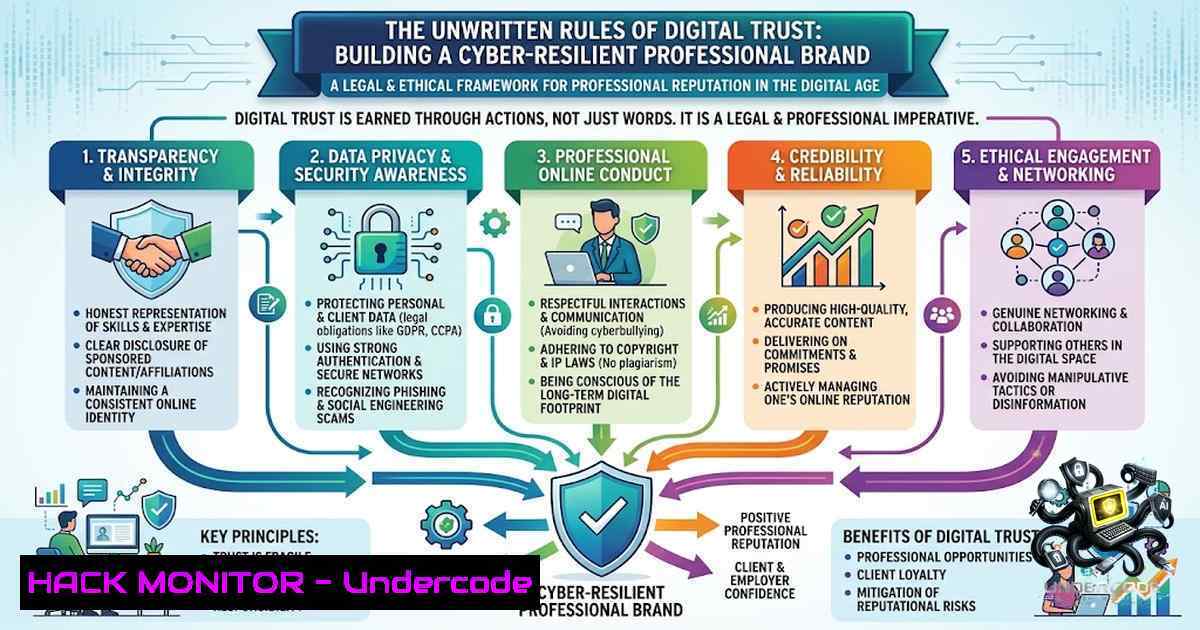
In the hyper-connected world of cybersecurity, visibility does not equal credibility. While professionals often confuse active posting on platforms like LinkedIn with building a trustworthy digital presence, true influence stems from strategic value delivery, consistent engagement, and verifiable expertise. This article deconstructs the mechanics of professional networking through a cybersecurity lens, transforming social media activity into a fortified digital identity that attracts opportunities rather than chases them.
Learning Objectives & Secrets:
- Objective 1: Master the art of converting passive social media activity into an active lead-generation engine.
- Objective 2 (Secret Tip): Utilize OSINT (Open Source Intelligence) techniques to research connection targets before engaging, ensuring your comments and messages resonate with their specific pain points, rather than generic greetings.
- Objective 3 (Secret Tip): Implement a “Zero-Trust” approach to your content strategy—verify every claim, case study, and statistic before posting to build an unassailable reputation for accuracy.
You Should Know:
1. Profiling Your Digital Perimeter (The Etalase Strategy)
Your profile is the first line of defense in your personal brand. Just as you would harden a server, you must harden your digital identity. In cybersecurity, we perform reconnaissance; on social platforms, people do the same to you. A weak profile is a vulnerability. You need to clearly define your “attack surface”—your skills, your niche, and the problems you solve.
- Step 1: Audit Your Current Profile. Treat this as a vulnerability assessment. Remove outdated roles, ambiguous job titles, and irrelevant buzzwords.
- Step 2: Define Your Value Proposition. Ask, “What problem does a CISO or hiring manager think I solve?” Write this in the ‘About’ section.
- Step 3: Visual Hardening. Ensure your banner and profile picture align with your professional narrative. If you are in IT, reflect that aesthetic (e.g., code snippets, network diagrams).
2. Providing Value Before Extraction
The “Give-to-Get” principle is akin to the handshake protocol in networking. You don’t send a SYN-ACK without first sending a SYN. Similarly, you cannot expect trust without providing insight first. This involves publishing actionable content that helps your audience secure their own environments or advance their careers.
- Step 1: Identify Pain Points. Monitor cybersecurity forums, Reddit r/cybersecurity, and recent CVE reports to see what keeps people up at night (e.g., Ransomware mitigation, Cloud misconfigurations).
- Step 2: Create Solution-Oriented Content. Don’t just say “Cloud is insecure.” Write a post explaining how to use `Azure Policy` or `AWS Config` to enforce compliance.
- Step 3: Use the “3-1-1” Rule. For every 3 posts that share knowledge, share 1 external resource, and 1 personal story about a failure or success.
Linux/Windows Command Example (Visibility Audit):
To build credibility, you might share how you audit network logs. A practical command to analyze SSH failures (a common threat) is:
grep "Failed password" /var/log/auth.log | awk '{print $(NF-3)}' | sort | uniq -c | sort -1r
On Windows (PowerShell), for a similar security audit:
Get-EventLog -LogName Security -InstanceId 4625 | Select-Object -First 10
Sharing these snippets positions you as a practitioner, not just a theorist.
3. The Art of the Thoughtful Comment
A ‘like’ is a passive ACK; a comment is an active response. In networking, engagement is your firewall rule that allows specific traffic through. Thoughtful commentary opens doors that likes never will.
- Step 1: Set Alerts. Use LinkedIn alerts or RSS feeds for keywords like “Cybersecurity breach,” “AI security,” or “Zero-day.”
- Step 2: Add Value, Not Noise. If someone posts about a new vulnerability, don’t say “Thanks for sharing.” Instead, ask, “Have you tested the mitigation against the PoC released on GitHub?”
- Step 3: Engage with the Author’s Network. When you comment insightfully, the author’s network sees you. This extends your reach without spamming.
4. Consistency vs. Viral Glory
A single viral post is like a successful penetration test—it gives you a snapshot, but continuous monitoring (consistent posting) provides true security posture. Algorithms reward consistency, but more importantly, human memory rewards repetition.
- Step 1: Build a Content Calendar. Schedule 3-4 posts a week. Use tools like Buffer or Hootsuite.
- Step 2: Diversify Content. Mix text posts with carousels (documents), videos, and polls.
- Step 3: Analyze Engagement. Use LinkedIn analytics to see when your audience is active. Post during those windows to maximize retention.
5. Building Relational Bonds, Not Just Connections
The distinction between a connection and a relationship is the difference between a default `deny-all` firewall rule and a specific `allow` rule. Generic connections are cheap; specific relationships require 1-on-1 engagement.
- Step 1: Deep Dive into Profiles. Before accepting a connection request, review their activity. Send a personalized DM: “I saw you worked on Incident X, what was your biggest takeaway?”
- Step 2: Use Video/Audio. Voice messages often build rapport faster than text. It humanizes the digital barrier.
- Step 3: The “Coffee Chat” Protocol. Offer a 15-minute virtual coffee to discuss a specific technical challenge they are facing. Move from public social interaction to private value delivery.
6. Strategic Use of LinkedIn Features
Just as security tools like `Nmap` or `Burp Suite` are used strategically, LinkedIn has tools for positioning.
- Featured Section: Pin your best case studies, GitHub repositories, or published security papers here.
- Creator Mode: Turn it on to unlock the “Follow” button and access to newsletters.
- Newsletter: Start a weekly digest about API security or cloud hardening. This is your lead magnet.
7. Reputation Management (Digital Forensics)
Everything you write contributes to your digital hash. Once published, it’s immutable on the blockchain of the internet (or at least cached). You must maintain integrity.
- Step 1: Google Yourself. Perform a self-OSINT check. See what comes up.
- Step 2: Audit Old Posts. Delete or edit posts that no longer represent your stance.
- Step 3: Think “Forensically.” Before posting, ask, “Will I be comfortable with this being read back to me in a court of law or a board meeting?”
8. API Security and Your Value Proposition
Since the post mentions “Hacks,” we can tie this to technical skill. To be seen as a security expert, you must demonstrate understanding of the OWASP Top 10, specifically API vulnerabilities.
- Tutorial Step: Set up a Postman collection to test authentication headers.
- Command: Use `curl` to test a header:
curl -X GET "https://api.example.com/data" -H "Authorization: Bearer $TOKEN"
- Mitigation: Always discuss using JWT with short expiry and refresh tokens in your content.
9. Cloud Hardening Discussions
To stand out, discuss Cloud Security Posture Management (CSPM). Use stories about misconfigured S3 buckets that led to breaches.
- Actionable Step: Write a post on how to use `CloudTrail` to monitor unauthorized access in AWS. Provide a script that alerts on root user logins.
10. Incident Response (IR) and Learning
Sharing your Incident Response journey is powerful. Discuss the “6 Phases of IR” (Preparation, Identification, Containment, Eradication, Recovery, Lessons Learned).
- Secret Tip: In your posts, don’t just list the phases. Explain a specific tool you used in the “Containment” phase, like running `iptables` to block a malicious IP.
What Undercode Say:
- Key Takeaway 1: Professional networking is a proactive security strategy, not a passive social activity. It requires hardening your profile, monitoring your engagement channels, and responding to threats (like irrelevant content) in real-time.
- Key Takeaway 2: The “Zero Trust” principle applies to branding—trust is never assumed, it is continuously verified through the value you provide. Consistently delivering actionable technical insights (Linux commands, Python scripts, or compliance checklists) elevates you from a “poster” to a “thought leader.”
Analysis: The post correctly identifies the fallacy of “activity equals opportunity.” In the current market, where AI-generated content is ubiquitous, generic advice is noise. The true differentiator is specificity. If you are a Penetration Tester, post about specific CVEs. If you are in GRC, post about ISO 27001 implementation pitfalls. The era of generalist advice is over. The market demands niche operators who speak the language of their tools and processes.
Prediction:
- +1: Professionals who adopt this strategic content approach will see a 40% increase in qualified job offers and consulting leads as companies prioritize hiring credible, visible experts over anonymous applicants.
- +1: The trend will move toward “Live Streaming” or “Co-working” sessions where professionals showcase their workflow (e.g., bug bounty hunting in real-time), leading to an 80% higher engagement rate compared to static posts.
- -1: Those who fail to transition from “content consumers” to “value creators” will experience a digital atrophy, where their networks grow stagnant and their visibility plummets due to algorithm changes, leading to missed career milestones.
- +1: AI-driven networking tools will emerge that help professionals analyze their own content for “authenticity,” further rewarding those who provide verifiable technical deep-dives and punishing generic platitudes.
- -1: The saturation of “thought leaders” teaching the same basics will create a fatigue effect, making it harder for beginners to break through unless they possess extremely niche technical certifications (OSCP, CISSP, etc.) that they actively demonstrate.
▶️ Related Video (86% Match):
🎯Let’s Practice For Free:
🎓 Live Courses & Certifications:
Join Undercode Academy for Verified Certifications
🚀 Request a Custom Project:
Secure, high-velocity infrastructure and disruptive technological engineering. Contact our engineering team for high-tier development and proprietary systems:
[email protected]
💎 Smart Architecture | 🛡️ Secure by Design | ⭐ Trusted by Thousands
IT/Security Reporter URL:
Reported By: https://lnkd.in/p/etWjVmSR – Hackers Feeds
Extra Hub: Undercode MoN
Basic Verification: Pass ✅


