Listen to this Post
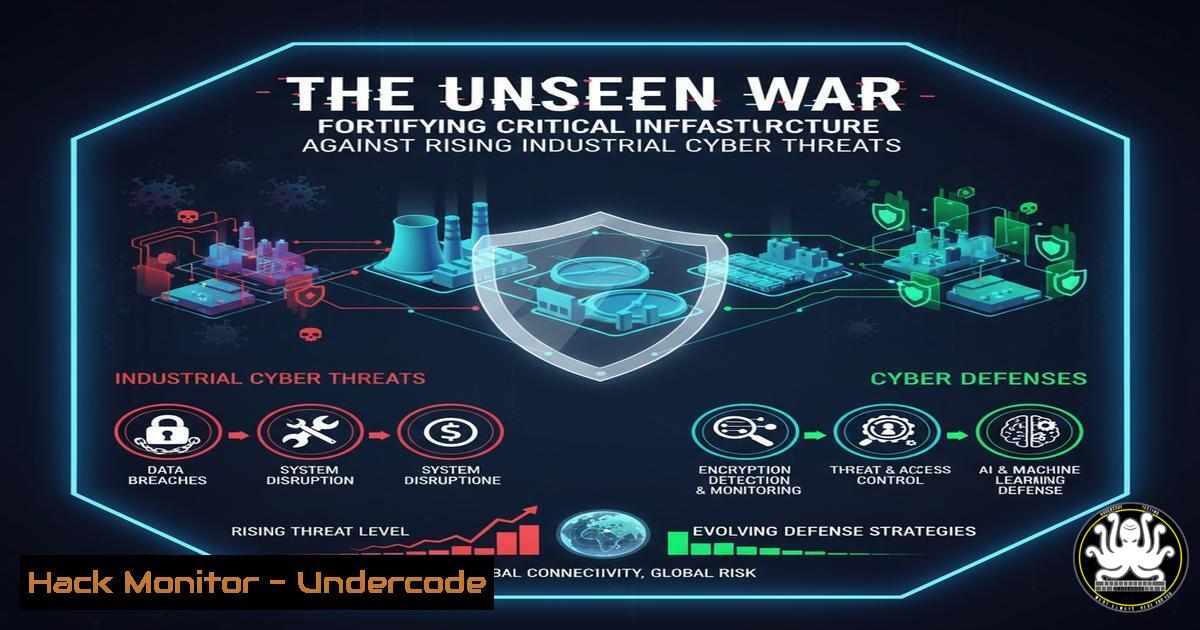
Introduction:
The digital battleground has expanded into the physical world, with Operational Technology (OT) and Industrial Control Systems (ICS) becoming prime targets for nation-states and cybercriminals. Safeguarding critical infrastructure—from power grids to water treatment facilities—requires a specialized blend of IT security principles and an intimate understanding of industrial processes. This article provides a tactical guide to building cyber resilience in these vital environments.
Learning Objectives:
- Understand the core principles of OT/ICS security and the key differences from traditional IT security.
- Master essential commands and techniques for securing and monitoring industrial networks.
- Develop a proactive defense strategy incorporating threat detection, vulnerability management, and incident response for critical infrastructure.
You Should Know:
1. Network Segmentation & Visibility with Nmap
A foundational step in OT security is identifying and isolating assets. You cannot protect what you cannot see. Using Nmap provides a clear picture of your network landscape.
`nmap -sS -sU -O -T4 192.168.1.0/24`
Step-by-step guide: This command performs a SYN scan (-sS) for TCP ports, a UDP scan (-sU) for UDP services, and attempts OS detection (-O) on the target subnet. The `-T4` flag speeds up the scan. In an OT environment, run this from a designated security VLAN. Analyze the output to identify all connected devices, including unexpected IT equipment or unauthorized industrial devices (IIoT). This map is crucial for enforcing segmentation firewalls that prevent lateral movement from corporate IT networks into the sensitive OT zone.
- Hardening Industrial Firewalls with Access Control Lists (ACLs)
OT networks must be segmented from enterprise IT networks. Configuring firewalls with strict ACLs is non-negotiable.
`access-list OT-TO-IT deny ip 10.10.10.0 0.0.0.255 172.16.1.0 0.0.0.255`
`access-list OT-TO-IT permit tcp 10.10.10.0 0.0.0.255 host 172.16.1.10 eq 443`
`access-list OT-TO-IT deny ip any any log`
Step-by-step guide: This Cisco-style ACL example is applied on a firewall at the IT/OT boundary. The first line explicitly blocks all traffic from the OT network (10.10.10.0/24) to the IT network (172.16.1.0/24). The second line creates a “pinhole” exception, allowing OT devices to communicate with a specific IT server (172.16.1.10) only over HTTPS (port 443). The final line denies and logs all other traffic, providing an audit trail. This “default-deny” posture is critical.
3. Securing PLCs with S7comm-Audit
Programmable Logic Controllers (PLCs) are the brains of industrial processes. Tools like `s7comm-audit` can assess their security posture.
`python s7audit.py -t 192.168.1.50 -a`
Step-by-step guide: This Python script targets a Siemens S7 PLC at the given IP address. The `-a` flag runs a full audit, checking for common vulnerabilities such as default or weak passwords, unprotected STOP commands, and unnecessary services. Before running in a production environment, always test in a lab setting. The results will guide you in hardening the PLC by changing default credentials, disabling unused services, and implementing logical access control.
4. Monitoring for Anomalies with Wireshark Filters
Continuous monitoring of OT network traffic is essential for detecting intrusions and operational anomalies. Wireshark is a key tool for this deep packet inspection.
`(ip.src==10.10.10.0/24 and ip.dst!=10.10.10.0/24) or (tcp.flags.reset==1) or (s7comm.stop)`
Step-by-step guide: Apply this display filter in Wireshark after capturing traffic from a SPAN port on an OT switch. It will highlight potentially malicious activity: traffic leaving the OT segment (indicating a potential beacon), TCP reset packets (which can signify scanning or connection issues), and most critically, S7 STOP commands that could halt a industrial process. Correlate these events with operational logs to determine malice versus normal activity.
5. Windows ICS Server Hardening with PowerShell
Many HMIs and engineering workstations run on Windows. Hardening these systems is a primary line of defense.
`Get-Service -DisplayName “Windows Defender” | Set-Service -StartupType Automatic -Status Running`
`Get-NetFirewallRule -DisplayGroup “Remote Desktop” | Set-NetFirewallRule -Enabled False`
`Set-ItemProperty -Path “HKLM:\SYSTEM\CurrentControlSet\Control\FileSystem” -Name “NtfsDisable8dot3NameCreation” -Value 1`
Step-by-step guide: Run these commands in an elevated PowerShell session on ICS hosts. The first command ensures Windows Defender is enabled and running (traditional AV may not be allowed). The second command disables the Remote Desktop firewall rules, removing a common attack vector. The third command modifies the registry to disable the creation of legacy 8.3 filenames, removing a potential foothold for attackers. Always test these changes in a development environment first.
6. Linux Historian Data Integrity Monitoring
Data historians running on Linux collect critical process data. Monitoring these systems for unauthorized changes is vital.
`sudo apt install aide`
`sudo aideinit`
`sudo mv /var/lib/aide/aide.db.new /var/lib/aide/aide.db`
`sudo aide.wrapper –check`
Step-by-step guide: AIDE (Advanced Intrusion Detection Environment) creates a database of file checksums and attributes. After installation, run `aideinit` to build the initial database. Copy the new database to the active one. Schedule a daily `aide.wrapper –check` via cron. Any changes to critical system binaries or historian application files will be reported, alerting you to potential compromise or unauthorized patching.
7. Vulnerability Assessment with Metasploit Auxiliary Modules
Proactively finding weaknesses before an attacker does is key. Metasploit’s non-exploitative modules are perfect for this.
`msfconsole`
`msf6 > use auxiliary/scanner/scada/modbusdetect`
`msf6 auxiliary(scanner/scada/modbusdetect) > set RHOSTS 192.168.1.100-150`
`msf6 auxiliary(scanner/scada/modbusdetect) > run`
Step-by-step guide: This Metasploit module scans a range of IPs for Modbus TCP devices. It identifies endpoints and gathers information like unit IDs without performing any exploitation. This is used for asset discovery and compliance checking, ensuring all devices are accounted for in your security management platform. Never use exploit modules against live production systems without explicit authorization.
What Undercode Say:
- The Air Gap is a Myth. Modern industrial systems require data exchange with corporate networks for efficiency and analytics. Relying on physical isolation as a primary security control is a dangerous fallacy. Security must be designed with the assumption that the network is already contested.
- Availability Trumps Confidentiality. In IT, we protect data confidentiality. In OT, the paramount concern is system availability and integrity. A ransomware attack on a corporate file server is an inconvenience; the same attack on a water treatment PLC is a public health catastrophe. All security controls must be evaluated based on their impact on operational resilience and safety.
The convergence of IT and OT networks has created a vast, vulnerable attack surface. Defenders must adopt a “Cyber-Informed Engineering” mindset, where security is not bolted on but designed into the system from the ground up. The commands and techniques outlined are not a silver bullet but are essential components of a layered defense strategy that includes physical, network, and host-level controls. The goal is not to make a system impenetrable, but to increase the cost and complexity for an adversary to such a level that attacks are no longer feasible.
Prediction:
The future of industrial cyber threats will be defined by the weaponization of AI. We will see the emergence of self-propagating malware capable of autonomously navigating OT networks, learning process behaviors, and executing precision attacks that cause maximum physical damage while evading detection by mimicking normal operational noise. This will force a paradigm shift from reactive, signature-based defenses to AI-powered, predictive security platforms that can model normal operations and pre-emptively neutralize threats before they can impact the physical world. The race for control of critical infrastructure will be the defining cyber conflict of the next decade.
🎯Let’s Practice For Free:
IT/Security Reporter URL:
Reported By: Fahadmughal Industrialcyberdays – Hackers Feeds
Extra Hub: Undercode MoN
Basic Verification: Pass ✅


