Listen to this Post
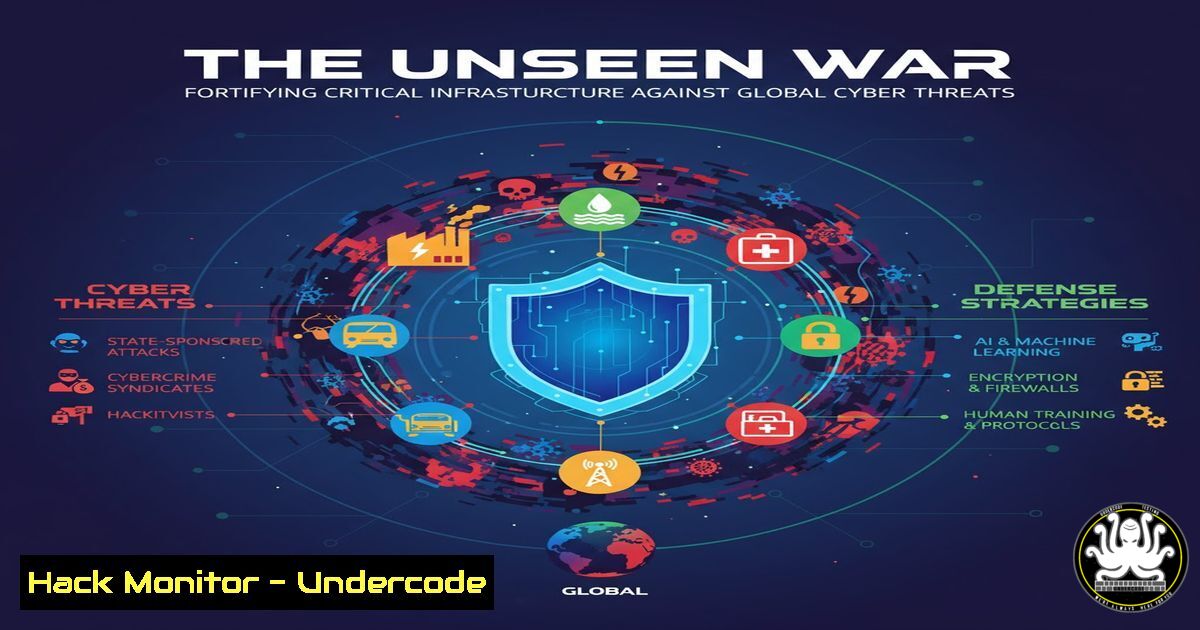
Introduction:
The digital battleground has expanded beyond corporate networks to encompass the very foundations of modern society: our critical infrastructure. From the water we drink to the energy that powers our homes, Operational Technology (OT) systems are under relentless assault by threat actors who recognize their immense disruptive potential. This new era of cyber warfare demands a paradigm shift from traditional IT security to a resilience-focused, cyber-informed engineering approach.
Learning Objectives:
- Understand the unique vulnerabilities of Industrial Control Systems (ICS) and Supervisory Control and Data Acquisition (SCADA) environments.
- Acquire practical skills for securing both Windows and Linux-based engineering workstations and servers common in OT settings.
- Learn to implement network segmentation and monitoring specifically designed to protect critical infrastructure assets.
You Should Know:
1. Hardening the Engineering Workstation
The engineering workstation is a prime target, often the bridge between the corporate IT network and the isolated OT environment. Compromising this single node can provide a gateway to critical control systems.
Verified Command/Code Snippet:
Windows – PowerShell Script to Disable Unnecessary Services
 List of services commonly unnecessary on an OT engineering workstation
$UnnecessaryServices = @("BthAvctpSvc", "Spooler", "Telnet", "W3SVC", "FTPSVC", "SSHDSERVER")

foreach ($service in $UnnecessaryServices) {
$svc = Get-Service -Name $service -ErrorAction SilentlyContinue
if ($svc) {
Write-Host "Stopping and disabling service: $service"
Stop-Service -Name $service -Force
Set-Service -Name $service -StartupType Disabled
}
}

Enable Windows Defender Application Control (WDAC) for a hardened policy
Invoke-CimMethod -Namespace root/Microsoft/Windows/CI -ClassName PS_UpdatePolicy -MethodName Update -Arguments @{ FilePath = "C:\WDAC\CriticalInfrastructurePolicy.xml"; Force = $true }
Step-by-step guide:
This PowerShell script performs two critical hardening actions. First, it iterates through an array of service names that are typically not required in a locked-down OT environment (e.g., print spooler, web server, legacy remote access). For each service found, it forcibly stops it and sets its startup type to “Disabled” to prevent it from running on reboot. The second part uses a CIM method to deploy a Windows Defender Application Control (WDAC) policy, which enforces a whitelist of allowed applications, drastically reducing the attack surface. Always test such scripts in a non-production environment first and ensure critical engineering software is not dependent on any disabled services.
2. Linux-based Historian and HMI Security
Linux systems often host data historians and Human-Machine Interfaces (HMIs). Their security is paramount as they aggregate and display operational data.
Verified Command/Code Snippet:
Linux – Securing SSH and File Permissions
 1. Harden the SSH configuration
sudo sed -i 's/PermitRootLogin yes/PermitRootLogin no/' /etc/ssh/sshd_config
sudo sed -i 's/PasswordAuthentication yes/PasswordAuthentication no/' /etc/ssh/sshd_config
echo "AllowUsers ot_admin historian_user" | sudo tee -a /etc/ssh/sshd_config

<ol>
<li>Restrict permissions for critical OT application directories
sudo find /opt/ot_apps -type d -exec chmod 750 {} \;
sudo find /opt/ot_apps -type f -exec chmod 640 {} \;
sudo chown -R root:ot_group /opt/ot_apps</p></li>
<li><p>Configure auditd to monitor for unauthorized access attempts
sudo auditctl -w /opt/ot_apps -p wa -k ot_app_access
sudo systemctl restart sshd auditd
Step-by-step guide:
This series of commands hardens a Linux server. It first modifies the SSH configuration to disable root logins and password-based authentication, forcing the use of key-based auth, and restricts SSH access to specific users. Then, it locks down file permissions for a hypothetical OT application directory (/opt/ot_apps), ensuring only the owner and group can write or execute, while others have no permissions. Finally, it uses the Linux audit daemon (auditd) to set a watch on the application directory for any write or attribute change events, logging them with a key “ot_app_access” for easy searching. Restarting the services applies the changes.
3. Network Segmentation for OT/IT Convergence
A flat network is a vulnerable network. Segmenting control system networks from enterprise IT is the most effective way to prevent lateral movement from a corporate breach.
Verified Command/Code Snippet:
Cisco IOS – ACL to Restrict Access to Control Network
! Define an extended access list to protect the PLC subnet
ip access-list extended OT-CONTROL-PLANE-ACL
! Permit only HMI/SCADA from specific hosts to PLCs on Modbus TCP port
permit tcp host 10.0.10.50 host 10.0.20.0 0.0.0.255 eq 502
! Permit only engineering workstations from a specific subnet to SCADA servers
permit tcp 10.0.10.0 0.0.0.255 host 10.0.20.100 eq 22
! Explicitly deny and log everything else
deny ip any any log

! Apply the ACL inbound on the interface facing the IT network
interface GigabitEthernet0/1
description LINK_TO_CORPORATE_IT
ip access-group OT-CONTROL-PLANE-ACL in
Step-by-step guide:
This Cisco IOS Access Control List (ACL) provides a basic framework for segmenting an OT network. It is built with a “default deny” philosophy. The first line permits only a specific HMI (10.0.10.50) to communicate with all PLCs in the 10.0.20.0/24 network on port 502 (Modbus TCP). The second line allows only engineering workstations from the 10.0.10.0/24 subnet to access a specific SCADA server via SSH (port 22). The final `deny` statement blocks all other traffic and logs the attempts, which is crucial for incident detection. This ACL is then applied to the incoming traffic on the interface connected to the corporate network.
4. Detecting Anomalous SCADA Network Traffic
Understanding and monitoring for normal protocol behavior is key to detecting breaches in an OT environment.
Verified Command/Code Snippet:
Zeek (Bro) Script for Modbus Exception Monitoring
 save as modbus-exceptions.bro
@load base/protocols/modbus

event modbus_message(c: connection, headers: ModbusHeaders, is_orig: bool) {
if (!is_orig && headers$function_code > 0x80) {
 A function code with the high bit set indicates an exception response
local exception_code = headers$function_code & 0x7F;
NOTICE([$note=Modbus::Modbus_Exception,
$conn=c,
$msg=fmt("Modbus exception %s detected from %s", exception_code, c$id$orig_h)]);
}
}
Step-by-step guide:
This script for the Zeek (formerly Bro) network security monitoring tool focuses on the Modbus protocol, common in OT. It triggers an event for every Modbus message. The logic checks if the message is a response (not originator) and if the function code has its high bit set (values above 0x80), which signifies an exception response from a PLC. When detected, it generates a notice, logging the exception code and the originating IP address of the master that caused it. A sudden spike in exceptions can indicate a misconfigured HMI, a malicious command injection attempt, or a failing device, all of which require investigation.
5. Vulnerability Assessment of ICS Components
Passive asset discovery and vulnerability identification are crucial to avoid disrupting delicate control processes.
Verified Command/Code Snippet:
Nmap NSE Script for S7-Comm Enumerate
 Passive banner grabbing and information collection without full port scans
nmap -sS --script s7-info.nse -p 102 10.0.20.10

Using the 'ics' NSE category to run safe scripts for ICS protocols
nmap -sS --script "ics-safe and not dos" 10.0.20.0/24
Step-by-step guide:
The first command uses Nmap’s Scripting Engine (NSE) with the `s7-info.nse` script to connect to a specific Siemens S7 PLC on its standard port (102/TCP) and safely enumerate its model, version, and system name. This is a non-intrusive way to build an asset inventory. The second command is a broader scan of an OT subnet using the `ics-safe` script category. The filter `and not dos` explicitly excludes any scripts known to be potentially disruptive (Denial-of-Service). This approach prioritizes the stability of the operational environment while still gathering critical security intelligence.
6. Implementing Application Whitelisting with AppLocker
Preventing unauthorized executables, scripts, and installers from running is a cornerstone of OT security.
Verified Command/Code Snippet:
Windows – PowerShell to Create a Default Deny AppLocker Policy
 Enforce a default deny rule for all file types
Set-AppLockerPolicy -XmlPolicy (Get-Content -Path "C:\Policy\DefaultDeny.xml" -Raw)

Get the effective AppLocker policy
Get-AppLockerPolicy -Effective | Test-AppLockerPolicy -UserName "OT\eng_workstation01" -Path "C:\temp\malicious.exe"
Step-by-step guide:
The first command applies a pre-configured XML AppLocker policy that has a default deny rule. This policy must be carefully crafted beforehand to allow paths for the operating system, the engineering software suite (e.g., Siemens TIA Portal, Rockwell FactoryTalk), and other authorized applications. The second part demonstrates how to test the policy. It retrieves the effective policy and tests it against a specific user and file path. This allows administrators to proactively verify whether a piece of software, like a hypothetical “malicious.exe,” would be blocked before it can ever execute on the endpoint.
7. Cloud Monitoring for Hybrid OT/IT Data Flows
As OT data is increasingly sent to cloud platforms for analytics, securing these data flows is essential.
Verified Command/Code Snippet:
AWS CLI – Create a Trail and Alarm for Unauthorized API Calls
 Create a CloudTrail trail to log all API activity in the region
aws cloudtrail create-trail --name OT-Cloud-Monitoring --s3-bucket-name my-ot-cloudtrail-logs --is-multi-region-trail

Create a CloudWatch alarm for 'UnauthorizedAttempts' metric
aws cloudwatch put-metric-alarm --alarm-name "OT-Unauthorized-API-Attempts" \
--alarm-description "Alarm for unauthorized API calls in OT AWS account" \
--metric-name UnauthorizedAttempt --namespace AWS/CloudTrail \
--statistic Sum --period 300 --threshold 1 --comparison-operator GreaterThanOrEqualToThreshold \
--alarm-actions arn:aws:sns:us-east-1:123456789012:ot-security-alerts
Step-by-step guide:
This two-part command set establishes foundational cloud security monitoring in AWS. The first command uses the AWS CLI to create a multi-region CloudTrail trail, which records all API calls made in the account and stores the logs in a specified S3 bucket. The second command creates a CloudWatch alarm that triggers if the sum of `UnauthorizedAttempt` events (a built-in metric from CloudTrail) exceeds 1 in a 5-minute period. When the alarm triggers, it sends a notification to an SNS topic, which can then alert a security team via email or SMS, enabling rapid response to potential credential compromise or insider threats in the cloud environment.
What Undercode Say:
- The convergence of IT and OT networks is the single greatest cybersecurity challenge facing critical infrastructure, creating attack paths that were previously non-existent.
- A “defense-in-depth” strategy is non-negotiable, combining network, host, application, and procedural controls tailored to the unique stability and safety requirements of industrial environments.
The shift from air-gapped systems to interconnected IT/OT environments has fundamentally altered the risk landscape. Adversaries, ranging from state-sponsored actors to cybercriminal gangs, are actively probing and exploiting these new conduits. The focus must move beyond mere compliance checklists to engineering security directly into system design and operational procedures. This “cyber-informed engineering” approach, as highlighted in the source material, is not a luxury but a prerequisite for resilience. The failure to segment networks, harden endpoints, and monitor for anomalies is no longer a theoretical risk; it is an imminent threat to public safety and economic stability.
Prediction:
The next five years will see a marked increase in disruptive, rather than purely espionage-focused, cyberattacks against critical infrastructure. As geopolitical tensions rise, state actors will leverage cyber capabilities as a means of coercion and demonstration of power. We predict the first successful, large-scale cyber-induced failure of a critical water treatment or electrical distribution system in a developed nation, leading to cascading physical consequences and forcing a global reckoning on the enforcement of baseline cybersecurity standards for all critical infrastructure operators. The adoption of “cyber-informed engineering” will transition from a best practice to a regulatory and insurance mandate.
🎯Let’s Practice For Free:
IT/Security Reporter URL:
Reported By: Andrewohrt Cyber – Hackers Feeds
Extra Hub: Undercode MoN
Basic Verification: Pass ✅


