Listen to this Post
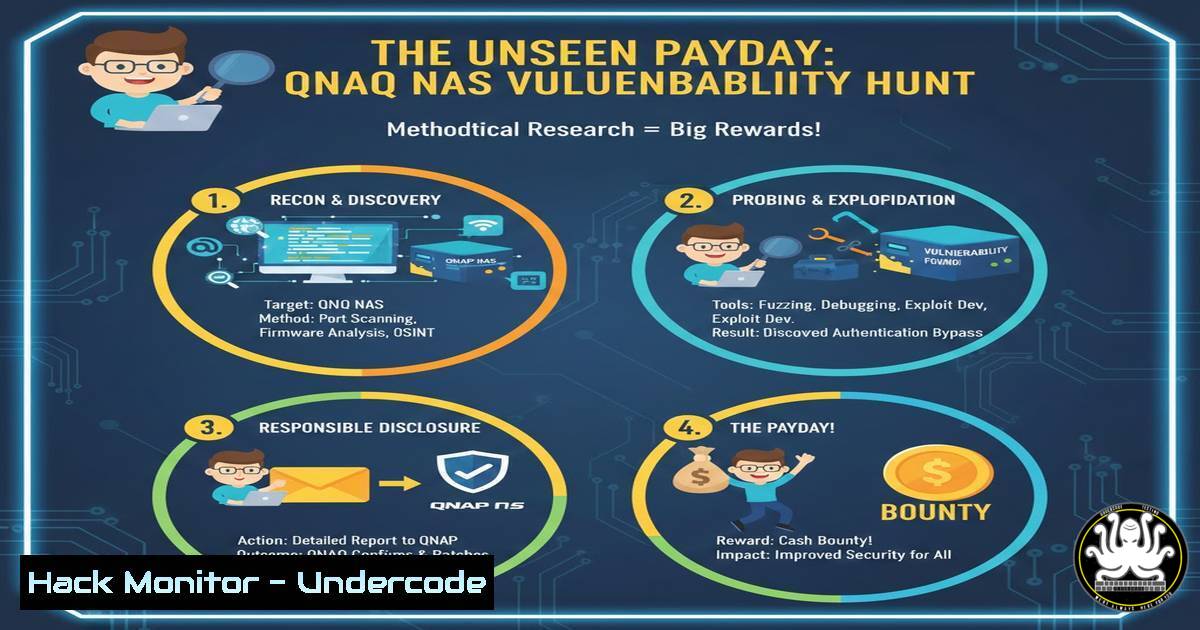
Introduction:
In the competitive realm of bug bounty hunting, a single, well-documented vulnerability can translate into both a significant security win and a financial reward. A recent disclosure by a security researcher, culminating in a “small bounty” for a QNAP NAS flaw, underscores the meticulous process behind responsible disclosure. This incident highlights the critical intersection of persistent reconnaissance, accurate vulnerability validation, and ethical reporting in strengthening enterprise and consumer network-attached storage (NAS) devices against potential compromise.
Learning Objectives:
- Understand the methodology for reconnaissance and attack surface mapping against embedded devices like NAS systems.
- Learn the process of validating common web application vulnerabilities, specifically SQL Injection, in authenticated contexts.
- Master the steps for crafting a professional, actionable bug bounty report that leads to successful remediation and reward.
You Should Know:
1. Reconnaissance and Attack Surface Enumeration
The first step in any successful security assessment is comprehensive reconnaissance. For a device like a QNAP NAS, this involves identifying all accessible services, web endpoints, and API interfaces. Researchers often start with the external footprint but must also consider post-authentication attack surfaces.
Step‑by‑step guide explaining what this does and how to use it.
Step 1: Network Discovery. Use `nmap` to identify the NAS and its open ports. A thorough scan includes service version detection.
nmap -sV -sC -p- <target_IP>
Step 2: Web Application Enumeration. Tools like `gobuster` or `ffuf` are used to discover hidden directories and files on the web interface.
gobuster dir -u http://<target_IP>:8080 -w /usr/share/wordlists/dirb/common.txt -x php,html,js
Step 3: API Endpoint Identification. Intercept traffic using Burp Suite or Proxy while browsing the web admin panel. Note all AJAX calls and JSON endpoints, as these are often rich targets for logic flaws or injection attacks.
2. Vulnerability Validation and Proof-of-Concept Creation
Upon identifying a potential flaw, such as a parameter vulnerable to SQL Injection in an API endpoint, rigorous validation is required. The goal is to confirm the vulnerability without causing damage or exfiltrating excessive data.
Step‑by‑step guide explaining what this does and how to use it.
Step 1: Isolate the Parameter. Using your proxy, identify the exact POST or GET parameter. For example, `file_id` in a request to /cgi-bin/fileManager/api/filemanagement/get_file_info.
Step 2: Test for Boolean-Based SQLi. Inject simple logic to trigger different responses.
 Original
file_id=123
 Injected payload to test
file_id=123 AND 1=1 --
file_id=123 AND 1=2 --
Observe if the application’s response (success/error, content change, time delay) differs between the two payloads.
Step 3: Construct a Safe PoC. Instead of dumping the database, demonstrate the vulnerability in a controlled manner. For a time-based blind SQLi, you might use:
file_id=123 AND (SELECT SLEEP(5)) --
A 5-second delay confirms the injection point.
3. Crafting the Professional Bug Report
The quality of the report directly impacts triage speed and bounty valuation. A good report is clear, concise, and reproducible.
Step‑by‑step guide explaining what this does and how to use it.
Step 1: Summary. Start with a one-line title: “SQL Injection in `/cgi-bin/fileManager/api/filemanagement/get_file_info` (Authenticated).”
Step 2: Technical Details.
Vulnerability Type: SQL Injection (Blind, Boolean-based).
Endpoint: Full HTTP(S) URL.
Affected Parameter: `file_id`.
Proof-of-Concept: Provide the exact, annotated HTTP request (with a placeholder auth cookie).
Impact: Explain potential impact: authentication bypass, data leakage (file metadata, user info), or system compromise.
Step 3: Reproduction Steps. List clear, numbered steps for the vendor to follow, including how to log in, navigate to the feature, and insert the payload.
Step 4: Remediation Recommendation. Suggest parameterized queries or prepared statements.
4. Post-Disclosure: Follow-up and Verification
After submission, the work isn’t over. Ethical researchers maintain communication and verify fixes.
Step‑by‑step guide explaining what this does and how to use it.
Step 1: Track Communication. Respond promptly to any clarifications requested by the security team.
Step 2: Test the Patch. Once the vendor deploys a fix, retest the vulnerability (with permission) to confirm it’s fully mitigated.
Step 3: Document Publicly (Optional). After the fix is widely deployed and with the vendor’s approval, you may write a detailed public disclosure blog post to contribute to the community’s knowledge.
5. Hardening Your Own QNAP NAS
While hunting for bugs, understanding defense is crucial. Here are essential hardening steps for QNAP device owners.
Step‑by‑step guide explaining what this does and how to use it.
Step 1: Immediate Updates. Enable automatic updates or check manually weekly. Update the QTS/QuTS hero operating system and all installed applications.
Step 2: Network Segmentation. Place your NAS on a separate VLAN, isolated from critical devices. Use firewall rules (on your router or the NAS itself) to restrict inbound access to only necessary IPs.
Step 3: Disable UPnP & Default Ports. Disable UPnP on your router and NAS. Change the default admin ports (8080, 443) to non-standard ones.
Step 4: Enable 2FA & Strong Credentials. Mandate two-factor authentication for all admin accounts and use a password manager for strong, unique passwords.
Step 5: Regular Backups (3-2-1 Rule). Maintain 3 copies of data, on 2 different media, with 1 copy offsite. This is your ultimate defense against ransomware.
What Undercode Say:
- The “Small” Bounty is a Major Win: Every validated vulnerability closed represents a real-world attack vector neutralized. The financial reward is secondary to the quantifiable increase in security for all users of the platform.
- Methodology Over Luck: This success is not accidental. It is the direct result of a systematic approach: recon, fuzzing, validation, and clear communication. This repeatable process is what separates consistent hunters from one-hit wonders.
The analysis here reveals that the modern bug bounty ecosystem is maturing. Vendors like QNAP are investing in these programs because they provide cost-effective, scalable security testing from a diverse pool of talent. For researchers, it underscores that targets are not just shiny web applications but the often-overlooked firmware and embedded systems in devices like NAS, routers, and IoT products, which hold vast amounts of sensitive data and are frequently exposed to the internet with default credentials.
Prediction:
The future of vulnerability disclosure will see increased automation in the initial recon and fuzzing phases, with AI-assisted tools flagging potential anomalies for deeper human investigation. However, the critical skills of exploit chain development, impact analysis, and professional reporting will remain irreplaceably human. Platforms will increasingly formalize relationships with top researchers, leading to more private, invite-only programs for critical infrastructure. Furthermore, we predict a regulatory push towards mandatory vulnerability disclosure programs for vendors selling networked devices, transforming bug hunting from a niche pursuit into a fundamental component of global supply chain security.
▶️ Related Video (78% Match):
🎯Let’s Practice For Free:
IT/Security Reporter URL:
Reported By: Aditya Singh4180 – Hackers Feeds
Extra Hub: Undercode MoN
Basic Verification: Pass ✅


