Listen to this Post
Introduction:
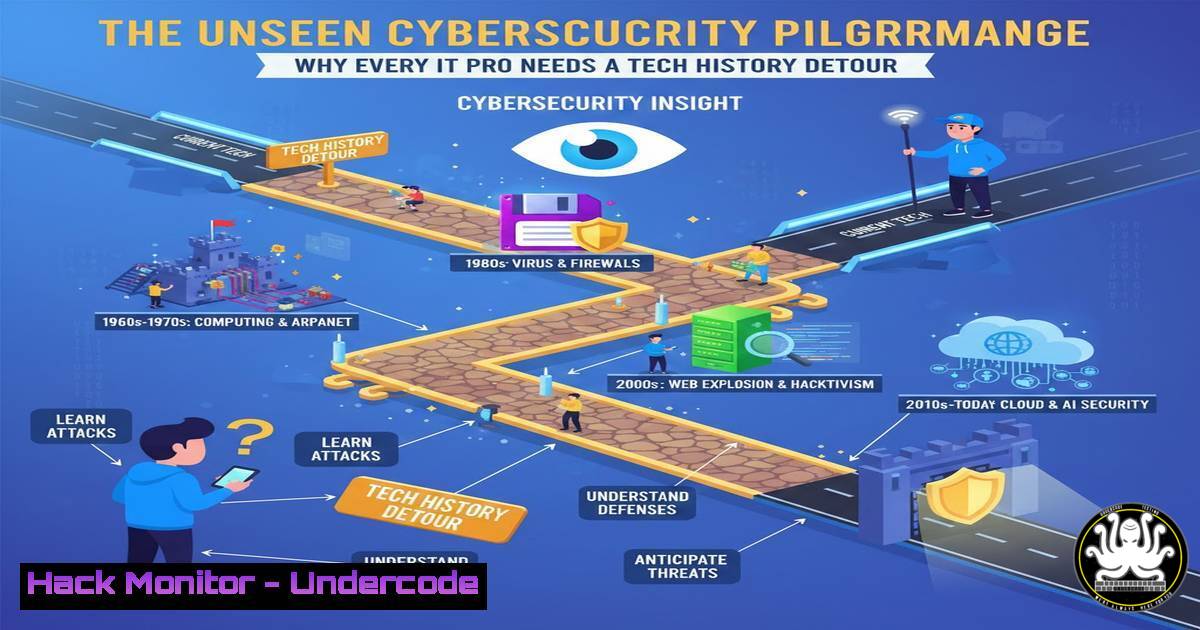
In an era of rapid technological advancement, the foundational principles of cybersecurity often get lost in the noise of new tools and threats. The pilgrimage to technology’s birthplaces—from the first Facebook office to Steve Jobs’ garage—serves as a powerful metaphor for security professionals needing to return to core concepts. Understanding the origins of the systems we protect provides critical context for defending their modern descendants against sophisticated attacks.
Learning Objectives:
- Understand how historical technology paradigms influence modern security vulnerabilities.
- Learn to implement foundational security principles that address legacy weaknesses.
- Develop methodologies for security testing that account for evolutionary system design.
You Should Know:
- The Computer History Museum: Learning from Password Cracking’s Origins
The evolution of authentication systems from simple mainframe logins to modern multi-factor authentication reveals persistent security challenges. Early systems relied on plaintext passwords and minimal access controls, creating vulnerabilities that still manifest in legacy systems today.
Step-by-step guide explaining what this does and how to use it:
– Research historical authentication breaches using `searchsploit -t mainframe authentication`
– Set up a test environment using Docker: `docker run -it –name legacy-auth legacy-system-simulator`
– Analyze password hashing evolution using command-line tools:
`echo -n “password” | md5sum` (historical weak hashing)
`echo -n “password” | sha256sum` (improved but still vulnerable without salt)
`openssl passwd -6 -salt “randomsalt” “password”` (modern hashing with salt)
– Implement historical vulnerability testing using custom Python scripts that simulate brute-force attacks against different hashing algorithms to demonstrate the importance of proper credential storage.
2. Facebook’s First Office: Social Engineering Attack Vectors
The humble beginnings of social platforms in small offices highlight how trust models have scaled—and how social engineering threats have evolved proportionally. Early development environments often lacked the security maturity required for global-scale platforms.
Step-by-step guide explaining what this does and how to use it:
– Set up a social engineering awareness test environment using The Social-Engineer Toolkit (SET):
`git clone https://github.com/trustedsec/social-engineer-toolkit/ set/`
`cd set && python setup.py install`
- Create simulated phishing campaigns targeting internal test users with controlled payloads
- Implement monitoring using Wireshark filters: `http.request.method == “POST” && ip.addr ==
`
- Configure email security protocols including DMARC, DKIM, and SPF records to mitigate impersonation attacks that exploit trust relationships established in early growth phases.</li>
</ul>

<h2 style="color: yellow;">3. Google Office Tour: Infrastructure Security at Scale</h2>

Google's infrastructure evolution demonstrates how security principles must scale with complexity. Their "BeyondCorp" zero-trust architecture represents the maturation of network security from perimeter-based models to identity-centric access control.

Step-by-step guide explaining what this does and how to use it:
- Implement zero-trust principles in a test Kubernetes environment:

<h2 style="color: yellow;">`kubectl create namespace zero-trust-test`</h2>

<h2 style="color: yellow;">`kubectl apply -f network-policies.yaml` (defining default-deny all policies)</h2>

<ul>
<li>Configure identity-aware proxy using Google Cloud IAP:</li>
</ul>

<h2 style="color: yellow;">`gcloud compute ssh instance-name --tunnel-through-iap --zone=us-central1-a`</h2>

<ul>
<li>Set up context-aware access policies using Terraform configurations that require device attestation and user identity verification before granting access to internal applications, regardless of network location.</li>
</ul>

<h2 style="color: yellow;">4. Steve Jobs' Garage: Secure Development Lifecycle Foundations</h2>

The innovation culture that spawned in garages lacked structured security processes, leading to foundational vulnerabilities in early software. Modern secure development practices address these gaps through systematic security integration.

Step-by-step guide explaining what this does and how to use it:
- Integrate security scanning into CI/CD pipelines using GitHub Actions:
[bash]
- name: Security Scan
uses: shiftleftscan/scan-action@v2
with:
type: "app"
output: "reports/"
– Implement pre-commit hooks for security using Husky and ESLint security plugins:
`npx husky add .husky/pre-commit “npm run security-scan”`
- Configure static application security testing (SAST) with SonarQube:
`docker run -d –name sonarqube -p 9000:9000 sonarqube:latest`
`sonar-scanner -Dsonar.projectKey=my-project -Dsonar.sources=. -Dsonar.host.url=http://localhost:9000`
5. Legacy System Hardening: Protecting Modern Implementations
Many organizations run systems with architectural patterns dating back to the eras represented by these tech landmarks. Hardening these systems requires understanding their historical context while applying modern security controls.
Step-by-step guide explaining what this does and how to use it:
– Identify legacy protocols using network scanning:`nmap -sV –script “safe or default”
<code></h2>
- Implement protocol encryption wrappers for legacy services using stunnel:
<h2 style="color: yellow;"></code>stunnel -c -d 0.0.0.0:143 -r 127.0.0.1:1143 -p /etc/stunnel/stunnel.pem<code></h2>
- Apply Windows legacy system hardening using PowerShell:
[bash]
Set-NetFirewallProfile -Profile Domain,Public,Private -Enabled True
Auditpol /set /category:"Account Logon" /success:enable /failure:enable
Set-ItemProperty -Path "HKLM:\SYSTEM\CurrentControlSet\Control\Lsa" -Name "RestrictAnonymous" -Value 1
– Configure Linux legacy service hardening using systemd socket activation and namespacing:
<h2 style=”color: yellow;”>systemctl edit legacy-service.service` (adding PrivateTmp, RestrictAddressFamilies, NoNewPrivileges directives)- API Security: From Simple Endpoints to Complex Ecosystems
The transition from monolithic applications to microservices mirrors the growth from garage startups to corporate campuses. API security has evolved from simple authentication to comprehensive protection layers.
Step-by-step guide explaining what this does and how to use it:
– Implement API gateway security using Kong with rate limiting and JWT validation:curl -i -X POST http://localhost:8001/services/example-service/routes \ --data 'paths[]=/api' \ --data 'name=api-route' curl -X POST http://localhost:8001/routes/api-route/plugins \ --data "name=rate-limiting" \ --data "config.minute=5" \ --data "config.hour=100"
– Configure API security testing using OWASP ZAP:
`docker run -v $(pwd):/zap/wrk/:rw -t owasp/zap2docker-stable zap-api-scan.py -t http://api-endpoint/openapi.json -f openapi -r report.html`
– Set up distributed tracing and security monitoring using Jaeger and OpenTelemetry to detect anomalous API patterns that indicate potential security breaches.7. Cloud Security Posture Management: Scaling Security Governance
As organizations grow from garage-scale to enterprise-level, manual security configuration becomes impossible. Automated cloud security posture management provides the scaling mechanism for security controls.
Step-by-step guide explaining what this does and how to use it:
– Implement AWS Security Hub with custom configuration checks:aws securityhub enable-security-hub --enable-default-standards aws securityhub create-action-target --name "RemediateHighSeverity" --description "Remediate high severity findings" --id HighSeverityRemediation
– Configure Azure Security Center continuous export to SIEM systems:
Set-AzSecurityWorkspaceSetting -Name "default" -Scope "/subscriptions/subscription-id" -WorkspaceId "/subscriptions/subscription-id/resourcegroups/resource-group/providers/microsoft.operationalinsights/workspaces/workspace-name"
– Deploy Google Cloud Security Command Center notification feeds for real-time alerting on misconfigurations that could lead to data exposure or unauthorized access.
What Undercode Say:
- Security fundamentals established in technology’s early days remain critically relevant despite architectural evolution
- Understanding the historical context of systems provides invaluable perspective for anticipating modern attack vectors
- The most effective security strategies blend respect for proven principles with adaptation to emerging technologies
The pilgrimage to technology’s historical sites symbolizes the security professional’s need to understand foundational principles while building future defenses. Each era of technological innovation introduced both breakthroughs and blind spots—the garage startups prioritized functionality over security, the early internet companies struggled with scaling trust models, and modern cloud-native architectures face complexity management challenges. By studying this evolution, security teams can anticipate how current innovations in AI and edge computing might introduce tomorrow’s vulnerabilities, enabling proactive rather than reactive security postures.
Prediction:
The convergence of AI development with legacy system dependencies will create novel attack surfaces that exploit the gap between historical architectural decisions and modern computing paradigms. Security teams that understand technology evolution will better anticipate these hybrid threats, implementing controls that address both legacy vulnerabilities and emerging AI-specific risks through adaptive defense frameworks that span technological generations.
🎯Let’s Practice For Free:
IT/Security Reporter URL:
Reported By: Debac One – Hackers Feeds
Extra Hub: Undercode MoN
Basic Verification: Pass ✅🔐JOIN OUR CYBER WORLD [ CVE News • HackMonitor • UndercodeNews ]
📢 Follow UndercodeTesting & Stay Tuned:


