
Listen to this Post
Introduction:
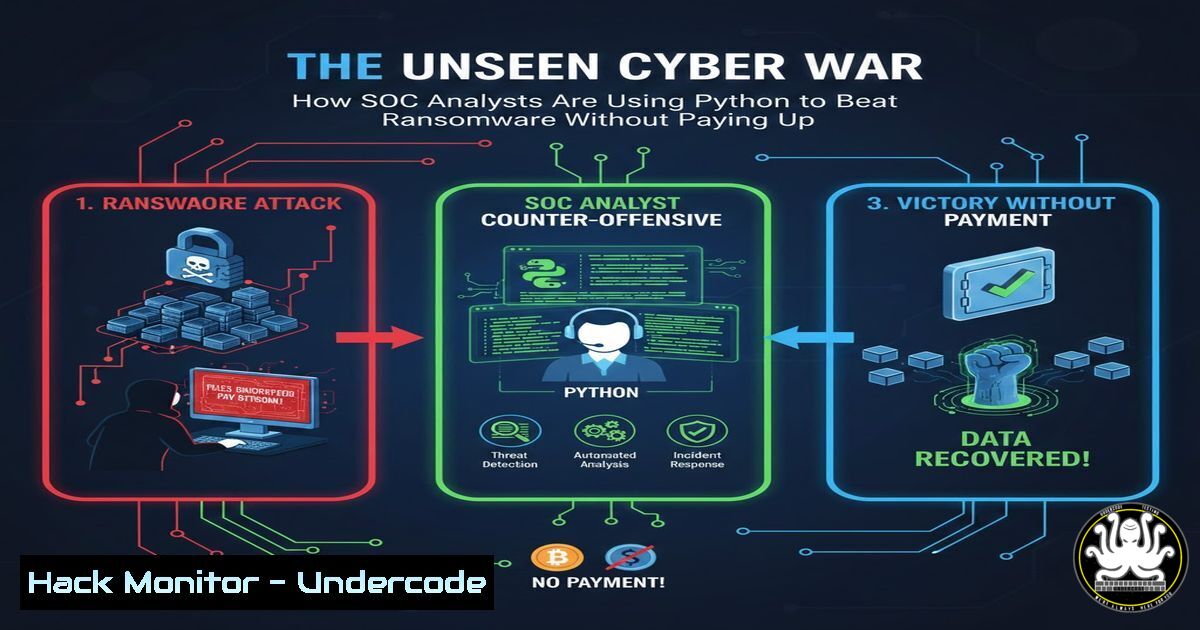
In today’s escalating cyber threat landscape, Security Operations Center (SOC) analysts are the first line of defense. A new wave of training simulations is equipping these professionals with a powerful blend of procedural rigor and hands-on technical skills, including ethical hacking with Python to directly combat ransomware threats, moving beyond mere detection to active mitigation.
Learning Objectives:
- Understand the end-to-end workflow of a modern SOC analyst, from threat intelligence consumption to vulnerability remediation.
- Learn how to analyze Common Vulnerabilities and Exposures (CVEs) and communicate risks effectively to technical teams.
- Develop a foundational Python script for ethical hacking purposes, specifically for brute-forcing weak encryption keys.
You Should Know:
1. Mastering Threat Intelligence with CISA
The Cybersecurity and Infrastructure Security Agency (CISA) is a critical resource. Staying updated with its publications, such as the “Shields Up” initiative and Known Exploited Vulnerabilities (KEV) catalog, is a non-negotiable daily task for any defensive operator.
Step‑by‑step guide explaining what this does and how to use it.
Step 1: Make it a Habit. Start your day by visiting the CISA website (cisa.gov) and reviewing new alerts and bulletins. For automation, subscribe to their RSS feeds or use their free API to pull data directly into your SIEM or a dedicated dashboard.
Step 2: Prioritize with the KEV Catalog. The KEV catalog lists vulnerabilities that are being actively exploited in the wild. Any system in your environment matching a KEV entry must be patched immediately. Cross-reference your asset management database against this list.
Step 3: Integrate into Your Workflow. Use tools like MISP (Malware Information Sharing Platform) or TheHive to ingest CISA’s IOCs (Indicators of Compromise). This allows for automated detection and blocking of known malicious IPs, domains, and file hashes.
- From CVE to Action: Vulnerability Analysis & Communication
Finding a vulnerability is only 10% of the job; the other 90% is ensuring it gets fixed. This requires translating technical jargon into actionable business risk.
Step‑by‑step guide explaining what this does and how to use it.
Step 1: Deep Dive into the CVE. Don’t just read the CVSS score. Use the National Vulnerability Database (NVD) to understand the attack vector, complexity, and potential impact on confidentiality, integrity, and availability (CIA triad).
Step 2: Identify Affected Assets. Use a network scanner like Nmap to find all systems running the vulnerable software.
Linux/Windows Command: `nmap -sV -p 443 –script ssl-heartbleed 192.168.1.0/24` (This example checks a network range for the Heartbleed vulnerability on port 443).
Step 3: Draft a Clear Remediation Email. Your communication must be concise and authoritative.
Subject: URGENT: Remediation Required for CVE-2023-12345 (Critical)
Body: Briefly explain the vulnerability, list the affected servers/IPs, provide a direct link to the vendor patch, and set a clear deadline for remediation (e.g., 48 hours for critical flaws).
- The Ethical Hacker’s Tool: Python for Ransomware Decryption
Some ransomware uses weak encryption algorithms or poorly generated keys. In such cases, a custom Python script can be used to brute-force the decryption key, saving the organization from paying a ransom.
Step‑by‑step guide explaining what this does and how to use it.
Step 1: Identify the Encryption Pattern. This often requires reverse-engineering a sample of the ransomware or researching it in threat intelligence communities. For this example, we’ll assume a simple XOR encryption or a weak key space.
Step 2: Write the Brute-Force Script. Below is a foundational Python script. This is a simplified example and must be adapted to the specific ransomware variant.
Python Code:
import itertools
import string

Simulate a function that tries to decrypt with a given key
def try_decrypt(ciphertext, key):
 In a real scenario, this would use a crypto library (e.g., pycryptodome)
 to attempt decryption with the key. This is a placeholder logic.
decrypted_text = "".join(chr(ord(c) ^ ord(k)) for c, k in zip(ciphertext, itertools.cycle(key)))
 Check if the decryption produced a known plaintext, like a file header
if "PDF" in decrypted_text or "PNG" in decrypted_text:
return True, key, decrypted_text
return False, None, None

Example usage
encrypted_data = "your_encrypted_data_here"  This would be read from a file
 Define a character set to generate keys from (e.g., lowercase letters)
charset = string.ascii_lowercase
key_length = 4  Assuming a very short key for demonstration

print("[] Starting brute-force decryption...")
for key_tuple in itertools.product(charset, repeat=key_length):
candidate_key = ''.join(key_tuple)
success, found_key, plaintext = try_decrypt(encrypted_data, candidate_key)
if success:
print(f"[bash] Key found: {found_key}")
 Save the decrypted data
with open("decrypted_file.bin", "wb") as f:
f.write(plaintext.encode('latin-1'))
break
Step 3: Execute and Analyze. Run the script in a contained, isolated lab environment against an encrypted test file. Monitor system resources, as brute-forcing can be computationally intensive.
4. Building a Contained Lab Environment
Testing decryption scripts or analyzing malware must never be done on a production network. A safe, isolated lab is essential.
Step‑by‑step guide explaining what this does and how to use it.
Step 1: Use Virtualization. VMware Workstation or Oracle VirtualBox are perfect for this. Create a virtual network that is “Host-Only” or “NAT” to ensure no traffic escapes to your physical network.
Step 2: Harden the Lab. Use a “sacrificial” Windows or Linux VM as the victim machine. Take a snapshot before infecting it so you can always revert to a clean state. Disable shared folders and drag-and-drop functionality between the host and the VM.
Step 3: Utilize Analysis Tools. Install tools like Wireshark for network analysis, Process Monitor for system activity, and a disassembler like Ghidra on your analysis machine (separate from the victim VM).
- From Simulation to Reality: Integrating Skills into the SOC
The true value of a simulation is its translation into daily operational procedures.
Step‑by‑step guide explaining what this does and how to use it.
Step 1: Automate CISA Feed Ingestion. Work with your SIEM administrator to create a custom parser for the CISA KEV catalog. This can automatically create high-priority tickets in your ticketing system (e.g., Jira) for any matching asset.
Step 2: Develop Standard Operating Procedures (SOPs). Document the exact steps for vulnerability analysis and communication, just as practiced in the simulation. This ensures consistency and speeds up new analyst onboarding.
Step 3: Create a Sanctioned Toolbox. With proper governance, compile a set of approved ethical hacking scripts, including the decryption brute-forcer, and store them in a secure, version-controlled repository like GitLab for the entire team to use.
What Undercode Say:
- Proactive Defense is the New Standard. The era of purely reactive security is over. Modern analysts must blend threat intelligence, clear communication, and active countermeasures to be effective.
- Democratizing Ethical Hacking. Using Python for tasks like brute-force decryption empowers defenders to fight back directly, shifting the balance of power from attackers to defenders.
The AIG simulation represents a pivotal shift in cybersecurity training. It moves beyond theoretical multiple-choice questions and immerses the analyst in a realistic, end-to-end workflow. The inclusion of a practical Python scripting task is particularly significant; it bridges the gap between SOC analysis and penetration testing, creating a more versatile and potent cyber defender. This holistic approach, combining process with hands-on code, is what will define the next generation of successful security teams.
Prediction:
The integration of AI and Machine Learning into both offensive and defensive cybersecurity tools will accelerate. We will see a future where SOC analysts no longer just write simple brute-force scripts but instead develop, train, and deploy AI models that can predict attacker behavior, automatically generate patches for certain vulnerability classes, and create adaptive decryption tools that learn from ransomware strains in real-time, rendering many current extortion tactics obsolete.
🎯Let’s Practice For Free:
IT/Security Reporter URL:
Reported By: Blessing Akindunmade – Hackers Feeds
Extra Hub: Undercode MoN
Basic Verification: Pass ✅


