Listen to this Post
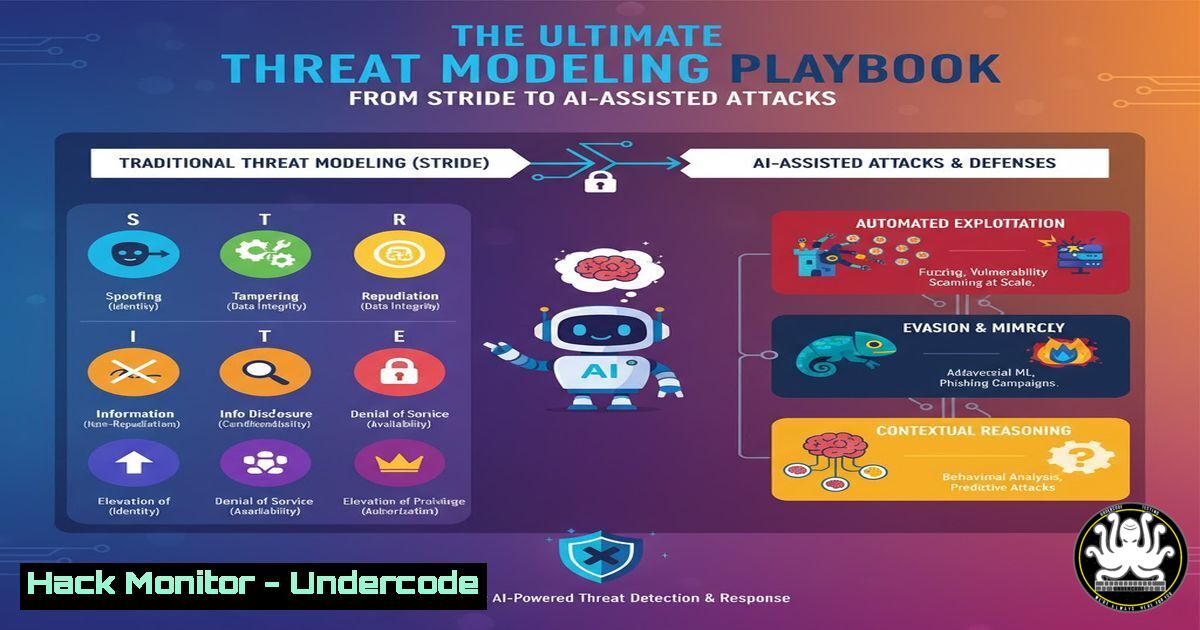
Introduction:
Threat modeling has evolved from a basic security exercise into a critical, AI-powered discipline essential for modern cloud defense. As revealed in Google Cloud’s methodologies, this structured approach to identifying and mitigating risks is now integral to securing everything from application design to complex AI systems. This guide provides the actionable commands and techniques used by top security teams to build resilient systems.
Learning Objectives:
- Master the core STRIDE methodology and its practical application across development lifecycles.
- Implement advanced threat modeling for AI systems and cloud-native architectures.
- Develop continuous threat modeling processes integrated with security operations.
You Should Know:
1. STRIDE Methodology Implementation
STRIDE (Spoofing, Tampering, Repudiation, Information Disclosure, Denial of Service, Elevation of Privilege) provides the foundational framework for systematic threat identification.
 Threat Modeling Tool CLI - Generate STRIDE-based threats
threatmodel generate --framework STRIDE --target web-application
threatmodel analyze --component auth-service --threats spoofing,elevation
threatmodel export --format security-requirements --output security-spec.md
Step-by-step guide: The STRIDE framework forces security teams to consider six core threat categories. Start by mapping your system’s data flow diagram, then systematically apply each STRIDE category to every component. For authentication services, focus on spoofing threats; for data storage, prioritize tampering and information disclosure. Export findings to security requirements for development teams.
2. AI System Threat Modeling Commands
AI systems introduce unique threats including model poisoning, data leakage, and adversarial attacks that require specialized assessment.
 AI Threat Assessment Script
import ai_threat_library

threats = ai_threat_library.analyze_model(
model_type='llm',
data_sources=['training-data', 'user-inputs'],
attack_vectors=['data-poisoning', 'model-inversion']
)

for threat in threats:
mitigation = ai_threat_library.recommend_controls(
threat,
framework='MITRE-ATLAS'
)
print(f"Threat: {threat.name} - Mitigation: {mitigation}")
Step-by-step guide: AI threat modeling extends beyond traditional software threats to include machine learning-specific risks. Use specialized libraries to identify threats across the ML pipeline – from data collection and training to inference and deployment. Map identified threats to the MITRE ATLAS framework for comprehensive coverage and implement controls like data sanitization, model monitoring, and adversarial training.
3. Cloud Asset Discovery and Mapping
Comprehensive threat modeling requires complete visibility of cloud assets and their trust relationships.
 Cloud Asset Inventory Commands
gcloud asset list --project=my-project --format=json > cloud-assets.json
gcloud services list --enabled --project=my-project
terraform plan -refresh-only -out=current-state.tfplan

Network Mapping
nmap -sS -A -T4 $(gcloud compute instances list --format="value(networkInterfaces[bash].accessConfigs[bash].natIP)")
Step-by-step guide: Begin threat modeling with complete asset discovery using cloud provider tools. Export all assets to create your attack surface inventory. Use network scanning to identify unintended exposures and trust relationships. This mapping forms the foundation of your data flow diagrams and trust boundary analysis essential for effective threat identification.
4. Automated Threat Detection Rules
Convert threat model findings into active security monitoring rules.
 Sigma Rule - Detecting STRIDE Tampering Attempts
title: Suspicious File Modifications in System Directories
logsource:
category: file_event
product: windows
detection:
selection:
TargetFilename:
- 'C:\Windows\System32\'
- '/etc/'
- '/bin/'
filter:
Image:
- 'C:\Windows\System32\legit_program.exe'
- '/usr/bin/approved_tool'
condition: selection and not filter
Step-by-step guide: Translate identified threats into detection rules using standardized formats like Sigma. Focus on high-risk scenarios identified during threat modeling – unauthorized file modifications for tampering threats, unusual authentication patterns for spoofing, and resource exhaustion patterns for denial of service. Deploy these rules to your SIEM for continuous threat detection.
5. Infrastructure as Code Security Scanning
Embed threat modeling into DevOps pipelines through automated IaC security analysis.
 Terraform Security Scanning
tfsec --exclude-downloaded-modules .
checkov -d . --external-checks-dir ./custom-threat-rules
terrascan scan -i terraform -t aws

Custom Rule for Threat Mitigation
cat > custom_rule.rego << EOF
package terraform.security

deny[bash] {
resource := input.aws_security_group[bash]
not resource.ingress[bash].cidr_blocks == ["10.0.0.0/16"]
msg := sprintf("Security group %v allows external access", [bash])
}
EOF
Step-by-step guide: Infrastructure as Code represents a critical attack surface. Use multiple scanning tools to identify misconfigurations that align with threat model findings. Create custom rules specifically addressing threats identified during modeling – such as overly permissive security groups or missing encryption. Integrate these scans into CI/CD pipelines to catch threats before deployment.
6. API Security Testing Commands
APIs represent high-value targets requiring specialized threat assessment.
 API Security Testing Suite
oasdiff breaking base.json revised.json --fail-on WARN
schemathesis run --checks all http://api:8000/swagger.json
curl -H "Authorization: Bearer $TOKEN" -X POST https://api.example.com/data \
-d '{"malicious_input": "<script>alert(1)</script>"}'

JWT Token Analysis
jwt_tool $(curl -s http://api.example.com/token -I | grep Authorization) \
-X k -d wordlist.txt
Step-by-step guide: API threat modeling focuses on business logic flaws, injection attacks, and authentication bypass. Use OpenAPI specification analysis to identify structural vulnerabilities, then conduct automated testing for logic flaws and injection points. Test token security through JWT analysis and simulate attacker techniques like parameter pollution and mass assignment.
7. Continuous Threat Modeling Integration
Modern threat modeling operates as a continuous process, not a one-time exercise.
 GitHub Actions - Automated Threat Modeling
name: Continuous Threat Modeling
on: [push, pull_request]
jobs:
threat-model:
runs-on: ubuntu-latest
steps:
- uses: actions/checkout@v3
- name: Generate Threat Model
run: |
threatmodeler-cli analyze --changes-only \
--baseline threat-model-baseline.json \
--output new-threats.md
- name: Security Gate
run: |
critical_count=$(jq '.threats | map(select(.risk == "high")) | length' new-threats.md)
if [ $critical_count -gt 0 ]; then
echo "Critical threats identified - blocking merge"
exit 1
fi
Step-by-step guide: Integrate threat modeling directly into development workflows using automation tools. Analyze code changes against baseline threat models to identify new risks. Implement security gates that block merges when critical threats are introduced. This ensures threat modeling keeps pace with rapid development while providing immediate feedback to developers.
What Undercode Say:
- AI Democratizes Advanced Threat Modeling: Machine learning tools are making sophisticated threat assessment accessible to organizations without dedicated threat modeling teams, fundamentally changing security program scalability.
- Shift from Document-Centric to Automation-Centric: Traditional threat modeling documents are being replaced by machine-readable threat models that integrate directly into security tools and DevOps pipelines.
The evolution toward AI-assisted threat modeling represents both an opportunity and a paradigm shift. As Google’s approach demonstrates, integrating threat modeling throughout the development lifecycle – from design through deployment – creates more resilient systems. The future lies in continuous, automated threat assessment that scales with development velocity while maintaining security rigor. Organizations that master this integration will achieve both security and agility advantages in increasingly complex threat landscapes.
Prediction:
Within three years, AI-powered threat modeling will become as ubiquitous as static code analysis, with real-time threat assessment integrated directly into developer IDEs. This will shift security left to the point of creation while simultaneously providing continuous runtime protection. The organizations that successfully implement these AI-assisted processes will demonstrate 80% faster threat identification and 60% reduction in security-related delays, fundamentally changing the economics of secure software development.
🎯Let’s Practice For Free:
IT/Security Reporter URL:
Reported By: Chuvakin How – Hackers Feeds
Extra Hub: Undercode MoN
Basic Verification: Pass ✅


