
Listen to this Post
Introduction:
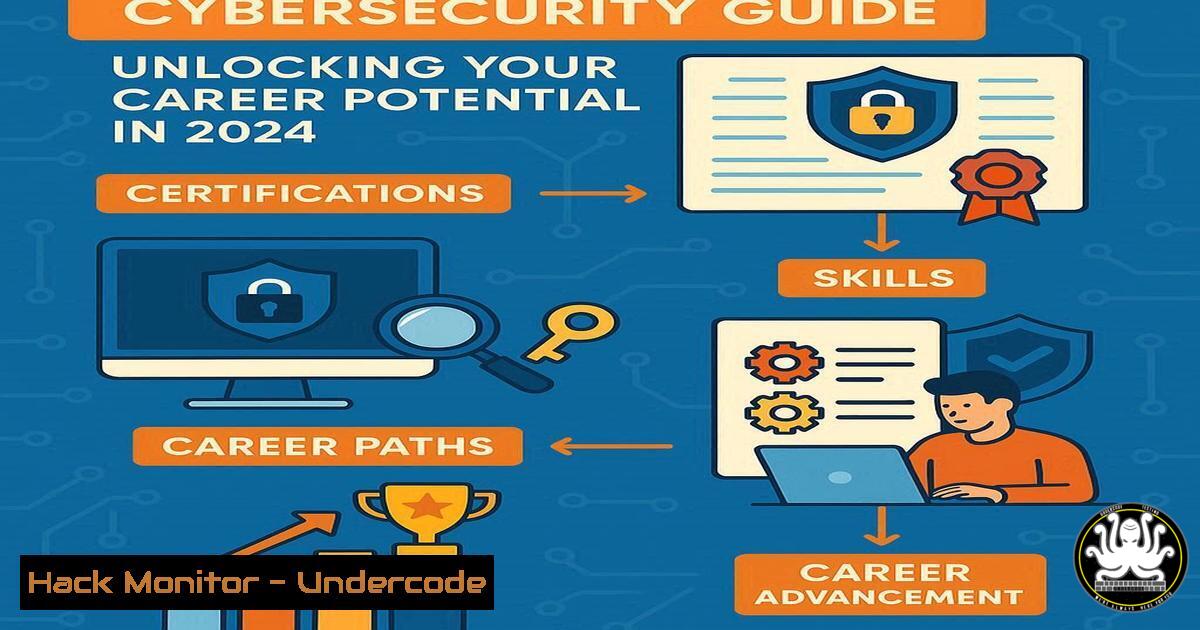
Navigating the complex landscape of cybersecurity certifications can be daunting for professionals at any career stage. With hundreds of options available, selecting the right certification path requires strategic planning and industry insight from experienced security practitioners who understand what credentials deliver real career value.
Learning Objectives:
- Identify the most valuable cybersecurity certifications for different career specializations
- Understand how to strategically plan certification progression from entry-level to expert
- Learn practical command-line skills that certification holders are expected to master
You Should Know:
1. Foundational Security Certifications and Basic Command Proficiency
CompTIA Security+ remains the gold standard for entry-level cybersecurity professionals, covering fundamental security concepts and practical skills.
 Network scanning with nmap - essential for security assessments
nmap -sS -sV -O target_ip
 -sS: TCP SYN scan
 -sV: Version detection
 -O: OS detection
This nmap command performs a comprehensive network reconnaissance scan, combining SYN scanning (which is stealthier than connect scans), service version detection, and operating system fingerprinting. Security professionals use this daily for vulnerability assessments and penetration testing.
 Analyzing network traffic with tcpdump
tcpdump -i eth0 -w capture.pcap host 192.168.1.100
 -i: Interface specification
 -w: Write to file
 host: Filter for specific host
2. Intermediate Technical Certifications and System Hardening
Certifications like CISSP and CySA+ require deeper technical knowledge, particularly in system hardening and security analysis.
 Linux system audit with lynis
sudo lynis audit system
 Comprehensive security auditing tool
 Provides hardening recommendations
Lynis performs a comprehensive security audit of Linux systems, checking for misconfigurations, outdated software, and missing security controls. It generates actionable recommendations for system hardening.
 Windows security configuration analysis
Get-Service | Where-Object {$_.Status -eq 'Running'}
 Lists all running services for security review
This PowerShell command enumerates all running Windows services, allowing security professionals to identify potentially vulnerable or unnecessary services that should be disabled as part of system hardening.
3. Cloud Security Certifications and AWS Hardening
With cloud security becoming increasingly critical, certifications like AWS Certified Security Specialty demand proficiency in cloud infrastructure protection.
 AWS CLI security group audit
aws ec2 describe-security-groups --query 'SecurityGroups[].[GroupName,GroupId]'
 Lists all security groups for review
This AWS CLI command retrieves all security groups in your AWS account, enabling security professionals to audit network access controls and identify overly permissive rules.
 Check for public S3 buckets
aws s3api list-buckets --query 'Buckets[].Name'
aws s3api get-bucket-acl --bucket bucket-name
These commands help identify publicly accessible S3 buckets, a common misconfiguration that leads to data breaches. Regular auditing of S3 bucket permissions is essential for cloud security.
4. Offensive Security Certifications and Ethical Hacking
Certifications like OSCP (Offensive Security Certified Professional) focus heavily on practical penetration testing skills and exploit development.
 Metasploit framework usage
msfconsole
use exploit/windows/smb/ms17_010_eternalblue
set RHOSTS target_ip
exploit
This Metasploit sequence demonstrates exploitation of the EternalBlue vulnerability, teaching penetration testers how to leverage known exploits while emphasizing the importance of patching critical vulnerabilities.
 Basic Python exploit script template
!/usr/bin/env python3
import socket
import struct

target_ip = "192.168.1.100"
target_port = 9999

Buffer overflow pattern
buffer = b"A"  1000

s = socket.socket(socket.AF_INET, socket.SOCK_STREAM)
s.connect((target_ip, target_port))
s.send(buffer)
s.close()
This Python script demonstrates a basic buffer overflow exploit structure, a fundamental skill for penetration testers pursuing OSCP and similar certifications.
5. Digital Forensics Certifications and Incident Response
Certifications like GCFA (GIAC Certified Forensic Analyst) require mastery of forensic tools and incident response procedures.
 Memory acquisition with FTK Imager or dd
dd if=/dev/mem of=memory_dump.raw bs=1M
 Creates forensic image of system memory
 Essential for incident investigation
The dd command creates a bit-for-bit copy of system memory, preserving evidence for forensic analysis during security incidents. This is crucial for investigating advanced persistent threats.
 Timeline creation with log2timeline
log2timeline.py --parsers windows,linux,macintosh timeline.plaso evidence.image
 Creates unified timeline from multiple evidence sources
This command processes various log files and artifacts to create a comprehensive timeline of system activity, helping investigators reconstruct attack sequences and identify compromise indicators.
6. API Security and Modern Application Protection
As applications move to API-driven architectures, understanding API security becomes critical for security professionals.
 API security testing with OWASP ZAP
zap-cli quick-scan --self-contained --start-options '-config api.disablekey=true' http://target-api:8080
 Automated API security assessment
OWASP ZAP provides automated security testing for APIs, identifying common vulnerabilities like injection flaws, broken authentication, and improper asset management.
 JWT token analysis
echo "eyJhbGciOiJIUzI1NiIsInR5cCI6IkpXVCJ9.eyJzdWIiOiIxMjM0NTY3ODkwIiwibmFtZSI6IkpvaG4gRG9lIiwiaWF0IjoxNTE2MjM5MDIyfQ.SflKxwRJSMeKKF2QT4fwpMeJf36POk6yJV_adQssw5c" | base64 -d
 Decodes JWT token for security analysis
This command decodes JSON Web Tokens to inspect their contents, helping security professionals identify misconfigurations and potential vulnerabilities in authentication mechanisms.
7. Advanced Persistent Threat Detection and Mitigation
Senior security certifications require understanding advanced threat detection techniques and mitigation strategies.
 YARA rule creation for malware detection
rule APT_Malware_Indicator {
meta:
description = "Detects APT malware based on specific indicators"
author = "Security Analyst"
strings:
$a = { 6A 40 68 00 30 00 00 6A 14 }
$b = "malicious_domain.com" wide ascii
condition:
any of them
}
YARA rules allow security professionals to create custom detection signatures for identifying malware families and advanced persistent threats based on binary patterns and behavioral indicators.
 SIEM query for suspicious process execution
index=windows EventCode=4688
| search ProcessName=".scr" OR ProcessName=".com"
| stats count by host ProcessName CommandLine
This SIEM query detects unusual process executions that might indicate malware activity, particularly screensaver or COM file executions that are uncommon in enterprise environments.
What Undercode Say:
- Certification value extends beyond the credential to the practical skills gained through preparation and hands-on experience
- The cybersecurity certification landscape is evolving to include more specialized tracks, particularly in cloud security and AI protection
- Practical command-line proficiency often separates qualified candidates from those who merely passed the exam
The cybersecurity certification ecosystem represents more than just credentials—it’s a structured pathway for skill development and career advancement. While certifications provide validation of knowledge, the real value lies in the practical competencies developed during preparation. Employers increasingly prioritize candidates who can demonstrate both theoretical understanding and hands-on technical skills. As the field evolves toward specialization, professionals must strategically select certifications that align with both current industry demands and long-term career goals, while continuously updating their practical technical abilities.
Prediction:
The cybersecurity certification market will continue to fragment into specialized domains, with emerging focus areas including AI security, quantum cryptography, and cloud-native protection. Practical, hands-on certifications that require demonstrable skills will gain preference over purely theoretical credentials. The integration of AI-assisted learning and adaptive testing will personalize certification pathways, while employers will increasingly value continuous skill verification through micro-certifications and hands-on assessments over traditional periodic recertification.
🎯Let’s Practice For Free:
IT/Security Reporter URL:
Reported By: Liambarnes44 A – Hackers Feeds
Extra Hub: Undercode MoN
Basic Verification: Pass ✅


