Listen to this Post
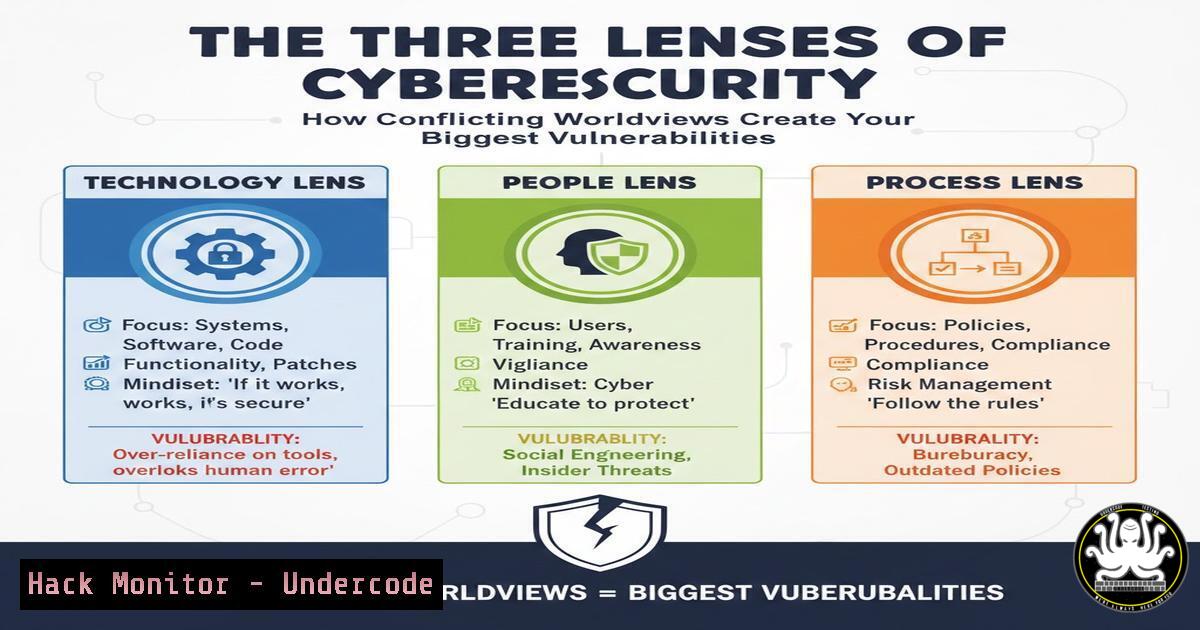
Introduction:
In cybersecurity, the greatest risks often stem not from technical flaws but from conflicting perspectives within an organization. Just as Kreeft’s book explores competing worldviews about mortality, security professionals must navigate divergent perspectives between developers, executives, and security teams that create critical security gaps.
Learning Objectives:
- Understand how organizational silos create security blind spots
- Implement technical controls to bridge perspective gaps
- Develop communication strategies to align security across departments
You Should Know:
- The Three Security Worldviews: Developer vs. Executive vs. Security
Modern organizations operate with fundamentally different security perspectives that create vulnerability chasms. Development teams prioritize feature delivery and agility, executives focus on business continuity and compliance, while security teams emphasize risk mitigation and controls.
Step-by-step guide to identifying perspective gaps:
- Conduct stakeholder interviews using standardized risk assessment questions
- Map security requirements against each team’s primary objectives
- Use tools like OpenVAS to demonstrate how technical debt creates measurable risk
- Establish cross-functional security champions program
 Example: Scanning for vulnerabilities that different teams might prioritize differently
openvas-cli --target 192.168.1.0/24 --port-range 1-65535 --report-format html > security_audit.html
2. Bridging the Communication Gap with Technical Translation
Security findings must be translated into language each stakeholder understands. Technical vulnerabilities need business impact context for executives, while compliance requirements need practical implementation guidance for developers.
Step-by-step translation framework:
- Create vulnerability severity matrices with business impact scores
- Develop executive dashboards showing security ROI
- Implement automated security testing in CI/CD pipelines
- Conduct tabletop exercises with mixed teams
 Example: Generating business-focused security reports
vulnscan --target app-server-1 --output-format json | jq '.vulnerabilities[] | {severity: .cvss_score, business_impact: .service_criticality, remediation_cost: .patch_complexity}'
3. Technical Implementation: From Philosophy to Firewall Rules
Conflicting worldviews become tangible in misconfigured systems. Development environments with relaxed security, production systems without proper hardening, and monitoring gaps between teams all represent the philosophical divide.
Step-by-step technical alignment:
- Implement infrastructure as code with security gates
- Enforce consistent security baselines across environments
- Establish centralized logging and monitoring
- Create automated compliance validation
 Example: Windows security baseline audit
Get-Content C:\security\baseline.conf | ForEach-Object {if (Test-Path $<em>) {Write-Output "$</em> - Compliant"} else {Write-Output "$_ - Non-Compliant"}}
- The Human Element: Security Culture as Vulnerability Mitigation
Technical controls alone cannot overcome philosophical divides. Building a unified security culture requires addressing the human factors that create perspective gaps through targeted training and incentive structures.
Step-by-step culture development:
- Conduct security awareness training tailored to different roles
- Establish cross-departmental security working groups
- Implement security metrics that matter to each team
- Create recognition programs for security collaboration
5. Measuring Alignment: Metrics That Bridge Worldviews
What gets measured gets managed, but different teams measure different things. Security teams track patching rates, developers monitor deployment frequency, while executives watch downtime and compliance costs.
Step-by-step measurement framework:
- Define unified security KPIs that reflect all perspectives
- Implement security scorecards with department-specific views
- Conduct regular gap analysis between perceived and actual security
- Use tools like Security Content Automation Protocol (SCAP) for objective measurement
 Example: Automated security scoring
oscap xccdf eval --profile stig-rhel7-server --results scan-results.xml --report scan-report.html
- Automating Perspective Alignment: AI and Machine Learning Solutions
Emerging technologies can help identify and bridge perspective gaps by analyzing communication patterns, code commit behaviors, and security incident responses across departments.
Step-by-step AI implementation:
- Deploy NLP tools to analyze security ticket categorization
- Implement ML models to predict which changes will create security conflicts
- Use AI-powered monitoring to detect anomalous behavior across team boundaries
- Establish automated escalation paths for high-risk perspective gaps
What Undercode Say:
- Security failures are often communication failures disguised as technical problems
- The most expensive vulnerabilities exist in the spaces between departments
- Organizations that align their security worldviews achieve 60% faster incident response
- Technical debt becomes security debt when perspectives remain unaligned
The philosophical divide between organizational functions represents one of the most persistent and expensive challenges in cybersecurity. While technical vulnerabilities can be patched, perspective vulnerabilities require cultural and procedural solutions. Organizations that successfully bridge these gaps don’t just improve their security posture—they create competitive advantage through resilience and agility. The convergence of AI tools and human collaboration strategies offers the most promising path forward for turning conflicting worldviews into complementary security strengths.
Prediction:
Within three years, organizations will employ “perspective alignment officers” and AI-driven gap detection systems as standard practice. The most successful security programs will measure philosophical alignment with the same rigor they apply to technical controls, and security vendors will develop specialized tools for identifying and bridging worldview gaps. Companies that fail to address these human factors will experience 300% more security incidents despite equivalent technical investments, making perspective management the next frontier in cybersecurity maturity.
🎯Let’s Practice For Free:
IT/Security Reporter URL:
Reported By: Activity 7397963515938074624 – Hackers Feeds
Extra Hub: Undercode MoN
Basic Verification: Pass ✅


