Listen to this Post
Introduction:
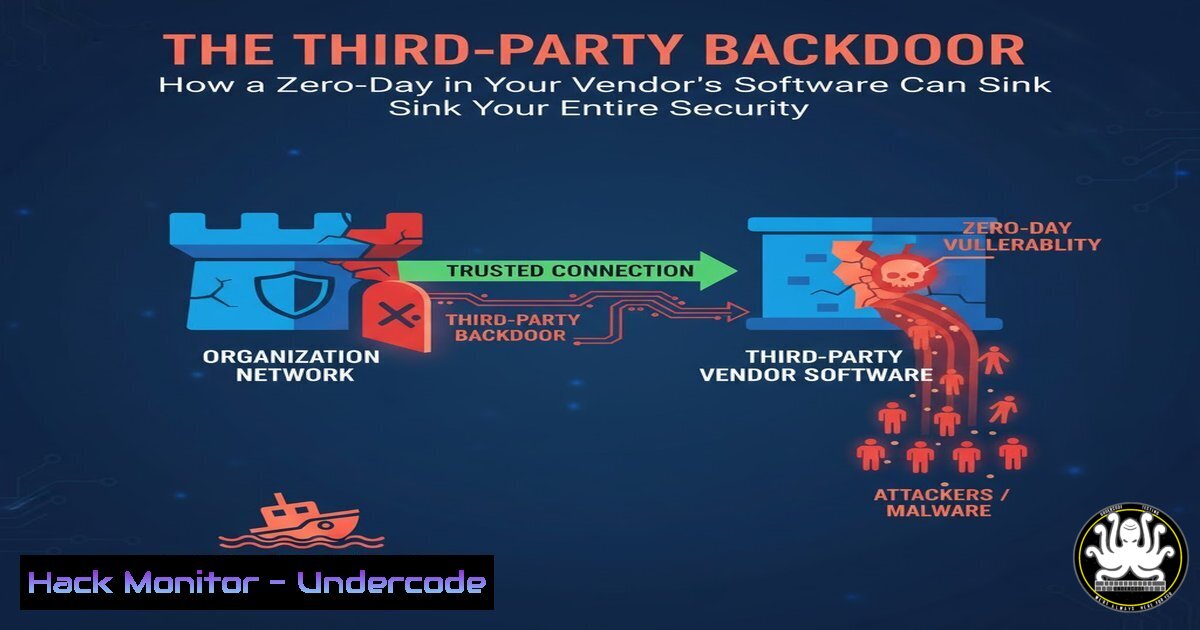
The recent Logitech data breach is a stark reminder that an organization’s cybersecurity is only as strong as its weakest vendor’s security. A sophisticated attack group compromised the company not by targeting its direct defenses, but by exploiting a zero-day vulnerability in a third-party Oracle platform. This incident underscores the critical and escalating threat of supply chain attacks, where the trust placed in partners and providers becomes the primary attack vector.
Learning Objectives:
- Understand the mechanics of a third-party supply chain attack and how to map your own digital supply chain.
- Learn the immediate steps to identify and mitigate risks from zero-day vulnerabilities in critical external services.
- Develop a proactive strategy for third-party risk management, including technical controls and communication plans.
You Should Know:
- Mapping Your Digital Attack Surface: Identifying Every Third-Party Access Point
The first line of defense against a supply chain attack is comprehensive visibility. You cannot protect what you cannot see. This involves creating a detailed inventory of all third-party vendors, the software they provide (especially cloud/SaaS), and the level of access they have to your network and data.
Step-by-step guide explaining what this does and how to use it:
Step 1: Inventory All Third-Party Software. Use a combination of network scanning and endpoint detection to catalog all installed applications. On Linux, you can use a command like `dpkg -l` (Debian/Ubuntu) or `rpm -qa` (RedHat/CentOS) to list installed packages. On Windows, PowerShell is your friend: Get-WmiObject -Class Win32_Product | Select-Object Name, Vendor, Version.
Step 2: Identify Vendor Access Levels. For each vendor, document what data they can access (e.g., customer PII, employee records, intellectual property) and what network permissions they hold. This is often managed through Identity and Access Management (IAM) policies in cloud environments like AWS or Azure.
Step 3: Classify by Criticality. Assign a risk rating to each vendor based on the sensitivity of the data they handle and their level of integration with your core systems. A vendor with direct database access is far more critical than one that only receives anonymized analytics data.
- The Zero-Day Fire Drill: Creating an Effective Emergency Response Plan
A zero-day vulnerability is a flaw unknown to the vendor until it is actively exploited or publicly disclosed. When this affects a critical third-party service, your response time is measured in hours, not days.
Step-by-step guide explaining what this does and how to use it:
Step 1: Establish a Threat Intelligence Feed. Subscribe to feeds from CISA, your national CERT, and reputable cybersecurity firms. Monitor vendor security advisories religiously. Tools like MISP (Malware Information Sharing Platform) can help automate this.
Step 2: Develop a Containment Playbook. The moment a zero-day in a critical service is announced, your team must know exactly what to do. This includes:
Isolation: Can the affected service be temporarily isolated from the rest of the network? Use firewall rules to block traffic. On a Linux host, you could quickly implement a rule with iptables: iptables -A INPUT -s <vendor_service_ip> -j DROP.
Access Revocation: Temporarily revoke the vendor’s high-level access privileges via your IAM system.
Log Aggregation: Immediately preserve and analyze logs from all systems interacting with the vendor’s service to look for Indicators of Compromise (IoCs).
- Network Segmentation: Building Moats to Limit Lateral Movement
In the Logitech breach, attackers “rebounded” from the initial compromise into the internal corporate network. Robust network segmentation acts as a firebreak, preventing a breach in one zone from spreading to others.
Step-by-step guide explaining what this does and how to use it:
Step 1: Design a Segmented Architecture. Move away from a flat network. Segment your network into zones (e.g., DMZ, corporate LAN, sensitive data zone, manufacturing). Third-party access should be confined to the most restrictive zone possible.
Step 2: Enforce Policies with Firewalls and NAC. Configure firewall rules to strictly control traffic between segments. Implement Network Access Control (NAC) to ensure only authorized devices can connect to specific network segments. For example, a vendor’s server should not be able to initiate a connection to your internal HR database.
Step 3: Microsegmentation. For advanced protection, implement microsegmentation within your data center, controlling East-West traffic between individual workloads. This can be achieved with solutions from VMware (NSX) or cloud-native security groups.
- Proactive Compromise Hunting: Assuming a Beach and Looking for Footprints
Don’t wait for an alert. Proactively hunt for threats, especially after news of a zero-day affecting your ecosystem.
Step-by-step guide explaining what this does and how to use it:
Step 1: Leverage EDR/XDR Tools. Use Endpoint Detection and Response (EDR) tools to search for anomalous process behavior, suspicious network connections, or known IoCs related to the specific zero-day exploit.
Step 2: Query Your SIEM. Craft specific queries in your Security Information and Event Management (SIEM) system. For instance, search for all outbound network traffic from your database servers to unfamiliar external IP addresses, which could indicate data exfiltration.
Step 3: Deploy Canary Tokens. Place fake database credentials or sensitive-looking files in areas accessible to third-party services. If these “trip,” you know someone is somewhere they shouldn’t be.
5. Crafting Your “Rainy Day” Communication Plan
Logitech’s admission highlights the importance of transparent communication. Having a pre-written, adaptable communication plan for customers, employees, and regulators is crucial for maintaining trust.
Step-by-step guide explaining what this does and how to use it:
Step 1: Template Development. Draft template communications for a data breach notification. These should include holding statements, detailed FAQs, and regulatory disclosure documents. The content must be clear, concise, and avoid technical jargon.
Step 2: Identify Stakeholders and Channels. Maintain an updated list of all parties who need to be informed (legal, PR, key customers) and the primary communication channels (email, dedicated website, press release).
Step 3: Conduct a Tabletop Exercise. Run a simulated breach scenario with your legal, communications, and security teams. Practice who says what, to whom, and when. This ensures a coordinated and calm response under pressure.
What Undercode Say:
- Your security perimeter is no longer your firewall; it is the collective security posture of every vendor in your supply chain.
- In the era of SaaS and cloud services, a proactive, intelligence-driven defense that assumes compromise is the only sustainable strategy.
The Logitech incident is not an anomaly but a blueprint for modern cyberattacks. Focusing solely on internal defenses is a recipe for failure. The strategic shift required is to extend your security governance, continuous monitoring, and incident response planning to encompass your entire digital ecosystem. This involves contractually mandating security standards for vendors and technically enforcing the principle of least privilege. The question is no longer if a vendor will be compromised, but how quickly you can detect and contain the fallout when it happens.
Prediction:
Supply chain attacks will become the dominant cyber threat vector over the next two years, leading to a surge in regulatory requirements for third-party risk disclosure and the rise of “Security Chain of Custody” certifications. Organizations will be forced to perform cyber due diligence with the same rigor as financial audits, and insurance premiums will be directly tied to the demonstrable security health of an organization’s entire vendor portfolio. AI-powered tools will emerge to dynamically assess and score vendor risk in real-time, making supply chain security a core, data-driven business function.
🎯Let’s Practice For Free:
IT/Security Reporter URL:
Reported By: Activity 7396464792280092673 – Hackers Feeds
Extra Hub: Undercode MoN
Basic Verification: Pass ✅


