Listen to this Post
Introduction:
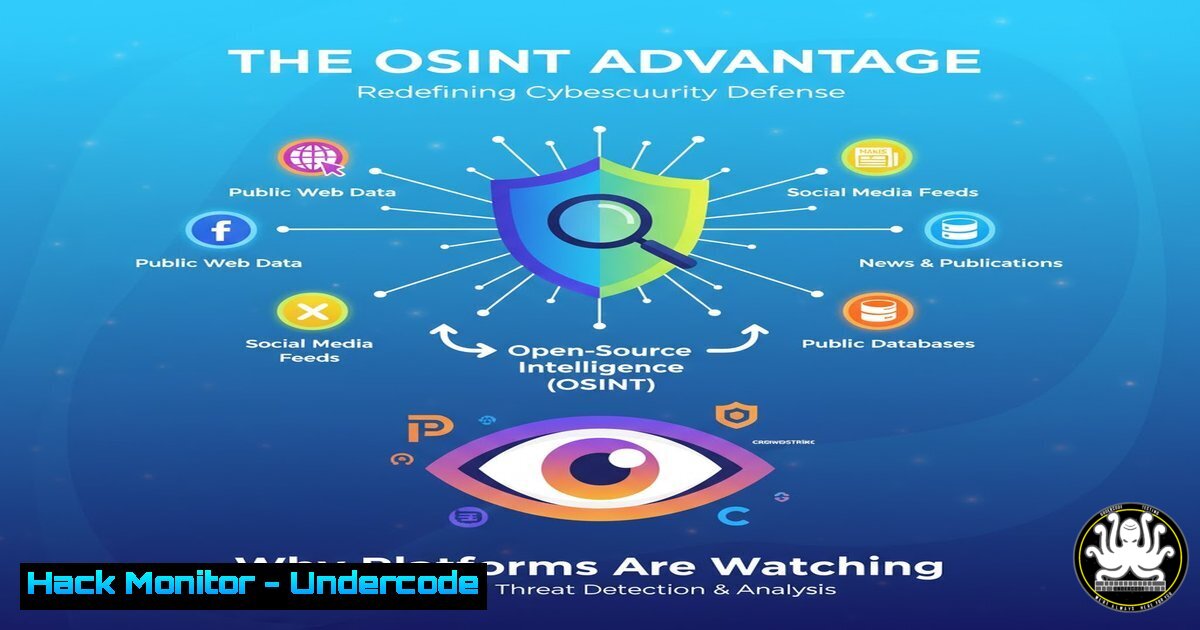
Open-Source Intelligence (OSINT) has evolved from a niche investigative technique to a cornerstone of modern cybersecurity strategy. For professionals, mastering OSINT is not just about gathering data; it’s about connecting disparate digital footprints to build a coherent threat picture. This skillset is so potent that its practitioners often find themselves under increased scrutiny from social platforms, as evidenced by recurring account restrictions that can coincide with professional growth in this field.
Learning Objectives:
- Understand the core methodologies and tools used in professional OSINT investigations.
- Learn how to leverage OSINT for proactive threat intelligence and attack surface reduction.
- Discover the ethical and operational boundaries of OSINT to avoid platform penalties and legal issues.
You Should Know:
- The OSINT Mindset: More Than Just Google Searches
OSINT is a systematic process of collecting, analyzing, and interpreting publicly available information for a specific intelligence purpose. It goes far beyond simple search engines, encompassing data from social media, public government records, satellite imagery, code repositories, and metadata. The goal is to turn noise into actionable intelligence.
Step-by-step guide explaining what this does and how to use it.
Step 1: Define the Intelligence Requirement: Clearly articulate what you need to know. Are you identifying a threat actor, mapping an organization’s digital footprint, or investigating a phishing campaign?
Step 2: Identify Potential Sources: Based on your requirement, list the relevant data sources. These could be social networks (LinkedIn, Twitter), domain registration records (WHOIS), certificate transparency logs (crt.sh), or paste sites like Pastebin.
Step 3: Gather Data Methodically: Use a combination of manual checks and automated tools. Start with broad searches and progressively narrow your focus. Always document your sources for verification.
Step 4: Analyze and Correlate: This is the critical phase. Cross-reference information from different sources. Does the email from a data breach match a username on a forum? Does the LinkedIn profile’s stated location align with the geotag in an Instagram post?
Step 5: Report Findings: Present the intelligence in a clear, concise report, distinguishing between verified facts and analytical assessments.
2. Essential OSINT Toolbox: From Recon-ng to theHarvester
A professional OSINT analyst employs a suite of tools to automate and enhance data collection. Familiarity with these tools, often run on Linux distributions like Kali, is crucial.
Step-by-step guide explaining what this does and how to use it.
theHarvester: A simple yet powerful tool for gathering emails, subdomains, hosts, and banners from public sources.
Command: `theHarvester -d example.com -b google`
This command searches Google for information related to example.com.
Maltego: A graphical link analysis tool that transforms data into interactive graphs, revealing hidden relationships.
How to use: Install Maltego, start a new machine, and use a transform hub to pivot from a domain to its associated IP addresses, DNS records, and linked entities.
Recon-ng: A full-featured web reconnaissance framework written in Python. It modularizes reconnaissance, making complex data collection repeatable.
Commands:
`recon-ng` to start the framework.
`marketplace install all` to install all available modules.
`modules load recon/domains-hosts/google_site_web` to load a module for finding subdomains.
`options set SOURCE example.com`
`run`
- The Art of the Dork: Mastering Google Search Operators
Google hacking, or “Google dorking,” uses advanced search operators to find sensitive information inadvertently exposed online. This is a fundamental skill for vulnerability discovery.
Step-by-step guide explaining what this does and how to use it.
Step 1: Understand Key Operators:
`site:` restricts searches to a specific site.
`filetype:` searches for specific file extensions (e.g., pdf, xls, doc).
`intitle:` / `inurl:` searches for text in the page title or URL.
`ext:` alternative to `filetype:`.
`-` excludes a term.
Step 2: Construct Complex Queries: Combine operators to pinpoint data.
Example 1: Find exposed PDF reports on a target company’s website.
Query: `site:example.com filetype:pdf “confidential”`
Example 2: Locate open webcams that use a specific title.
Query: `intitle:”webcam 7″ live applet`
Example 3: Find Apache server status pages that are publicly accessible.
Query: `inurl:server-status “Apache Status”`
- Social Media Reconnaissance: Piecing Together the Digital Persona
Social platforms are a goldmine for OSINT. The objective is to build a profile of an individual or organization, identifying potential attack vectors like password reset questions or social engineering opportunities.
Step-by-step guide explaining what this does and how to use it.
Step 1: Username Enumeration: Use tools like Sherlock to find a username across hundreds of social sites.
Command: `sherlock user123`
Step 2: Profile Analysis: Manually review profiles for information like employment history, educational background, locations, interests, and connections. Look for patterns in posts and photos.
Step 3: Metadata Extraction: Images contain EXIF data (GPS coordinates, camera model, date). Use tools like `exiftool` on Linux.
Command: `exiftool image.jpg`
Step 4: Archive Analysis: Use the Wayback Machine (web.archive.org) to view historical versions of social media profiles and deleted posts.
5. Infrastructure Mapping: Uncovering the Hidden Attack Surface
Understanding an organization’s digital footprint is key to defensive and offensive security. This involves discovering all internet-facing assets.
Step-by-step guide explaining what this does and how to use it.
Step 1: Subdomain Enumeration: Use tools like `amass` or subfinder.
Command: `amass enum -d example.com -passive`
Step 2: Port Scanning: With a list of IPs and subdomains, use `nmap` to identify open ports and services.
Command: `nmap -sV -sC targetIP -oA scan_results`
Step 3: Certificate Transparency Logs: Search `crt.sh` for all SSL certificates issued for a domain, often revealing overlooked subdomains.
Step 4: Cloud Storage Recon: Manually check for misconfigured AWS S3 buckets, Google Cloud Storage, or Azure blobs by using common naming conventions (e.g., s3://company-name-backup).
- Mitigating the “LinkedIn Effect”: Why Your OSINT Activity Gets Flagged
The post’s mention of recurring comment restrictions highlights a real phenomenon. Platforms like LinkedIn employ sophisticated algorithms to detect bot-like or reconnaissance behavior. Intensive OSINT-related activity—such as viewing many profiles in a short time, using automation tools, or making specific search patterns—can trigger these safeguards.
Step-by-step guide explaining what this does and how to use it.
Step 1: Operate Manually and Slowly: For social media recon, avoid tools that aggressively scrape data. Mimic human behavior with random delays between actions.
Step 2: Use Multiple Identities and Sessions: When conducting broad research, do not perform all searches from a single, logged-in account. Use a VPN and incognito sessions to distribute the “footprint.”
Step 3: Respect Robots.txt and Terms of Service: Violating a site’s ToS can lead to permanent bans and legal consequences. Always review the legal boundaries before starting an investigation.
Step 4: Leverage Official APIs Where Possible: Some platforms offer APIs for data access. While rate-limited, they provide a sanctioned method for data collection.
What Undercode Say:
- The power of OSINT lies in its legality and accessibility; the very information used to protect assets is the same used to compromise them. The practitioner’s skill determines the outcome.
- Platform restrictions on security professionals are an unintended consequence of the arms race between defenders and malicious actors, forcing analysts to be more nuanced and ethical in their methods.
The duality of OSINT is its defining characteristic. It is a defensive shield for the cybersecurity analyst mapping an organization’s attack surface, but in the wrong hands, it is a powerful spear for phishing, doxxing, and corporate espionage. The “LinkedIn restriction” experienced by the professional is a symptom of this duality. Platforms cannot easily distinguish between a white-hat analyst conducting research and a black-hat actor profiling targets. This forces security professionals to operate with heightened operational security (OPSEC), blurring the lines between hunter and prey in the digital landscape. The future of effective OSINT will depend not just on technical tool proficiency, but on developing sophisticated tradecraft to navigate these automated sentinels.
Prediction:
The convergence of AI and OSINT will create a paradigm shift in cyber threat intelligence. We will see the emergence of AI-powered OSINT platforms that can autonomously correlate real-time data from thousands of sources, predicting attack campaigns and identifying vulnerabilities before they are widely exploited. Conversely, threat actors will weaponize AI to generate highly convincing deepfakes and synthetic personas for social engineering, making verification through traditional OSINT methods more challenging. This will lead to an AI-driven “cat and mouse” game, where the ability to discern signal from noise, and truth from AI-generated fiction, will become the most critical skill in a cybersecurity analyst’s arsenal.
🎯Let’s Practice For Free:
IT/Security Reporter URL:
Reported By: Elijah Jonah – Hackers Feeds
Extra Hub: Undercode MoN
Basic Verification: Pass ✅


