
Listen to this Post
Introduction:
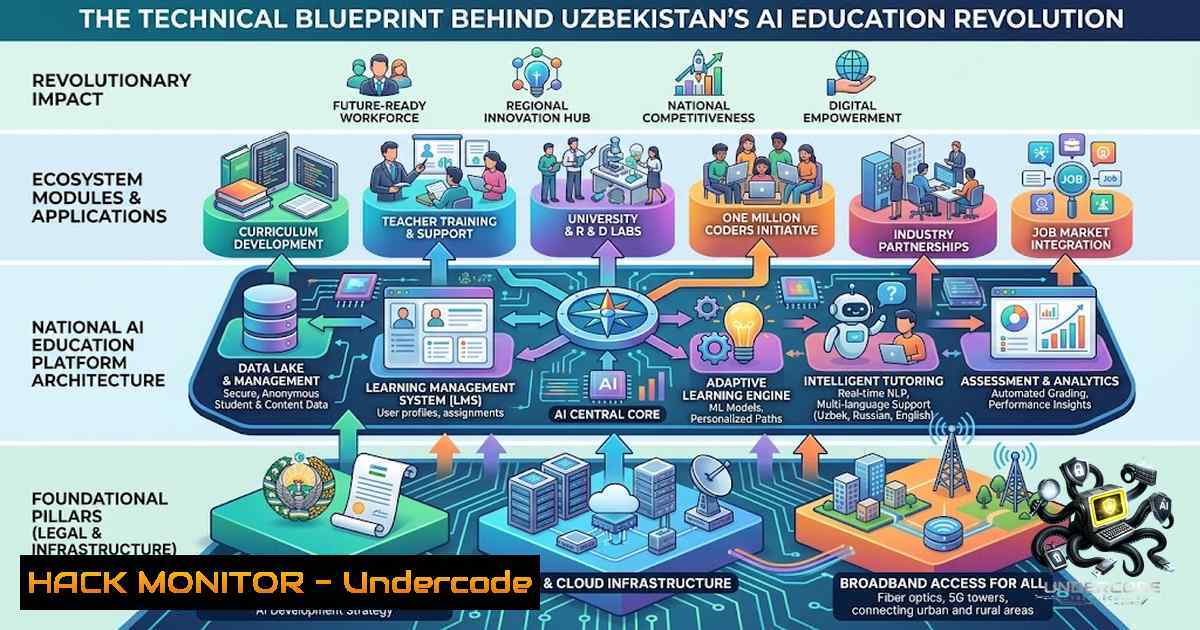
Uzbekistan’s surge to the 1 global ranking for modern tech course enrollment on Coursera, with women constituting 58.9% of AI course users, represents a significant paradigm shift in educational technology deployment and social engineering. This initiative, part of the “5 Million AI Leaders” program, demonstrates a unique fusion of governmental policy, direct community engagement, and the scalable infrastructure of global ed-tech platforms. For cybersecurity and IT professionals, this case study offers critical insights into large-scale access management, data governance at scale, and the logistical challenges of bridging the digital divide through technical infrastructure.
Learning Objectives & Secrets:
- Objective 1: Understand the Technical Infrastructure of Voucher Distribution – Learn the backend mechanics of generating, securing, and distributing over 1 million digital vouchers for platform access, including API integration with Coursera’s partner ecosystem.
- Objective 2 Secret Tips: Implementing Zero-Trust for User Onboarding – Discover how to apply Zero-Trust principles to the user lifecycle, ensuring that the “no middleman, no waiting room” promise is technically enforced through robust identity verification and conditional access policies.
- Objective 3 Secret Tips: Scaling In-Person Digital Literacy with Automated Tools – Learn how to supplement in-person training with automated scripts and IT tools to verify account creation, course enrollment, and network connectivity, effectively troubleshooting user-side issues at scale.
You Should Know:
- Securing the Voucher Lifecycle: From Generation to Redemption
The core technical challenge of this initiative is the secure creation and distribution of vouchers. A voucher is essentially a unique, one-time-use token that provides access to a paid service. Managing this at a scale of over 1 million requires a robust system.
Step‑by‑step guide:
- Step 1: Token Generation – On a secure Linux server, generate cryptographically secure random tokens for vouchers. Use the `openssl` command to create a unique identifier:
openssl rand -hex 16. This creates a 32-character hexadecimal string, which is resilient against brute-force guessing. - Step 2: Secure Storage – Store these tokens in a hashed format in a database. Instead of storing the raw token, hash it using a strong algorithm like SHA-256. This ensures that even if the database is compromised, the tokens cannot be used. A Linux command to hash a token:
echo -1 "USER_TOKEN" | sha256sum. - Step 3: API Integration – The redemption process is a critical API call to Coursera’s partner backend. This API must be secured with API keys and OAuth 2.0. Use `curl` to test the API endpoint:
curl -X POST https://api.coursera.org/partner/vouchers -H "Authorization: Bearer YOUR_API_KEY" -d '{"token":"HASHED_TOKEN", "user_id":"USER_ID"}'. - Step 4: Auditing and Revocation – Implement a logging system to track voucher usage. On Linux, use `tail -f /var/log/voucher_audit.log` for real-time monitoring. Windows administrators can use `Get-Content -Path C:\Logs\voucher_audit.log -Wait` in PowerShell to achieve the same.
- Step 5: Expiry Management – Set a time-to-live (TTL) for each voucher using database triggers or cron jobs. To clean up expired tokens, use a cron job on Linux:
0 0 /usr/bin/php /scripts/clean_expired_vouchers.php.
2. Hardening the Onboarding Infrastructure for Mass Adoption
The “step by step” in-person training requires an IT infrastructure that can handle thousands of simultaneous logins and course enrollments. This involves network security, device management, and identity federation.
Step‑by‑step guide:
- Step 1: Network Hardening for Public Access – Trainers often set up temporary Wi-Fi hotspots. Ensure these are secured using WPA2-Enterprise or a captive portal with strong encryption. Configure firewall rules to block malicious traffic. On Linux (iptables):
iptables -A INPUT -p tcp --dport 80 -m limit --limit 25/minute --limit-burst 100 -j ACCEPT. On Windows (Netsh):netsh advfirewall firewall add rule name="HTTP Rate Limit" dir=in action=block protocol=TCP localport=80 remoteip=any. - Step 2: Identity Verification and Zero-Trust – To maintain the integrity of the “women-first” initiative, a lightweight identity verification system is needed. This might involve SMS-based OTPs. A simple Python script using the `twilio` library can be used to send verification codes. To test email OTP delivery, use `telnet smtp.gmail.com 587` to validate SMTP connectivity.
- Step 3: User Device Security Checklist – Provide users with a basic security checklist. This includes advising them to update their operating systems. For Windows, the command `wuauclt /detectnow /updatenow` can be used to force a Windows Update check. For Linux (Debian/Ubuntu),
sudo apt update && sudo apt upgrade -y. - Step 4: Browser Security Settings – Ensure users are using secure browsers. Guide them to install HTTPS Everywhere and ad-blockers to prevent malicious redirects. For IT admins, configuring a Group Policy Object (GPO) on Windows to enforce security settings is critical: `gpedit.msc` -> Computer Configuration -> Administrative Templates -> Windows Components -> Internet Explorer.
- Step 5: Cloud Instance Hardening – If using cloud-based VMs for training environments, ensure they are hardened. On AWS, set up a Security Group that only allows SSH (port 22) and HTTP/HTTPS (80/443) from specific IPs. On Azure, use Network Security Groups (NSGs) to similar effect.
3. API Security and Data Governance at Scale
With 1 million users accessing Coursera, the data flow between the local initiative and the platform is immense. This creates a significant attack surface for API-based breaches.
Step‑by‑step guide:
- Step 1: API Key Rotation – Implement automated API key rotation. Use a Linux cron job to generate new keys and update environment variables: `openssl rand -base64 32` to generate a new key, and then restart the application server:
sudo systemctl restart your-app-service. - Step 2: Implementing Rate Limiting – To prevent brute-force attacks on user login and voucher redemption endpoints, implement rate-limiting. On an NGINX server, add to the configuration:
limit_req_zone $binary_remote_addr zone=mylimit:10m rate=10r/m;. This allows only 10 requests per minute. - Step 3: SQL Injection Prevention – All database queries for user management must be parameterized. For a Python Flask application, use
cursor.execute("SELECT FROM users WHERE user_id = %s", (user_id,)). This prevents SQL injection. A common command to test for SQL injection vulnerabilities issqlmap -u "http://example.com/login?id=1" --dbs. - Step 4: Data Encryption at Rest – All user PII (names, email addresses, phone numbers) stored in the local database must be encrypted. Use AES-256 encryption. On Linux, you can encrypt a file using
openssl enc -aes-256-cbc -salt -in users_data.csv -out users_data.enc -k YOUR_PASSWORD. On Windows, use PowerShell:ConvertTo-SecureString -String "Password" -AsPlainText -Force | ConvertFrom-SecureString | Out-File -FilePath "encrypted.txt". - Step 5: Monitoring with SIEM – Set up a Security Information and Event Management (SIEM) tool like Splunk or a free alternative like Wazuh. To send logs to Wazuh on Linux, use
cat /var/log/auth.log | nc wazuh-server 1514.
- Bridging the Digital Divide: Offline and Low-Bandwidth Solutions
The “courtyard in a regional town” scenario implies potential internet connectivity issues. IT professionals must plan for offline synchronization and low-bandwidth optimization.
Step‑by‑step guide:
- Step 1: Local Caching of Course Content – While Coursera is primarily online, administrative tasks like account creation can be queued. Use a local Redis cache to queue actions:
redis-cli lpush registration_queue '{"user":"client_data"}'. This allows the system to work offline and sync when connectivity is restored. - Step 2: Bandwidth Monitoring – Use tools to monitor network speed. On Linux, `speedtest-cli` provides a quick benchmark. To limit bandwidth for non-essential traffic, use `tc` (traffic control):
tc qdisc add dev eth0 root tbf rate 1mbit burst 32kbit latency 400ms. - Step 3: Asset Compression – If serving any local content (logos, training materials), ensure it’s compressed. Use Gzip on Linux: `gzip -9 training_manual.pdf` and send the `.gz` file. On Windows IIS, enable “Dynamic Content Compression” via the IIS Manager.
5. Vulnerability Exploitation and Mitigation for Ed-Tech Platforms
Understanding how an attacker might target such an initiative is crucial for defense.
Step‑by‑step guide:
- Step 1: Testing for Open Redirects – Phishing attacks often use open redirects on legitimate platforms to steal credentials. Use `curl -I http://your-registration-site/redirect?url=http://malicious.com` to test if it redirects without validation.
– Step 2: Mitigating Phishing – Implement DMARC, DKIM, and SPF for all official emails sent to learners. To check a domain’s SPF record, use `dig -t TXT yourdomain.com` on Linux. - Step 3: Web Application Firewall (WAF) – Deploy a WAF like ModSecurity. For an Apache server, enable it with
sudo a2enmod security2. Configure basic rules to block SQLi and XSS. - Step 4: Session Hijacking Prevention – Ensure sessions are secure. Set Secure and HttpOnly flags on cookies. For developers, in a PHP application:
session_set_cookie_params(['secure' => true, 'httponly' => true, 'samesite' => 'Strict']);.
What Undercode Say:
- Key Takeaway 1: The success of Uzbekistan’s program is not just about issuing vouchers but about the meticulous technical execution of identity verification, secure token management, and resilient network infrastructure that supports millions of users.
- Key Takeaway 2: The 58.9% female participation rate is a technical win for data governance and a testament to the effectiveness of targeted, in-person technical support in overcoming initial digital literacy barriers.
The analysis reveals that the “GAP | Women IT Club” is effectively functioning as a sovereign cybersecurity defense mechanism. By equipping women with AI and IT skills, the nation is building a robust, diversified workforce capable of defending its digital borders against emerging AI-powered threats. This is a strategic move to ensure that the nation’s future technologists are aware of vulnerabilities from day one.
Prediction:
- +1 This initiative will serve as a global blueprint for other nations, particularly in the Global South, demonstrating that a combination of national policy, platform partnerships (Coursera), and grassroots IT support can rapidly achieve digital transformation.
- +1 The influx of 500,000+ newly trained women into the tech ecosystem will create a powerful defense-in-depth layer, reducing cybercrime susceptibility and fostering a culture of digital resilience that benefits the entire region.
- +1 We will likely see a surge in localized cybersecurity startups in Uzbekistan over the next 3–5 years, founded by the graduates of this program, aiming to solve local security challenges with a deep understanding of the regional context.
- -1 The massive scale of the program increases the attack surface for credential theft and API abuse. If the voucher redemption API is not robustly secured with rate-limiting and anomaly detection, the system could be exploited by bots to siphon resources.
- -1 The reliance on a single global platform (Coursera) could present a geopolitical risk. A change in partnership terms, pricing, or data sovereignty laws could disrupt the program, highlighting the need for a multi-platform strategy or a domestic infrastructure backup.
▶️ Related Video (92% Match):
🎯Let’s Practice For Free:
🎓 Live Courses & Certifications:
Join Undercode Academy for Verified Certifications
🚀 Request a Custom Project:
Secure, high-velocity infrastructure and disruptive technological engineering. Contact our engineering team for high-tier development and proprietary systems:
[email protected]
💎 Smart Architecture | 🛡️ Secure by Design | ⭐ Trusted by Thousands
IT/Security Reporter URL:
Reported By: https://lnkd.in/p/eGYDdaAc – Hackers Feeds
Extra Hub: Undercode MoN
Basic Verification: Pass ✅


