Listen to this Post
Introduction:
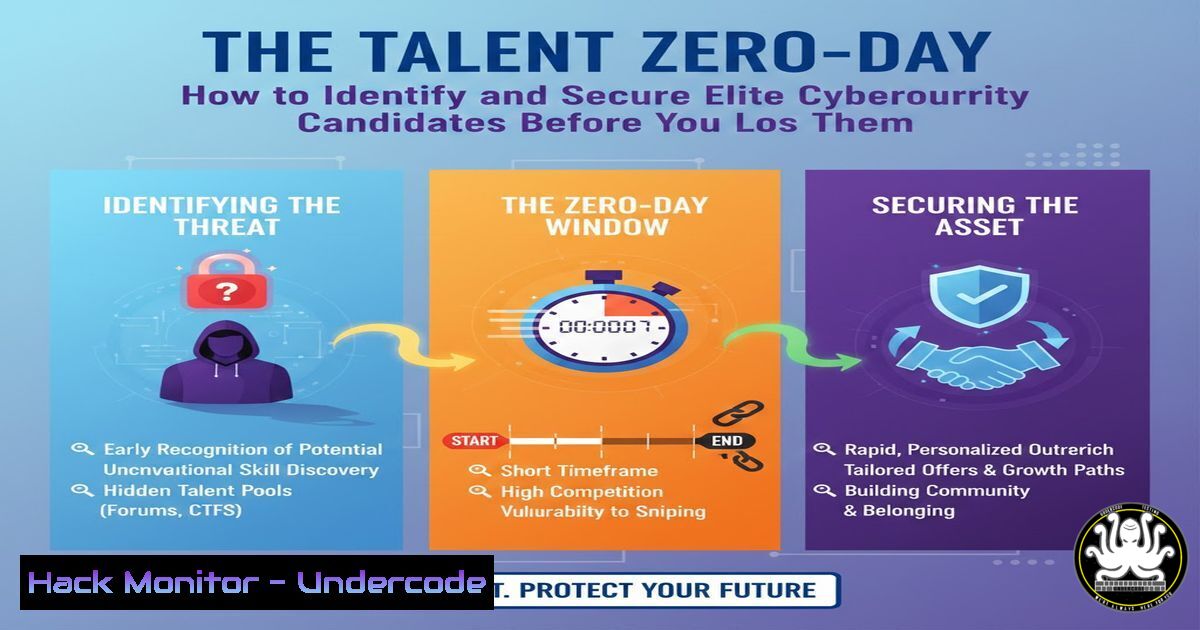
In the high-stakes world of cybersecurity, encountering a candidate with a perfect blend of technical prowess, threat intelligence, and cultural fit is as rare as discovering a zero-day vulnerability. The agonizing scenario of “right person, wrong time” is a critical operational risk, forcing leaders to make strategic decisions that impact their organization’s security posture for years. This article provides a tactical framework for identifying, engaging, and retaining this elite “talent zero-day” through proactive security measures and creative engagement strategies.
Learning Objectives:
- Identify the key technical and soft skills that define an elite cybersecurity candidate.
- Develop interim engagement strategies, such as retainer-based consulting and micro-projects, to secure talent.
- Implement technical onboarding and access control procedures for short-term contractors.
You Should Know:
- Identifying the “Perfect” Candidate: A Technical Skills Matrix
The post highlights a “perfect” candidate with an “exact skill set.” In cybersecurity, this extends beyond a generic resume. It means verifying proficiency in specific, high-demand areas. A true elite candidate possesses a demonstrable combination of offensive and defensive skills, cloud security knowledge, and scripting automation abilities.
Step-by-Step Guide to Technical Vetting:
Step 1: Practical Skill Assessment. Move beyond theoretical questions. Use a controlled lab environment to test candidates.
Command Example (Linux): Ask the candidate to analyze a sample log file for signs of intrusion.
 Find failed SSH attempts from a specific IP in auth.log
grep "Failed password" /var/log/auth.log | grep "192.168.1.100" | wc -l

Extract all unique IPs that attempted to connect
awk '/Failed password/ {print $11}' /var/log/auth.log | sort | uniq -c | sort -nr
Command Example (Windows/PowerShell): Request a script to identify anomalous processes.
 Get processes using unusually high CPU for investigation
Get-Process | Where-Object { $_.CPU -gt 100 } | Select-Object ProcessName, Id, CPU
Step 2: Cloud & Automation Proficiency. Verify hands-on experience with Infrastructure as Code (IaC) and cloud-native security tools. Ask them to explain the security implications of a misconfigured S3 bucket or a overly permissive IAM role.
Step 3: Threat Intelligence Mindset. Present a recent CVE (e.g., a critical vulnerability in a common web framework). Ask the candidate to outline the steps for patch management, mitigation, and how they would communicate the risk to leadership.
2. Architecting a Secure Retainer or Consulting Agreement
A retainer is not merely a financial arrangement; it’s a security contract. It requires careful planning to provide meaningful, secure access without exposing your core infrastructure.
Step-by-Step Guide to Secure Consultant Onboarding:
Step 1: Define the Scope of Work (SOW). Be specific. Examples include: “Perform a penetration test on our customer-facing web application,” “Develop a SIEM alert rule for detecting lateral movement,” or “Harden our AWS EC2 security groups.”
Step 2: Implement Principle of Least Privilege (PoLP). Never grant domain admin or root access to a consultant.
Active Directory Example: Create a dedicated security group with only the permissions needed for the task.
AWS Example: Create an IAM policy that allows `s3:GetObject` and `s3:ListBucket` on a specific bucket used for log analysis, but denies all other services.
Step 3: Mandate Multi-Factor Authentication (MFA) and VPN. All external access to your environment must be through a secured VPN connection with MFA enforced. This is non-negotiable.
- Leveraging Micro-Projects and Bug Bounties to Maintain Engagement
If a consistent retainer is not feasible, micro-projects and bug bounty programs can keep the candidate engaged with your organization’s technical challenges.
Step-by-Step Guide to Engaging Talent via Micro-Projects:
Step 1: Scoped Vulnerability Assessment. Provide a specific, non-critical component of your infrastructure for assessment. For example, a Docker container image or a single API endpoint.
Step 2: Code Review Challenge. Anonymize a snippet of your application code (e.g., a login function) and pay the candidate to perform a security-focused code review, identifying potential SQL injection or cross-site scripting (XSS) flaws.
Step 3: Tool Configuration Tutorial. Ask them to document the setup of a specific open-source security tool (e.g., Wazuh, Osquery) in a lab environment, creating a tutorial your full-time team can later use.
4. Securing Knowledge Transfer and Operational Handover
When the consultant’s engagement ends or transitions to a full-time role, a secure and documented handover is critical to prevent knowledge loss and ensure continuity.
Step-by-Step Guide to Secure Knowledge Transfer:
Step 1: Document Findings in a Secure Repository. All reports, code, and configurations must be stored in a designated, access-controlled repository (e.g., a private GitHub/GitLab repo or Confluence space).
Step 2: Conduct a Technical Walkthrough. The consultant should lead a session with your internal team, walking through their work, any scripts they developed, and the security rationale behind their decisions.
Step 3: Credential Rotation. Immediately upon project completion, rotate all passwords, API keys, and access tokens that the consultant was ever provisioned. This is a fundamental security control.
- Building a Long-Term Talent Pipeline with Continuous Monitoring
The “right person, wrong time” problem highlights a reactive talent strategy. A proactive approach involves continuously scouting for talent, much like continuous monitoring for threats.
Step-by-Step Guide to Proactive Talent Pipelining:
Step 1: Engage with the Community. Actively participate in cybersecurity forums (e.g., HackerOne, Stack Overflow Security), GitHub open-source security projects, and attend conferences (e.g., DEF CON, Black Hat). Identify and connect with skilled individuals before you have a need.
Step 2: Create an Apprenticeship or Mentorship Program. Develop junior talent in-house. This can involve setting up a internal “capture the flag” (CTF) environment or having them assist senior engineers with low-risk security tasks.
Step 3: Utilize Threat Intelligence Feeds… for Talent. Follow security researchers who disclose vulnerabilities responsibly. Their public work is a living portfolio of their skills and ethics.
What Undercode Say:
- Elite Talent is a Vulnerability Patch. Securing a top-tier cybersecurity professional is akin to applying a critical patch to a systemic vulnerability in your human infrastructure. The cost of inaction—being left exposed to evolving threats—far outweighs the creative financial investment required to secure them.
- Flexibility is the New Compensation. The future of cybersecurity work is hybrid and project-based. Building mechanisms to engage talent outside the traditional FTE model is no longer a “nice-to-have” but a strategic imperative for building a resilient security organization.
The original post captures a fundamental tension in high-tech hiring. In cybersecurity, where the talent gap is acute, this problem is magnified. Letting a perfect candidate walk over a temporary budget constraint is a severe strategic miscalculation. The six-month delay could be the window in which a major incident occurs, one that the candidate could have prevented. The proposed “creative” solutions—retainers, consulting—are not just stopgaps; they are intelligent risk mitigation strategies. They allow an organization to immediately inject high-level expertise into its security program, building defensive capabilities during a period of critical need. The question isn’t “is it fair?” but rather “can we afford not to?”
Prediction:
The “right person, wrong time” dilemma will become a primary driver for the formalization of the Fractional CISO and vCIRC (Virtual Computer Incident Response Team) models. We will see a rise in platforms and agencies that exclusively broker retainers for elite, pre-vetted cybersecurity talent on a project basis. Furthermore, AI-driven skill assessment tools will become more sophisticated, allowing managers to quantify a candidate’s “perfect fit” with hard data, making the business case for creative hiring solutions more compelling and financially justifiable to stakeholders. The organizations that fail to adapt to this fluid talent market will find themselves chronically under-protected and unable to respond to the accelerating threat landscape.
🎯Let’s Practice For Free:
IT/Security Reporter URL:
Reported By: Niels Schoumans – Hackers Feeds
Extra Hub: Undercode MoN
Basic Verification: Pass ✅


