Listen to this Post
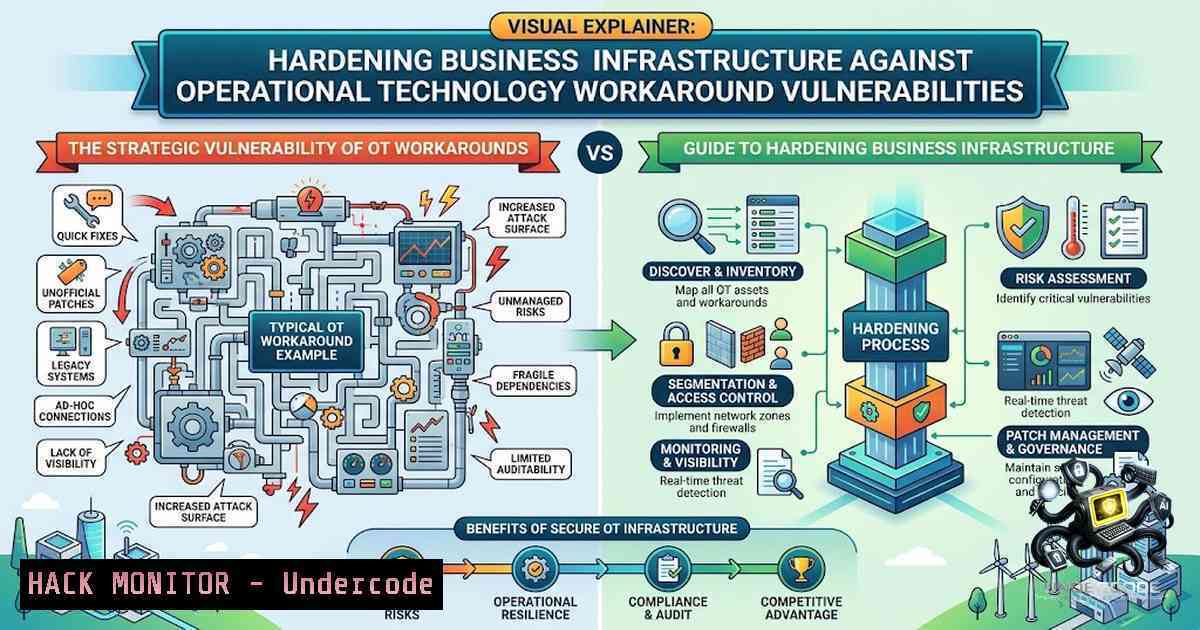
Introduction:
In the modern digital landscape, business agility often hinges on the ability to seamlessly integrate third-party software, but these integrations are frequently the weakest link in an organization’s security posture. The recent case of a wellness startup leveraging a booking platform (Fresha) highlights a critical vulnerability: the need to hack strategic solutions for operational constraints. This article explores how treating software limitations as a “tech workaround” rather than a systemic risk can expose businesses to data leakage, API abuse, and compliance failures, emphasizing the need for proactive cybersecurity hygiene in operational technology.
Learning Objectives:
- Objective 1: Identify and assess the security risks associated with “hacked” solutions in proprietary booking and CRM software.
- Objective 2: Implement secure API integration practices and fallback mechanisms for promotional logic and data handling.
- Objective 3: Develop a hardening strategy for operational databases and user access controls when utilizing default software configurations.
You Should Know:
1. Inventorying and Assessing the “Workaround” Stack
The core of the problem lies in the “tech workaround” designed to facilitate flexible discounts. When native software (like Fresha) lacks functionality, developers often create external scripts or middleware to patch the gap. This introduces a complex layer of logic that is frequently unmonitored and poorly secured. Start by auditing your current environment. Identify where business logic (e.g., discount rules, partner booking allocations) is being managed outside the primary application. This is a critical step for both operational stability and security.
Step-by-step guide:
- Linux (Audit Services): `sudo systemctl list-units –type=service –state=running | grep -E “script|api|webhook”` (Identifies running custom services that might be handling business logic).
- Windows (Check Scheduled Tasks): `Get-ScheduledTask | Where-Object {$_.State -eq “Ready”}` (Lists automated tasks that may be triggering custom scripts for data syncing or discount application).
- Network Scan: `nmap -sV -p- 192.168.1.0/24` (Performs a scan to discover any unannounced services or open ports where this middleware might be listening).
This should be your first layer of defense, revealing where business logic is being executed outside of the vendor’s secure environment.
2. Securing the API and Middleware Layer
The “hack” usually involves interacting with the Fresha API (Application Programming Interface). A major risk is the exposure of API keys or hardcoded credentials within public-facing webhooks. You must verify that your integration uses OAuth 2.0 or similar robust authorization flows and that secrets are stored in environment variables, not in code repositories.
Step-by-step guide:
- Code Review (Bash): `grep -r “API_KEY” –exclude-dir=.git .` (Scans the project directory for hardcoded secrets).
- Environment Configuration: Ensure your middleware uses an `.env` file. Example: `FRESHA_API_KEY=your_secure_key_here` (Never commit this file to version control).
- API Call Validation: Implement a script to test the API response and validate that data is encrypted in transit (HTTPS/TLS 1.3). A simple test for secure headers: `curl -I https://api.example.com/endpoint` to check for Strict-Transport-Security headers.
– Rate Limiting: Implement a throttling mechanism to prevent brute-force attacks on your custom discount endpoints. Using NGINX or a Python Flask middleware, add a rate limiter to protect the infrastructure.3. Operational Yield and Database Integrity
The operational yield management mentioned in the client session involves balancing large group bookings against calendar availability. This translates into database concurrency issues. If your workaround writes directly to a database or uses a secondary cache (like Redis), you risk dirty reads or race conditions. This is a disaster for data integrity and can lead to double-bookings or lost revenue.
Step-by-step guide:
– Linux (Check Logs): `tail -f /var/log/mysql/error.log` or `journalctl -u postgresql -f` (Monitor database logs for errors or lockouts).
- Concurrency Testing: Implement a simple load test script to simulate multiple users attempting to book at the same time.
Python snippet to simulate concurrency
import threading
def book_space(user_id):
Code to interact with database
pass
for i in range(10):
threading.Thread(target=book_space, args=(i,)).start()
- Transactional Integrity: Ensure your database queries for balance and booking are wrapped in `BEGIN TRANSACTION` and `COMMIT` to prevent partial updates.
- Backup Strategy: `pg_dump database_name > backup.sql` (PostgreSQL) or `mysqldump -u root -p database > backup.sql` (MySQL) to ensure you have a fallback for your booking data.
4. Data Privacy and Compliance (GDPR/CCPA)
When handling partner and athlete data, you must ensure that your custom “discount” code or “group booking” tables do not store sensitive personal information (PII) in plain text. This is a high-risk area for cybersecurity breaches.
Step-by-step guide:
- Database Audit: `SELECT FROM information_schema.columns WHERE table_name = ‘bookings’` to find columns that might contain PII (email, phone, name).
- Encryption: Implement AES-256 encryption for storing sensitive data. Example:
UPDATE bookings SET customer_email = AES_ENCRYPT('[email protected]', 'encryption_key'). - Access Control: Limit database user permissions. `GRANT SELECT, INSERT ON bookings TO ‘webapp’@’localhost’;` (Do not use the admin account for the application).
- Compliance Check: Ensure you have a process to delete or anonymize data upon request. This involves setting up event listeners for data deletion commands.
5. Hardening the Infrastructure for the “Ad Hit”
The plan involves a massive paid ads influx, which will increase traffic. This is a prime time for a Distributed Denial of Service (DDoS) attack or credential stuffing. You need to harden your web server and application firewall before the “hit.”
Step-by-step guide:
- NGINX Configuration: Limit connections per IP to prevent brute force.
limit_conn_zone $binary_remote_addr zone=addr:10m;
limit_conn addr 10;
- Windows Firewall: `New-1etFirewallRule -DisplayName “Block Port 445” -Direction Inbound -LocalPort 445 -Protocol TCP -Action Block` (Example of blocking SMB if not used).
- Fail2ban (Linux): Configure to block IPs after repeated failed login attempts.
[nginx-http-auth]
enabled = true
port = http,https
filter = nginx-http-auth
logpath = /var/log/nginx/error.log
maxretry = 3
- Web Application Firewall (WAF): Enable or configure a cloud-based WAF like Cloudflare or AWS WAF to filter malicious traffic before it hits the origin server.
6. Penetration Testing the Custom Logic
The most critical step is to validate the “hack” itself. Penetration testing can reveal flaws in the discount logic. For example, an attacker could manipulate the API request to apply unlimited discounts or negative charges.
Step-by-step guide:
- Burp Suite: Intercept the request sent from your frontend to your custom backend and modify the “discount” parameter (e.g., -50.00) to test for business logic flaws.
- Nmap Scripting: `nmap –script=http-enum -p 80
` to enumerate all exposed directories and potential endpoints. - Access Control Test: Attempt to access the middleware admin panel by guessing the path (e.g.,
/admin,/api/docs) to ensure it is locked down. - SQL Injection: Test inputs for `’ OR ‘1’=’1` to ensure the database is secure against injection attacks.
What Undercode Say:
- Key Takeaway 1: Treating third-party software as a static “black box” is a security fallacy; always inventory and secure the external logic that modifies its behavior.
- Key Takeaway 2: The intersection of operational efficiency (yield management) and cybersecurity lies in database transaction integrity and ACL enforcement.
- Key Takeaway 3: Scaling for marketing traffic simultaneously scales the attack surface; hardening infrastructure must be a prerequisite, not an afterthought.
- Key Takeaway 4: API keys and business logic must be treated with the same rigor as financial assets; a single exposed credential can bankrupt the operational model.
- Key Takeaway 5: The “rugby pivot” introduces high-1et-worth individuals into the system; their data privacy is now a compliance liability for the wellness space.
- Key Takeaway 6: A Fractional Growth Partner functions similarly to a blue-team consultant—bridging the gap between business needs and secure technical implementation.
Prediction:
- -1: The ad-hoc nature of business “tech workarounds” will lead to a significant data breach or service outage, prompting an industry-wide review of booking software APIs by the end of Q3 2026.
- -1: Startups will face increased litigation from customers if “hacked” promotional logic leads to billing errors, forcing a stricter regulatory framework for SaaS integrations.
- +1: This case will drive the development of more robust middleware security solutions specifically designed to harden popular but limited SaaS platforms like Fresha.
- +1: Organizations will adopt “Security-as-Code” for business logic, using CI/CD pipelines to scan for vulnerabilities in the discount algorithms before deployment.
▶️ Related Video (82% Match):
🎯Let’s Practice For Free:
🎓 Live Courses & Certifications:
Join Undercode Academy for Verified Certifications
🚀 Request a Custom Project:
Secure, high-velocity infrastructure and disruptive technological engineering. Contact our engineering team for high-tier development and proprietary systems:
[email protected]
💎 Smart Architecture | 🛡️ Secure by Design | ⭐ Trusted by Thousands
IT/Security Reporter URL:
Reported By: https://lnkd.in/p/eZyCmGNw – Hackers Feeds
Extra Hub: Undercode MoN
Basic Verification: Pass ✅


